
Listening to Charles Mingus: Blues & Roots. One of the masterpieces of jazz. Sounds brand-new every time, though it’s almost as old as I am. 🎵
 Subscribe
- Public lists
- Manton Reece - Blogroll
- Fetched

Everybody who tries to read a page like this — typical of legacy journalism online — hits the “Reader View” button, or saves to Instapaper or a similar service, because if you want to read the article there’s no alternative. (I only saw the above because I accidentally hit the Reader View button a second time.) So how does this kind of thing make sense? Eventually, surely, advertisers will figure out that they’re paying for ads no one will see, and then what?
I had often pressed on [my father] essays and novels of Berry's. Like Berry’s father, mine was a white-collar professional who farmed on the side and deeply loved his rural community. He was perhaps the last of the country doctors to make a home visit and receive a cherry pie as payment. Yet it was also my dad who first pointed me toward a darkness behind the agrarian romance. Once, while handing back to me the book in which appears “A Defense of the Family Farm,” wherein Berry recommends the Amish practice of using family and horses instead of machinery, my father tersely noted that this idyllic vision depends on children doing forced labor.
Yes, but so does sending children to school. (That’s a minor quibble. The essay is superb and superbly provocative.)

Having done extensive research into the possibility of growing a lot of vegetables — after some halfhearted attempts in the past — I have come to two conclusions:
- I can’t afford the infrastructure that would be required to prevent my crops from being wholly consumed by squirrels;
- Even if I could afford that infrastructure, and installed it properly and devoted a great deal of care to keeping it up, the squirrels would probably find a way to eat everything anyway.
If I were fifteen years younger I would already have written a long post on the Sally Rooney kerfuffle. Ten years younger: I would want to write such a post but might be able to restrain myself. Five years younger: I’d be feeling that I probably should have an opinion on the subject and would worry a little about losing my edge. Today: I know that there is a kerfuffle but don’t know the details and don’t care. This is called Progress Towards Enlightenment. Five years more and, Deo volente, I won’t even know that crap like this is happening.
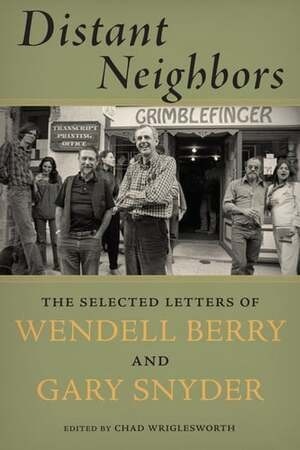
Finished reading: Distant Neighbors by Wendell Berry and Gary Snyder. 📚 Berry to Snyder, 1978:
I am, I believe, a “non-violent” fighter. But I am a fighter. And I see with considerable sorrow that I am not going to get done fighting and live at peace in anything like the simple way I once thought I would. So how to keep from becoming evil?
Maybe the answer is to fight always for what you particularly love, not for abstractions and not against anything: don’t fight against even the devil, and don’t fight ’to save the world."
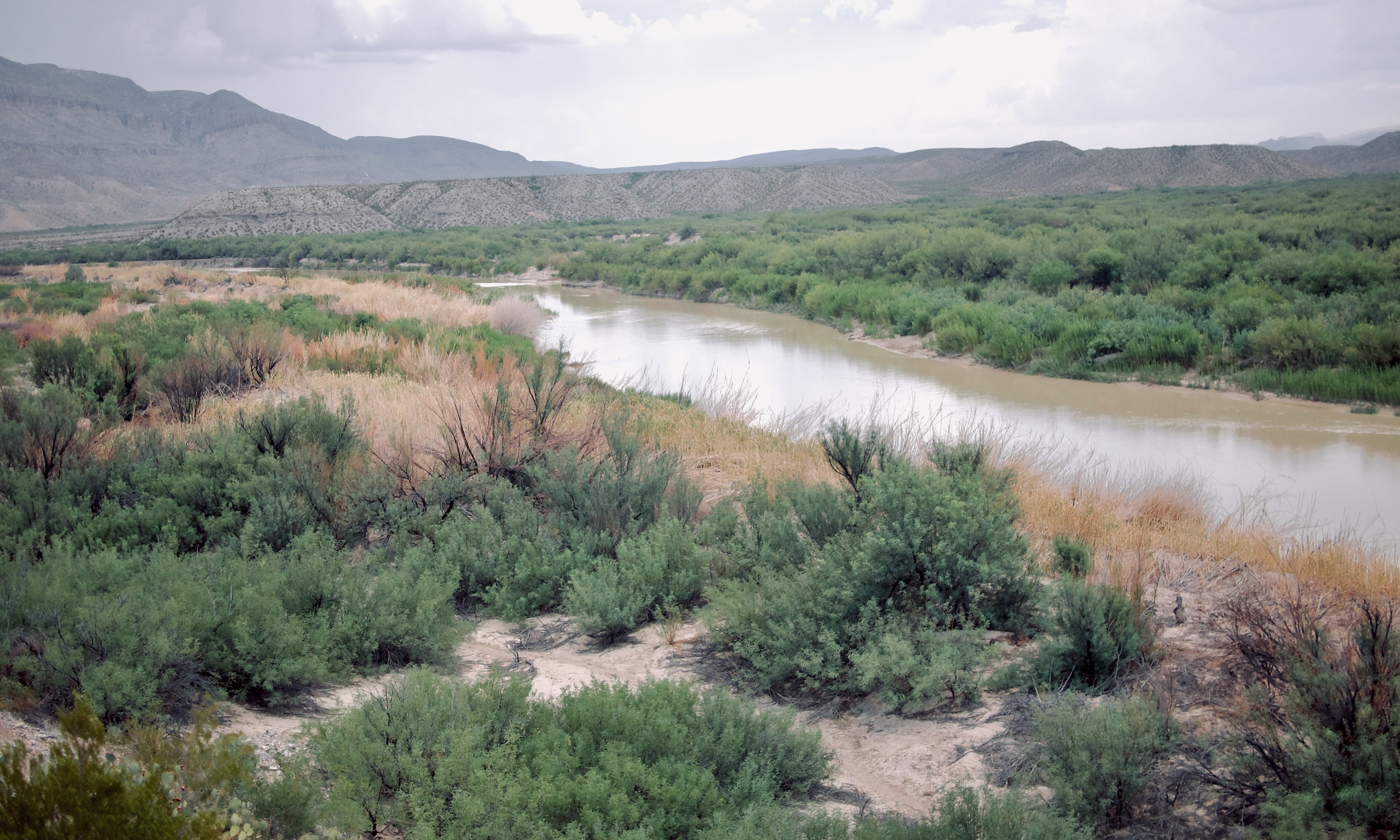
The Rio Grande at Big Bend National Park. Some people want to build a Big Beautiful Wall right there.
Over at Personal History, I wrote about photography.

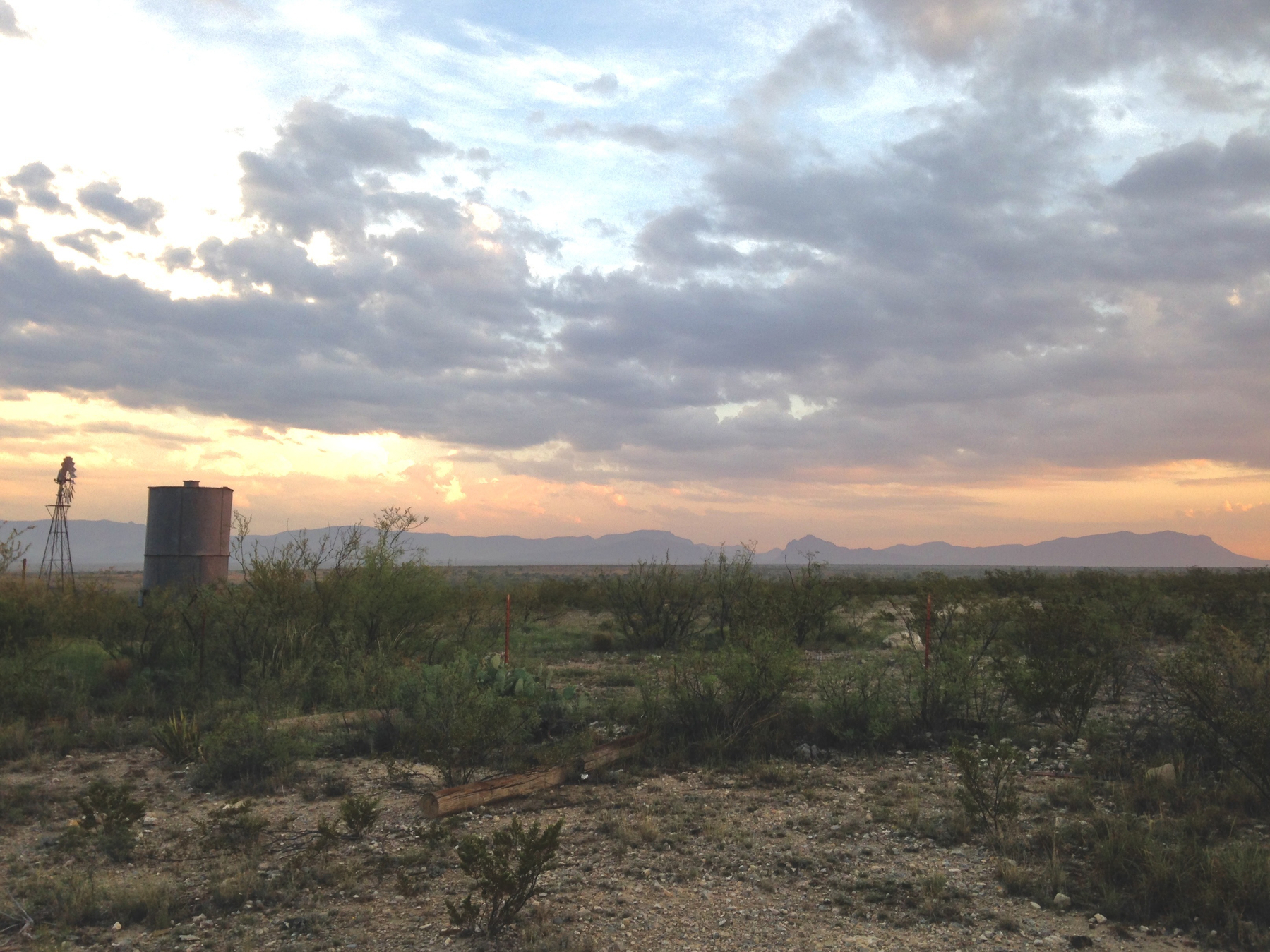
Chisos Mountains, 2014
George Saunders (yeah, I'm breaking my vow, but this is too funny not to quote):
Think of it this way: there’s plenty to do, right now, with just these minds we’ve been given: fight our anxiety, temper our cruelty, foster loving-kindness, try to figure out just what a mind is and what sort of trap it’s making for us in every moment. (Or: learn to skate, make a better omelet, play Bach, etc.) These things make up the (honorable, pleasurable) work of a lifetime. In what way does AI make life better, really? And for whom? In the end, will AI be there to guide us across to the other side and soothe our fears? (God, I hope not, but maybe we’ll all have DeathCope 3.0 loaded into our MindChip, and the last thing we’ll hear will be Claude, going, “You’ve got this!”)
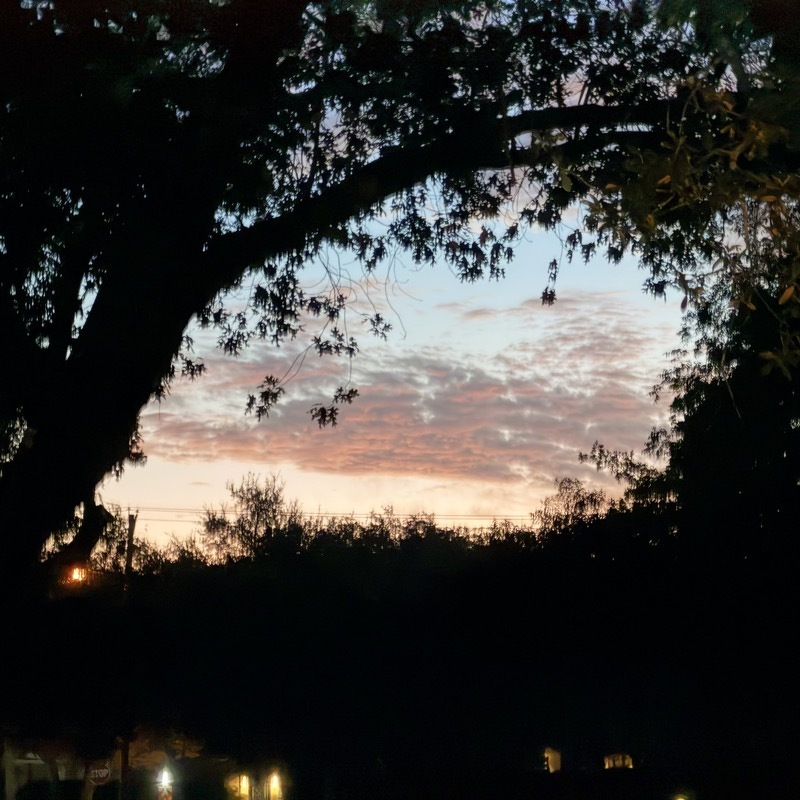
The pre-dawn walk with Angus is one of the best times of my day, especially as I usually listen to the Church of England’s service of Morning Prayer as we walk. This morning’s service was especially lovely.

Yesterday evening as I was setting the table I experienced The Transfiguration of the Watermelon.
Watched: High and Low — for the third time. An absolutely bonkers and absolutely brilliant movie, profoundly influential on everything from Schindler’s List to modern heist movies to any number of animes. 🍿

Currently contemplating: Portfolios of Ansel Adams by Ansel Adams, John Szarkowski. I bought this book in 1982, but this is the first time I’m going through it systematically and very slowly. 📚
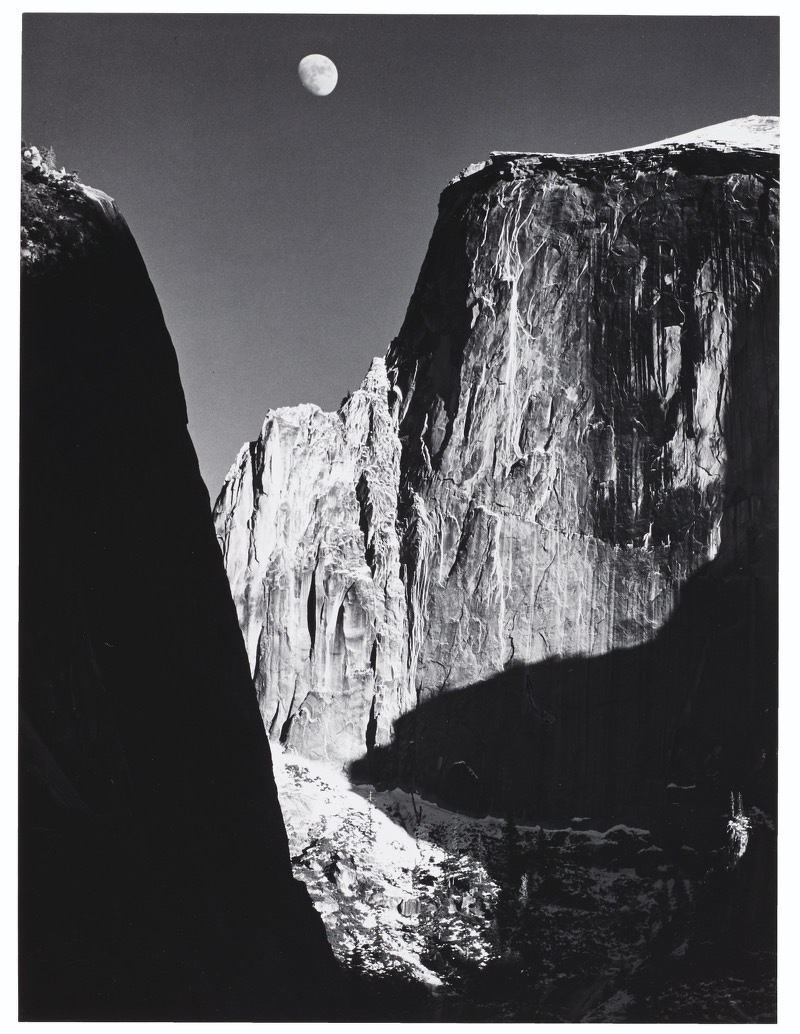
Ansel Adams, Moon and Half Dome (1960). Larger version here, and you have to see the larger version. It’s worth remembering that, as Louise Story wrote some years ago, “Yosemite does not often appear as it did at the moments Adams tripped his shutter. Nor is it easy to stand where he stood and capture the same images.”
Phil Christman:
When I finish reading James on Spencer, as when I finish reading Robinson or David Bentley Hart on Dawkins or Tallis on Dennett or Midgley on everybody, I appreciate again the infinite variety of consciousness, the plurality of its ends. Its excessiveness.&n...
Walking Angus this morning we passed a house with an enormous murder of crows on it, maybe thirty or forty of them, all cawing as loudly as possible. I remembered E. B. White’s poem:
In their assemblies at the edge of town,
Crows introduce resolutions, then vote them down.
How many times in summer, waked early by the mosquito,
Have I lain listening to the crow’s loud veto!
David Hume:
The Separation of the Learned from the conversible World seems to have been the great Defect of the last Age, and must have had a very bad Influence both on Books and Company: For what Possibility is there of finding Topics of Conversation fit for the Entertainm...
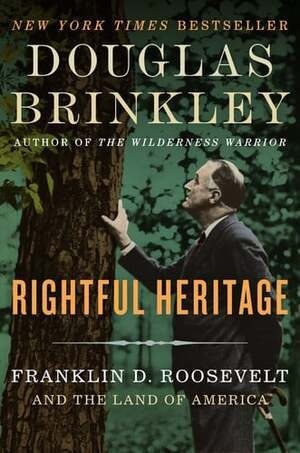
Currently reading: Rightful Heritage: Franklin D. Roosevelt and the Land of America by Douglas Brinkley 📚. Brinkley reports that one Civilian Conservation Corps company in New Mexico had a newsletter called The Woodpecker in which this psalm was featured:
Roosevelt is my shepherd, I shall not want;
He maketh me lie down on straw mattresses,
he leadeth me inside a mess hall,
he restoreth to me a job.
He leadeth me in the paths of reforestation for his country’s sake.
Yea, though I walk through the valley of the shadow of poison oak and ivy,
I will fear no evil, for he is for me.
His blankets and uniforms, they comfort me.
He prepareth a saw and ax before me in the presence of my commanding officer,
my shoes runneth over.
Surely beans and employment will follow me all the days of Roosevelt’s administration
and I shall dwell in a tent forever.

Currently reading: Anna Karenina, for the first time in some years. Endless joys here, and I’m reminded that there’s a certain kind of scene that Tolstoy does uniquely, and wonderfully. Here, for instance, a dinner party at which Levin finds himself encountering Kitty, who ...
Lionel Trilling (1963):
How far from our imagination is the idea of “peace” as the crown of spiritual struggle! The idea of bliss is even further removed. The two words propose to us a state of virtually infantile passivity which is the negation of the "more life" that we crave, the "more life" of spiritual militancy. We dread Eden, and of all the Christian concepts there is none which we understand so well as the felix culpa and the "fortunate fall"; not, of course, for the reason on which these Christian paradoxes were based, but because by means of sin and the fall we managed to get ourselves expelled from that place.
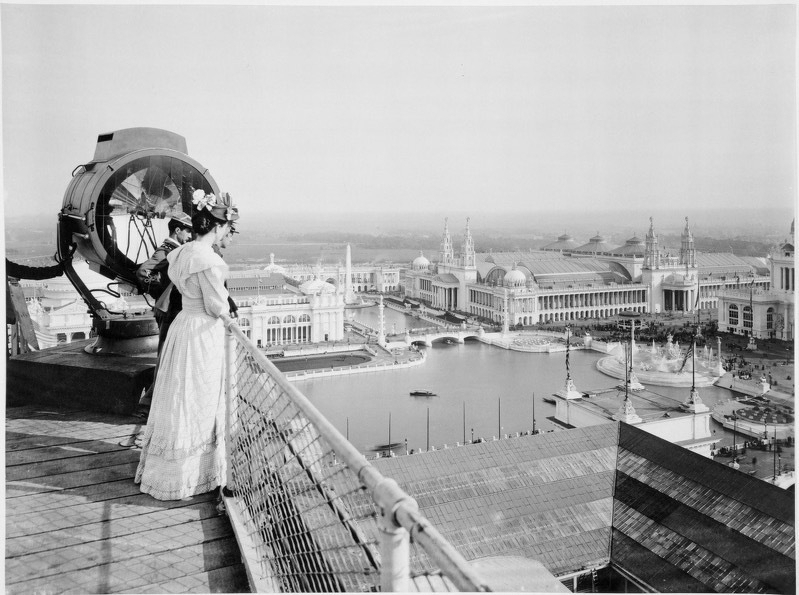
The Court of Honor, World's Columbian Exposition, Chicago, 1893 (Photograph by C. D. Arnold)
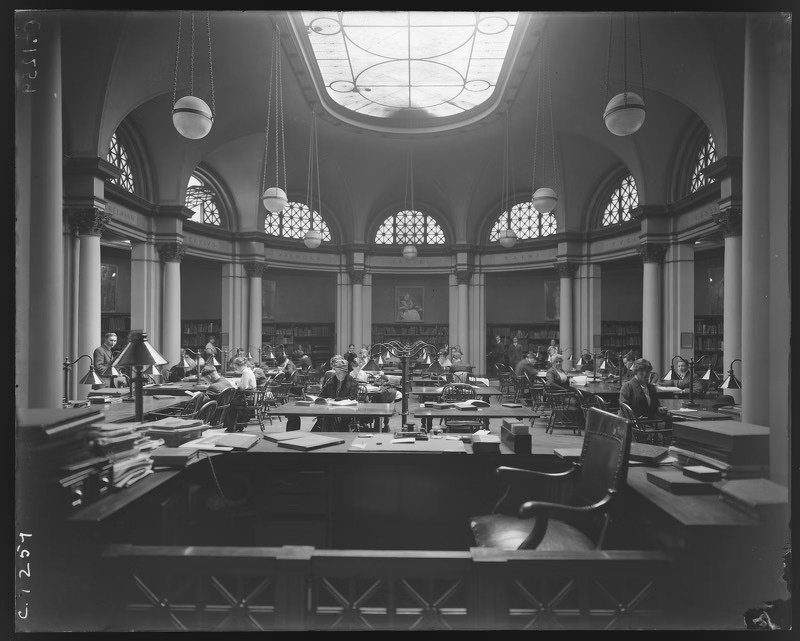
The Franke Reading Room at the Art Institute of Chicago
The CGI in The Magician’s Nephew, as we see it in the trailer, makes the movie look like an ad for Skittles.
This Leo Robson essay on Ralph Ellison is the single dumbest thing I have ever read in the LRB. Only a radically tone-deaf reader could make an assessment this triumphantly condescending: “Invisible Man, for all its intricacies and coiled ironies, has an element of stridency, and Ellison’s pronouncements leave little room for debate about his views.” Robson clearly thinks he’s much smarter than Ellison, and that arrogance makes him a disastrously bad reader of an endlessly complex book — and an endlessly complex person.