Re: the passing of Da Coach, I’m reminded of a story I heard, long ago, from Joseph Epstein. When Epstein taught at Northwestern University, he was colleagues and friends with the great Czech/Jewish emigré scholar Erich Heller, and after Heller moved into a retirement home in Evanston, where he lived among retired electricians and plumbers and CPAs, Epstein would regularly take him out to lunch. During one of those lunches, Heller leaned over to Epstein and in his deep voice quietly asked a question: “Tell me zomezink, Joe. Who is zis … Ditka?”
 Subscribe
- Public lists
- Manton Reece - Blogroll
- Fetched
Austin Kleon wants to know. I know which one I feel like today.
I’m shocked and delighted that Anne Carson has won the Nobel Prize for literature. Back in 2003 I wrote about her translation of Sappho — in the context of her whole remarkable career to that point. And I compared the love poetry of Sappho and Carson alike to the Song of Songs.
Leon Wieseltier:
As Graham Greene reported in his review of [Make Way for Tomorrow] in Night and Day in the summer of 1937, “a sense of misery and inhumanity is left vibrating in the nerves.” The film is a withering criticism of a terrible wrong — and an eloquent vind...
I finally heard from OUP, so I have posted an update to the update. Again: I cannot wait until all this is over.

This exceptionally handsome fella is four years old today!
The Greatest Monument Builders of All Time - The Atlantic:
In place of the heroic proportions and rigidity of royal tradition, statues of Akhenaten emphasized eccentric curves — narrow shoulders, swelling hips, carefully detailed sagging tummy flesh, and a face at once cad...
I continue to believe that Manchester City will suffer no punishment for their cheating. They will appeal and delay, appeal and delay, making every possible use of their nearly endless financial resources, and eventually the whole thing will just fade away. I hope I’m wrong.
My post on what happened with my DLS biography has gotten more attention than I expected or wanted, so I had to write an update. I’ll be glad when all this is over.
C. S. Lewis, from That Hideous Strength:
“And so,” said Straik, “the lessons you learned at your mother’s knee return. God will have power to give eternal reward and eternal punishment.”
“God?” said Mark. “How does He come into it? I don’t believe in God.”
“But, my friend,” said Filostrato, “does it follow that because there was no God in the past that there will be no God also in the future?”
“Don’t you see,” said Straik, “that we are offering you the unspeakable glory of being present at the creation of God Almighty? Here, in this house, you shall meet the first sketch of the real God. It is a man — or a being made by man — who will finally ascend the throne of the universe. And rule forever.”

Wes and I looking out over the Grand Canyon of the Yellowstone (2005). It’s one of those places that doesn’t look real in photographs — but doesn’t look real when you’re there either.

Currently listening: Duke Ellington, Never No Lament: The Blanton-Webster Band. These discs have great healing powers, I’m telling you. 🎵
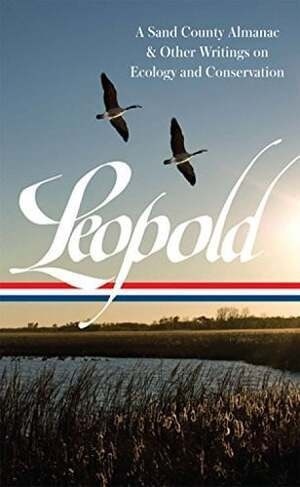
Currently reading: A Sand County Almanac and Other Writings On Ecology And Conservation by Aldo Leopold. Re: Leopold’s “land ethic” and his emphasis on the “biotic community,” I think: I just don’t know how to convince people who care only about money to care even a little bit about anything else. 📚
So how do we understand an intelligence radically different from our own? The same way we understand this phenomenon in dogs: ethology. Ethologists, who study animal behavior, have confronted this problem for decades. They begin with behavior, guided by the core principle that similar behaviors can arise from very different minds.
Nobel laureate Niko Tinbergen argued that understanding behavior requires asking four core questions: What mechanisms produce it? How does it develop? What purpose does it serve? How does it compare across species? Those questions translate well to AI. What computations produce an agent’s behavior? How have changes in its training shaped that behavior over time? What is the behavior designed to accomplish? And how does it compare with that of other forms of intelligence?
Francis Young:
In the end, I do not think Christianity will go the same way as Europe’s pre-Christian religions. Even if you don’t believe it is sustained by divine promises and by God’s grace, Christianity is conceptually resilient to a high degree, and its Scriptures ensu...
If you’re in the Chicago area, there will be performances this weekend at Wheaton College of The Cook-Off, a small comic opera composed by my friend and former colleague Shawn Okpebholo. It’ll be wonderful music in a lovely space.

When I posted this I felt a great weight lifting.
Everybody is talking about Elizabeth Dias’s long report in the NYT on Anthropic and religious scholars, and rightly so. It’s brilliant. Elizabeth (like her Times colleague Ruth Graham) was my student back in the day, so of course I would like to take credit for the excellence of her work … but I can’t. I think she just had one class from me. But still: liberal-arts education FTW!
Adam Nayman’s review of Digger mentions more than thirty — more than thirty — other movies, along with a few TV shows. This hyper-referential style of reviewing was pioneered by Pitchfork in its record reviews, and has now spread everywhere: it’s a giant tumor on online writing. There are whole generations of critics today who can’t describe what they have seen or heard, but only analogize to other things they have seen and heard. It ain’t helpful.
Some have asked, so: I still have no answers to my questions about the non-appearance of the hardcover of my Sayers biography and the flaws in the Kindle version. No answers, no idea when I’ll get answers, no idea when the book will be available. I assume that eventually people will be able to buy the book, but whether that will be next week, next month, or next year I can’t guess. The only person at OUP who has responded seems to believe that my chief concern is that I haven’t received my author’s copies. I corrected this assumption, but there’s been no response since. At the moment I’m still holding to my theory.
This Changes Nothing
That world-transforming, world-shattering, world-saving technology/person/event? The one that “changes everything”? It changes nothing. You're still you, and the same challenges confront you that have always confronted humanity and will always confront humanity. Every week you give yourself a new reason why you now don't have to think about loving your neighbor as yourself, turning the other cheek, doing justly and loving mercy and walking humbly with your God. It’s a crisis! It’s Flight 93! But come on: you're kidding yourself. Everything important is what it was, and wherever you go, there you are. Hey, I get it: All you want is to get off Mr. Bones’ Wild Ride. But it ain't happening. The ride never ends ... until you do.

Finished reading: John Muir: Nature Writings (LOA #92) by John Muir 📚
The poor bit of measured time was soon spent, and while the saddles were being adjusted I again urged Emerson to stay. “You are yourself a sequoia,” I said. “Stop and get acquainted with your big brethre...
John Muir: Nature Writings by John Muir 📚
On the way back to our Tuolumne camp, I enjoyed the scenery if possible more than when it first came to view. Every feature already seems familiar as if I had lived here always. I never weary gazing at the wonderful Cathedral. It h...
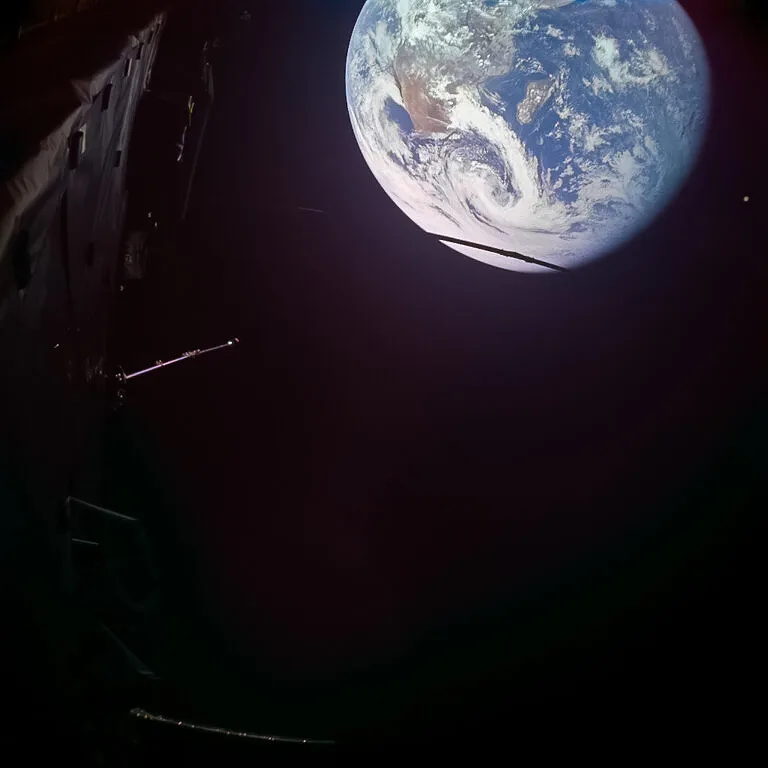
I’m working on an essay about what it means to equip young people for life, and that reminded me of an old post of mine. I should write more about this!
Today in class I was talking about how Auden, in “At the Grave of Henry James,” makes use of the Prayer of Humble Access, and one of my students told me that she had recently, in her choir, been singing a setting of that — which turns out to be quite beautiful. It was composed by Samuel Sebastian Wesley (1810-1876).
If you see me posting more photos than usual, that will be because I am getting to know my new iPhone 18 Pro — my previous model was a 15 — and figuring out what the new version of Halide offers. Halide really is an extraordinary app: I especially admire the various ways it allows the user to bypass Apple’s computational-photography algorithms.