
This explanation of why my Big Blog is called The Homebound Symphony is also a good overview of what I’m trying to do in all my online writing.
 Subscribe
- Public lists
- Manton Reece - Blogroll
- Fetched
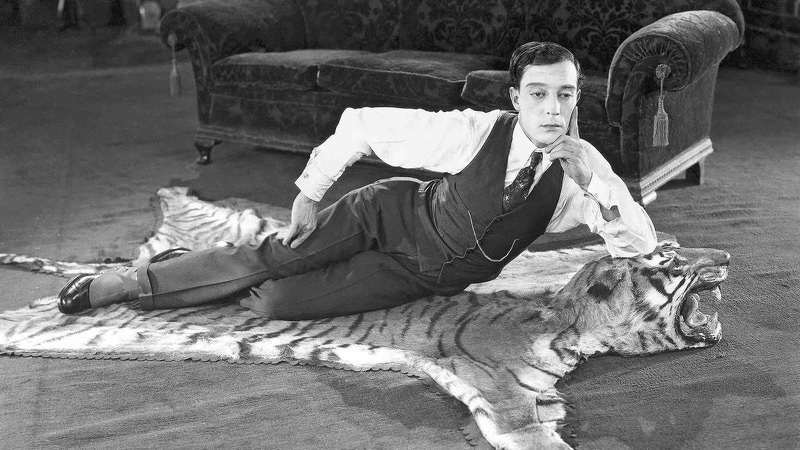
me irl rn
My old internet friend Erin Kissane and I probably have some significant disagreements about electoral politics, but there’s a deeper politics of how human beings communicate with one another about which we are in real agreement. I love the work on our common life she’s been doing ever since the Covid Tracking Project — a great example, by the way, of how anarchic practices can achieve things impossible for our formal political order. Nowadays she’s thinking about clouds and atmospheres‚ literally and metaphorically, and I am tracking carefully.
See also Ruskin on the open skies and on cloud beauty.
This clip of the “worst 20 seconds in football” — from a 1993 QPR-Man City match — is just mesmerizing. The intricacy of the choreography is worthy of a Jackie Chan movie.
Synopsis: Four drug-addled Englishmen are lost, confused, and at one another’s throats until a quiet, friendly Texan comes along to give them new hope and a new sense of purpose. 🍿
Over at Cosmos Malick: The Girl’s Story.

A shipwreck with a great deal of champagne (and other things)
I’m teaching a class this term called Four Big Books. I describe it here.
Interviewed by Ezra Klein, the political consultant Morris Katz notes one major factor making it difficult for genuinely grass-roots political candidates to emerge and succeed: the precipitous decline in local journalism. If a candidate says that people in his or her area ca...
In Latin, H was “ha,” and K as “ka” came after it. People reciting the alphabet would say “ha, ka, el ….” But Latin didn’t really need the K, because C did its job. (Caesar was pronounced “KIGH-sar.”) So people started thinking of “ha, ka” as referring just to H and saying “haka.” Heavy usage transforms pronunciation. “Haka” dropped the “H” at the start like Eliza Doolittle was taught out of in her “Hertford, Hereford and Hampshire” exercise — “aka.” Then the K changed to a “ch” — “ahcha” — and the A at the end dropped off — “ahch.” Then the “ah” changed to “ay” and hence “aitch”! We should really be calling H something like “hay.” But hey, we don’t — and the world keeps spinning.
"So, Professor Jacobs, what do you work on during your summer break?”
“Well, mainly I watch Jackie Chan movies.” 🍿
A new entry in my ongoing series of posts on religion, the Bible, and the movies: this one on how that earnest purveyor of Biblical epics, Cecil B. DeMille, put more skin on the screen than any other Hollywood director and forced the creation of the Hays Code.
A random snapshot taken in Central Park in 2008 — with the original iPhone. Funny how lo-res digital imagery now has a nostalgic aura.

Watching Stray Dog, the chief experience I have is a feeling of immense gratitude for air-conditioning. The film takes place during a brutal Tokyo heatwave (indeed it was filmed in those conditions) and everyone sweats rivers throughout. 🍿
At the end of Tarkovsky’s Solaris we see Kris returning to his father’s house — the place where we had first seen him in the opening seconds of the movie. Shortly after that opening we had heard Kris’s father tell a friend that he had built that house in imitation of another house he liked; and now, at the end, the camera pulls back from Kris and his father to show that the concluding events of the story are not taking place in a Russian dacha but rather on a tiny island in the great ocean of the planet Solaris. We might also reflect that the house being filmed is a set in a movie. So what we’re seeing as the film concludes is a simulacrum of a simulacrum of an imitation of a fictional house. 🍿
By dominating the digital world, Silicon Valley has already exerted indirect control over the physical one. Today’s data-center build-out is a whole new beast. From the most concrete aspects — cooling, power, land — to the most abstract financial instruments, AI has morphed into a heavy industry.
And needs to be regulated as such.
The second entry in my series of essays on the ongoing interest in the Second World War is now up.
Kaiju IPO:
Initiating Psychic
Obliteration.
When you need a good album to cook to, I highly recommend Dusty in Memphis.
Five minutes from snooze.

Comment’s Seedbeds of Christian Humanism gallery is a wonderful resource.
Watched: Room 999. This revisiting of Wim Wenders’s 1982 documentary Room 666 is often interesting and sometimes fascinating. (It must be said that not all filmmakers are especially articulate about what they do — this is evident in the original film as well.) Perhaps the comment that strikes me most forcibly is when Audrey Diwan wonders what will happen to her children’s sense of narrative when all the stories they experience are less than a minute long. And this is something to be concerned about. Many of the most important things in our lives develop over years; will people be capable of reckoning wisely with their experience if the only stories they know reach a resolution in 60 seconds? 🍿
I wrote a lengthy, passionate evisceration of everything about that disgraceful exhibition — by which I mean both the anti-football and the anti-entertainment surrounding it — and then deleted it. There are things one has to write that one does not have to post. ⚽️
In fact, I’m reconsidering my footy fandom. Eight-five minutes in and anyone showing up now will have missed absolutely nothing. ⚽️ 🇦🇷 🇪🇸
Update: Extra time and I am extra done. I don’t care any more. Time to watch a guitar repair video or some such.
A good many of the people who have become soccer fans in the last few weeks are probably reconsidering right about now. ⚽️ 🇦🇷 🇪🇸
When I follow a link to X or another social network, I inevitably see people slinging abuse at one another in the comments, and think: You’re still doing this? After all these years? I left Twitter a decade ago just to avoid such sniping. I guess the people still doing it must like it. I can’t even.
Hard to think of a cooler nickname in all of history than the Finnish farmer-turned-sniper known as the White Death.
Why Am I Left-Handed? | Natalie Wolchover:
Being left-handed is mostly no big deal. It is annoying how ink smudges under my hand. And I did once have to jump out of the way of a circular saw that I was holding backward; indeed, left-handers have more accidents while operati...
My hope for the World Cup final: that it also ends 6-4, with four goals for Messi and goals by six different Spaniards. ⚽️ 🇦🇷 🇪🇸
Dear Me, England - by Ian Leslie:
To be a longstanding England supporter is to glimpse life inside Nietzche’s concept of eternal recurrence: “This life as you now live it and have lived it, you will have to live once more and innumerable times more; and there will be nothing new in it, but every pain and every joy and every thought and sigh and everything unutterably small or great in your life will have to return to you, all in the same succession and sequence.”
The pattern with which we’re most familiar, having seen it in tournament after tournament, is the siege defence. It’s as if our players are unconsciously drawing on collective memories of Mafeking and Dunkirk; on stories of an island people repelling invaders. The wonder is that each generation of players seems to absorb the English script and to perform it convincingly.