
Francis Young:
In the end, I do not think Christianity will go the same way as Europe’s pre-Christian religions. Even if you don’t believe it is sustained by divine promises and by God’s grace, Christianity is conceptually resilient to a high degree, and its Scriptures ensu...
 Subscribe
- Public lists
- Manton Reece - Blogroll
- Fetched
If you’re in the Chicago area, there will be performances this weekend at Wheaton College of The Cook-Off, a small comic opera composed by my friend and former colleague Shawn Okpebholo. It’ll be wonderful music in a lovely space.

When I posted this I felt a great weight lifting.
Everybody is talking about Elizabeth Dias’s long report in the NYT on Anthropic and religious scholars, and rightly so. It’s brilliant. Elizabeth (like her Times colleague Ruth Graham) was my student back in the day, so of course I would like to take credit for the excellence of her work … but I can’t. I think she just had one class from me. But still: liberal-arts education FTW!
Adam Nayman’s review of Digger mentions more than thirty — more than thirty — other movies, along with a few TV shows. This hyper-referential style of reviewing was pioneered by Pitchfork in its record reviews, and has now spread everywhere: it’s a giant tumor on online writing. There are whole generations of critics today who can’t describe what they have seen or heard, but only analogize to other things they have seen and heard. It ain’t helpful.
Some have asked, so: I still have no answers to my questions about the non-appearance of the hardcover of my Sayers biography and the flaws in the Kindle version. No answers, no idea when I’ll get answers, no idea when the book will be available. I assume that eventually people will be able to buy the book, but whether that will be next week, next month, or next year I can’t guess. The only person at OUP who has responded seems to believe that my chief concern is that I haven’t received my author’s copies. I corrected this assumption, but there’s been no response since. At the moment I’m still holding to my theory.
This Changes Nothing
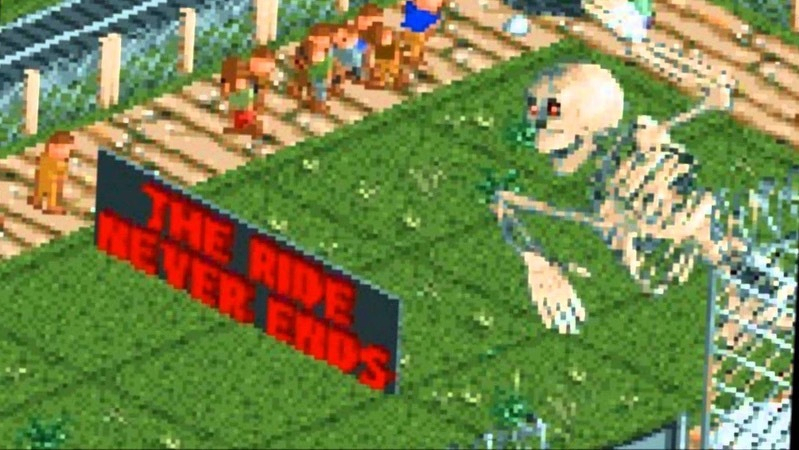
That world-transforming, world-shattering, world-saving technology/person/event? The one that “changes everything”? It changes nothing. You're still you, and the same challenges confront you that have always confronted humanity and will always confront humanity. Every week you give yourself a new reason why you now don't have to think about loving your neighbor as yourself, turning the other cheek, doing justly and loving mercy and walking humbly with your God. It’s a crisis! It’s Flight 93! But come on: you're kidding yourself. Everything important is what it was, and wherever you go, there you are. Hey, I get it: All you want is to get off Mr. Bones’ Wild Ride. But it ain't happening. The ride never ends ... until you do.
Finished reading: John Muir: Nature Writings (LOA #92) by John Muir 📚
The poor bit of measured time was soon spent, and while the saddles were being adjusted I again urged Emerson to stay. “You are yourself a sequoia,” I said. “Stop and get acquainted with your big brethre...
John Muir: Nature Writings by John Muir 📚
On the way back to our Tuolumne camp, I enjoyed the scenery if possible more than when it first came to view. Every feature already seems familiar as if I had lived here always. I never weary gazing at the wonderful Cathedral. It h...
I’m working on an essay about what it means to equip young people for life, and that reminded me of an old post of mine. I should write more about this!
Today in class I was talking about how Auden, in “At the Grave of Henry James,” makes use of the Prayer of Humble Access, and one of my students told me that she had recently, in her choir, been singing a setting of that — which turns out to be quite beautiful. It was composed by Samuel Sebastian Wesley (1810-1876).
If you see me posting more photos than usual, that will be because I am getting to know my new iPhone 18 Pro — my previous model was a 15 — and figuring out what the new version of Halide offers. Halide really is an extraordinary app: I especially admire the various ways it allows the user to bypass Apple’s computational-photography algorithms.

Number of people living within a 60-mile radius (or one-hour drive) of Waco: approximately 600,000.
Number of people living within a 120-mile radius (or two-hour drive) of Waco: approximately 12,000,000.
As Cosmos Malick: More on the way Malick seeks life in his films.
I have a theory
Here are the relevant facts:
Oxford University Press USA is a “crossover” publisher, which means that they’re an academic press but they publish many books meant to have some trade success also, e.g. showing up in the local Barnes & Noble.
But OUP UK, with w...
I’m still trying to discover (a) why no copies of my book were available in the U.S. on pub day; (b) why, if no copies of the book would be available on pub day, pub day was not delayed until they were available; (c) why nobody at OUP bothered to tell me that my book would not be available on pub day; (d) when copies of my book are likely to be available; (e) why the Kindle edition of the book is in gray e-ink, something not true of any of the hundreds of other books I have ever read on Kindle; (f) whether the Kindle edition can be fixed and, if so, when. I have no answers to any of these questions and no clear indication of when, or indeed whether, I will get answers.
It’s been a rough day, so: whisky, chocolate, Sinatra. 🎵
Turns out that this is not really the publication date for my book at all. See the update here. I am a pretty unhappy camper.
It’s pub day for my biography of Dorothy L. Sayers! Sayers is a fascinating person and I had a wonderful time writing about her. For this one week I’m gonna emerge from my social-media Faraday cage and be prepared to answer questions, here and at my Buy Me a Coffee site. (I’m not turning up on X or BlueSky. I’m no hero.)
Related: When I was writing the book I often posted on DLS-related things that I couldn’t fit into the final version.
UPDATE: Maybe I should think of my actual pub date as the day when Amazon next has the book in stock. Sigh. Maybe there were more pre-orders than Amazon and OUP had expected? That’s a consoling thought. But I suspect that there has been a delay in the manufacturing process, because I haven’t received my author’s copies either. Basically, at this point the book exists only digitally.
I’ve been suffering from eyestrain, so for my evening reading have turned to Stephen Fry narrating the Sherlock Holmes stories, which ranks as one of the three best narrations I have ever heard, the other two being Fiona Shaw’s The Mill on the Floss and Andy Serkis’s The Lord of the Rings. Spot-on in all respects: Simon Callow’s review of Fry’s Holmes. 📚🎧
Paul Chan:
Sometime during the mid-2010s, I noticed photographers, videographers, and artists of all kinds referring to what they made as “content,” as opposed to photos, videos, or art. The case was the same with writers: Blog posts, essays, and articles were lumped togeth...
When AI can mute my TV during commercials and unmute it when the show/game comes back on, I’ll be all in. Not until.
As we’re seeing more and more sophisticated robot/drone warfare, I find myself wondering whether the next step is what Adam Roberts described in his fabulous 2010 novel New Model Army — which I wrote about here.
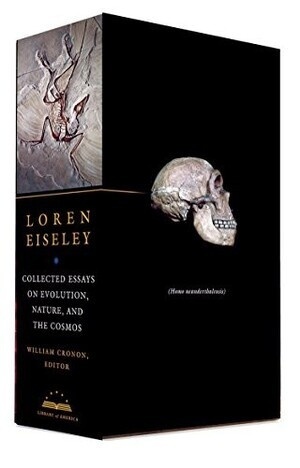
Currently reading: Loren Eiseley : Collected Essays on Evolution, Nature, and the Cosmos by Loren Eiseley. I’ve written occasionally over the years — here for instance — about how much Eiseley has meant to me since I discovered him at age fifteen or thereabouts. But how did I discover him? I well remember: He was quoted occasionally in Intelligent Life in the Universe, a 1966 book by I. S. Shklovskiĭ and Carl Sagan, which I borrowed from the East Lake Public Library in Birmingham, Alabama. That’s the kind of person I was at age fifteen. 📚
Whenever an organization says “There is no place for XYZ in this organization” or “We have zero tolerance for XYZ” the proper translation is: “Making this statement is all we’re going to do about XYZ, and you’ll just have to deal with it.”
I decided a couple of weeks ago that I needed to write a biggish essay on what it means to me to be a Southerner. Since then I’ve struggled with it. Today I decided I needed to post it. Think of this not as a completed work but as one abandoned in public.
Currently reading: Loren Eiseley : Collected Essays on Evolution, Nature, and the Cosmos by Loren Eiseley. I’ve written occasionally over the years — here for instance — about how much Eiseley has meant to me since I discovered him at age fifteen or thereabouts. But how did I discover him? I well remember: He was quoted occasionally in Intelligent Life in the Universe, a 1966 book by I. S. Shklovskiĭ and Carl Sagan, which I borrowed from the East Lake Public Library in Birmingham, Alabama. That’s the kind of person I was at age fifteen. 📚