
Middlemarch:
Dorothea’s impetuous generosity, which would have leaped at once to the vindication of Lydgate from the suspicion of having accepted money as a bribe, underwent a melancholy check when she came to consider all the circumstances of the case by the light of Mr. F...
 Subscribe
- Public lists
- Manton Reece - Blogroll
- Fetched
As I remarked, my current work concerns the development of folk horror, and in that process, the whole Margaret Murray phenomenon is critical. Crucially, the theory (which endured powerfully into the 1970s) allowed modern writers to imagine ancient pagan cults surviving today, and entrapping unwary urban visitors. Whatever he actually intended, Robert Kirk offered a superb manual for such literature, with his entrancing portrait of those fairies in the adjacent realm, into which modern people could easily slip. Adding witchcraft to the mix created a very tempting brew indeed. Kirk offered later writers almost a pre-written script.
I’m so glad Philip is turning to this — it’s something he’s thought about for years and years. It will be interesting to see how his work compares to that of Francis Young.

Hi.
PSA: I will post nothing further about AGI/machine learning. I will read nothing further on the topic (and am purging my RSS feed accordingly). I have other and better things on my mind and heart.

Finished reading: Middlemarch by George Eliot — for maybe the twelfth time. As I grow older and older, it grows greater and greater. 📚
Ring Rhyme in Latin - by Adam Roberts: “In terra Mordoris tenebrosissima” is especially fine.
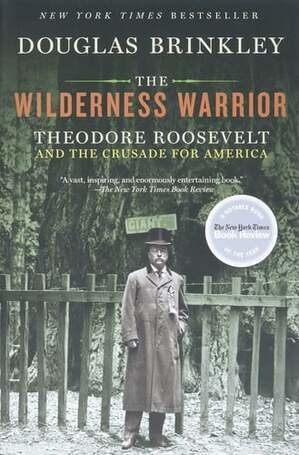
Finished reading: The Wilderness Warrior: Theodore Roosevelt and the Crusade for America by Douglas Brinkley. One-third of this massive book concerns the personal and political life of TR; one-third concerns his astonishing achievements in the conservation of the American landscape and its creatures; and one-third describes his killing of animals, thousands of animals. It often seems that TR wanted to protect the willdlife of American from everyone except him and his friends. His bloodlust was a kind of mania, and Brinkley can do nothing (who could?) to explain how it co-existed with his lifelong commitment to protect wild animals and their environments. 📚
Teddy again:
Birds should be saved because of utilitarian reasons; and, moreover, they should be saved because of reasons unconnected with any return in dollars and cents. A grove of giant redwoods or sequoias should be kept just as we keep a great and beautiful cathedral. ...
I have mixed feelings about the last decade of Beatles remixes, but this new version of Rubber Soul is AMAZING, especially on a good pair of headphones. 🎵
Louis Menand:
[Sarah L.] Kaufman has a favorite sentence that serves as a touchstone. It’s the last sentence of “The Great Gatsby,” and I bet you do know this one: “So we beat on, boats against the current, borne back ceaselessly into the past.” She grows eloquent on the ma...
A mini-manifesto from my Anarchist Notebook:
I am temperamentally and morally a conservative, which is to say: I believe that I am charged with preserving my inheritance, nurturing it, and passing it along to the next generation. That inheritance is spiritual, cultural, nat...
Ordinary photos of ordinary things on an ordinary Sunday morning.
Theodore Roosevelt:
Defenders of the short-sighted men who in their greed and selfishness will, if permitted, rob our country of half its charm by their reckless extermination of all useful and beautiful wild things sometimes seek to champion them by saying that “the game b...
You park your car at the top of a hill. You leave a note on the dashboard that says “please be good” and then you pull the parking brake. The car careens down the hill, smashes everything up, and you put out a press release saying “My car ignored my instructions! It hallucinated! It went rogue!” Your insurance company not only believes you, but invests $100 million in your company.
Via kfitz. One mild improvement in the recent discourse: the widespread scoffing at the “going rogue” explanation. The bots are behaving as designed and instructed.
Think of this not as a political post but a sociological one. What follows is anecdotal but noteworthy.
Here in Waco, I have seen hundreds of Talarico signs in people’s front yards, but not one Paxton sign. And for the past couple of weeks I’ve been looking hard! ...
Re: the passing of Da Coach, I’m reminded of a story I heard, long ago, from Joseph Epstein. When Epstein taught at Northwestern University, he was colleagues and friends with the great Czech/Jewish emigré scholar Erich Heller, and after Heller moved into a retirement home in Evanston, where he lived among retired electricians and plumbers and CPAs, Epstein would regularly take him out to lunch. During one of those lunches, Heller leaned over to Epstein and in his deep voice quietly asked a question: “Tell me zomezink, Joe. Who is zis … Ditka?”
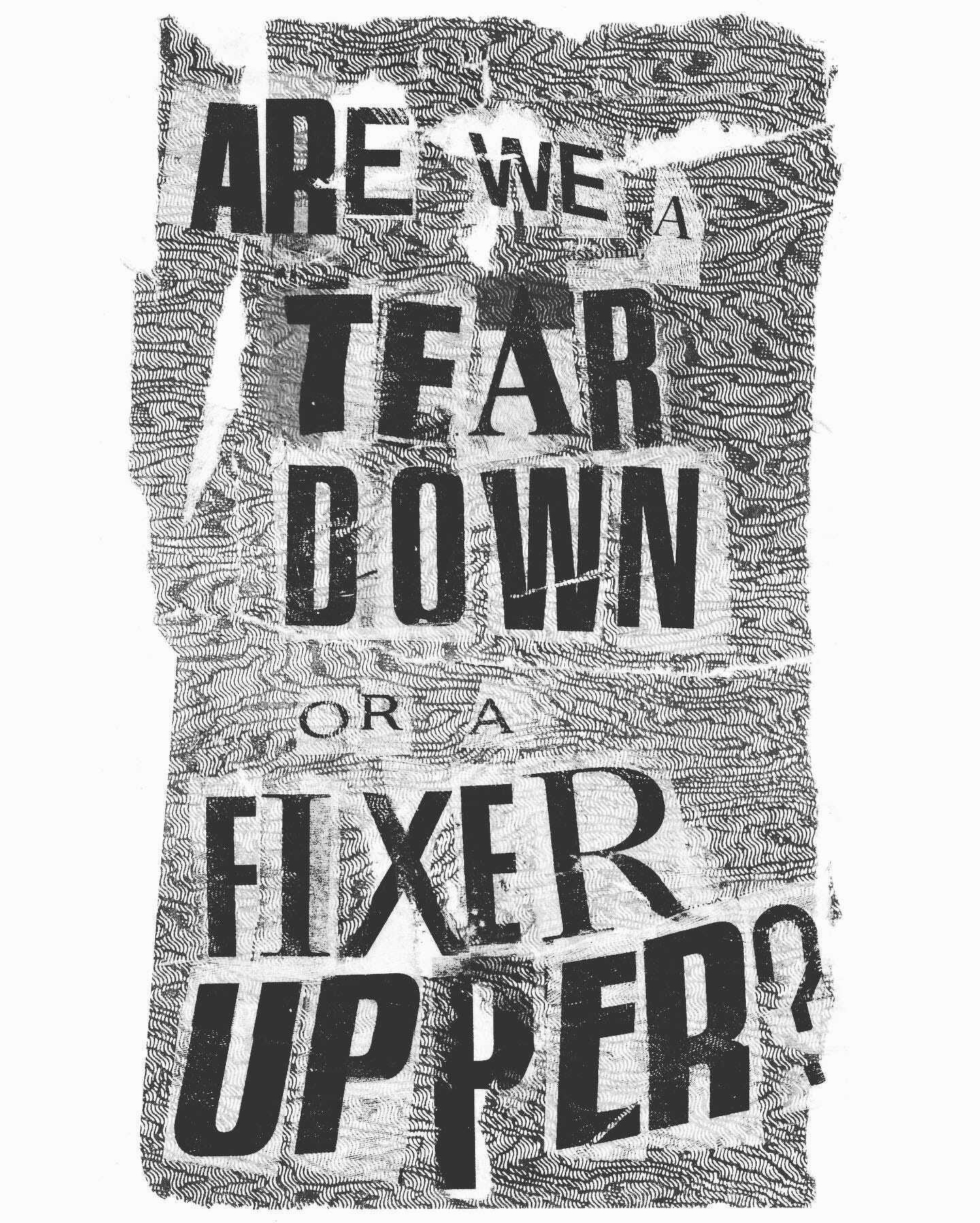
Austin Kleon wants to know. I know which one I feel like today.
I’m shocked and delighted that Anne Carson has won the Nobel Prize for literature. Back in 2003 I wrote about her translation of Sappho — in the context of her whole remarkable career to that point. And I compared the love poetry of Sappho and Carson alike to the Song of Songs.
Leon Wieseltier:
As Graham Greene reported in his review of [Make Way for Tomorrow] in Night and Day in the summer of 1937, “a sense of misery and inhumanity is left vibrating in the nerves.” The film is a withering criticism of a terrible wrong — and an eloquent vind...
I finally heard from OUP, so I have posted an update to the update. Again: I cannot wait until all this is over.

This exceptionally handsome fella is four years old today!
The Greatest Monument Builders of All Time - The Atlantic:
In place of the heroic proportions and rigidity of royal tradition, statues of Akhenaten emphasized eccentric curves — narrow shoulders, swelling hips, carefully detailed sagging tummy flesh, and a face at once cad...
I continue to believe that Manchester City will suffer no punishment for their cheating. They will appeal and delay, appeal and delay, making every possible use of their nearly endless financial resources, and eventually the whole thing will just fade away. I hope I’m wrong.
My post on what happened with my DLS biography has gotten more attention than I expected or wanted, so I had to write an update. I’ll be glad when all this is over.
C. S. Lewis, from That Hideous Strength:
“And so,” said Straik, “the lessons you learned at your mother’s knee return. God will have power to give eternal reward and eternal punishment.”
“God?” said Mark. “How does He come into it? I don’t believe in God.”
“But, my friend,” said Filostrato, “does it follow that because there was no God in the past that there will be no God also in the future?”
“Don’t you see,” said Straik, “that we are offering you the unspeakable glory of being present at the creation of God Almighty? Here, in this house, you shall meet the first sketch of the real God. It is a man — or a being made by man — who will finally ascend the throne of the universe. And rule forever.”

Wes and I looking out over the Grand Canyon of the Yellowstone (2005). It’s one of those places that doesn’t look real in photographs — but doesn’t look real when you’re there either.

Currently listening: Duke Ellington, Never No Lament: The Blanton-Webster Band. These discs have great healing powers, I’m telling you. 🎵
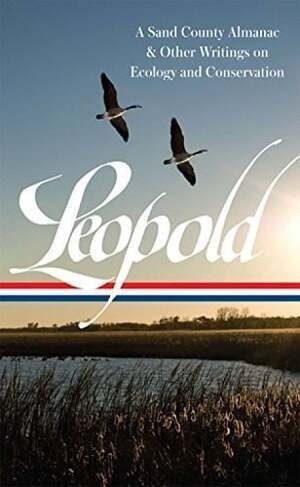
Currently reading: A Sand County Almanac and Other Writings On Ecology And Conservation by Aldo Leopold. Re: Leopold’s “land ethic” and his emphasis on the “biotic community,” I think: I just don’t know how to convince people who care only about money to care even a little bit about anything else. 📚
So how do we understand an intelligence radically different from our own? The same way we understand this phenomenon in dogs: ethology. Ethologists, who study animal behavior, have confronted this problem for decades. They begin with behavior, guided by the core principle that similar behaviors can arise from very different minds.
Nobel laureate Niko Tinbergen argued that understanding behavior requires asking four core questions: What mechanisms produce it? How does it develop? What purpose does it serve? How does it compare across species? Those questions translate well to AI. What computations produce an agent’s behavior? How have changes in its training shaped that behavior over time? What is the behavior designed to accomplish? And how does it compare with that of other forms of intelligence?