


Google Chrome, nice browser, but it doesn’t support the web.
We just hit a milesone in Atlantis. We have WebSocket support, client and server. We made a client that listens to the FeedLand stream of new and updated posts. Still waiting to see if that works. But when I started to write the code for this test app last year, I realized a...

Tuesday session

Tuesday session

Sunset
Frozen light yellow clouds hover under a grey sky, illuminated by the horizon sun.
⁂ ⁂ ⁂
“I have never seen the sky like that before”, I thought to myself while gazing with my whole mind and body in wonder. Fluffy yellow clouds under grey clouds?
The colours of the sky ha...
This is the era of very powerful bozos.

Fascinating online magazine from Microsoft. Looks like some thoughtful essays in this:
The Humanist Review of AI is a quarterly publication funded by Microsoft AI. We bring together thinkers from different fields to explore the impact of AI on society
Great start to FediForum. Really enjoyed Anil Dash’s talk, and now Daniel Holmgren is just wrapping up on AT Proto Spaces. Lots more for me to dig into with Spaces.
Toni Schneider revealed that Bluesky is trying to make a .bsky top-level domain. Interesting strategy. Hopefully they can monetize this while keeping it open for anyone to use, like Automattic did with .blog.
Lake Of Souls by Ann Leckie
In some ways, the short story is the ideal format for science fiction. If science fiction is all about ideas, a short story is a way to take an idea and play it out without any obligation to build a bigger world around it.
But short stories can work the other way too. If yo...
Why don’t more developers “use the platform”? | Read the Tea Leaves
nolanlawson.com/2026/10/03/why-dont-more-developers-use-the-platform/
Thought-provoking musings from Nolan.

ArtLung
• Joe Crawford
Quote of the Day: on what Iran could do
They could take out a city. Let them take out Los Angeles. Let them take out San Diego. This is a very small price to pay. Trump suggests he would let Iran ‘take out’ Los Angeles or San Diego (As a person who resides in San Diego, I disagree)
This hue shall pass | Colour contrast checker by Clearleft
My Clearleft colleagues have made this tool to check if your colour palette has enough contrast to be accessible.
But let’s face it, the best part is the name—chef’s kiss!
This hue shall pass is an accessibility tool that helps you review and refine your brand’s digital colour palette. It shows you a matrix of all possible colour combinations and which ones pass or fail your accessibility criteria. It then helps you make adjustments to unlock more usable combinations.
I know I’m late to the party, but I’m getting into listening to Golden from KPop Demon Hunters. Catchy. “We’re going up, up, up, it’s our moment…” 🎶
Rewrote the CSS editor in Micro.blog. Much better now, with nicer colors. Here’s a screenshot.
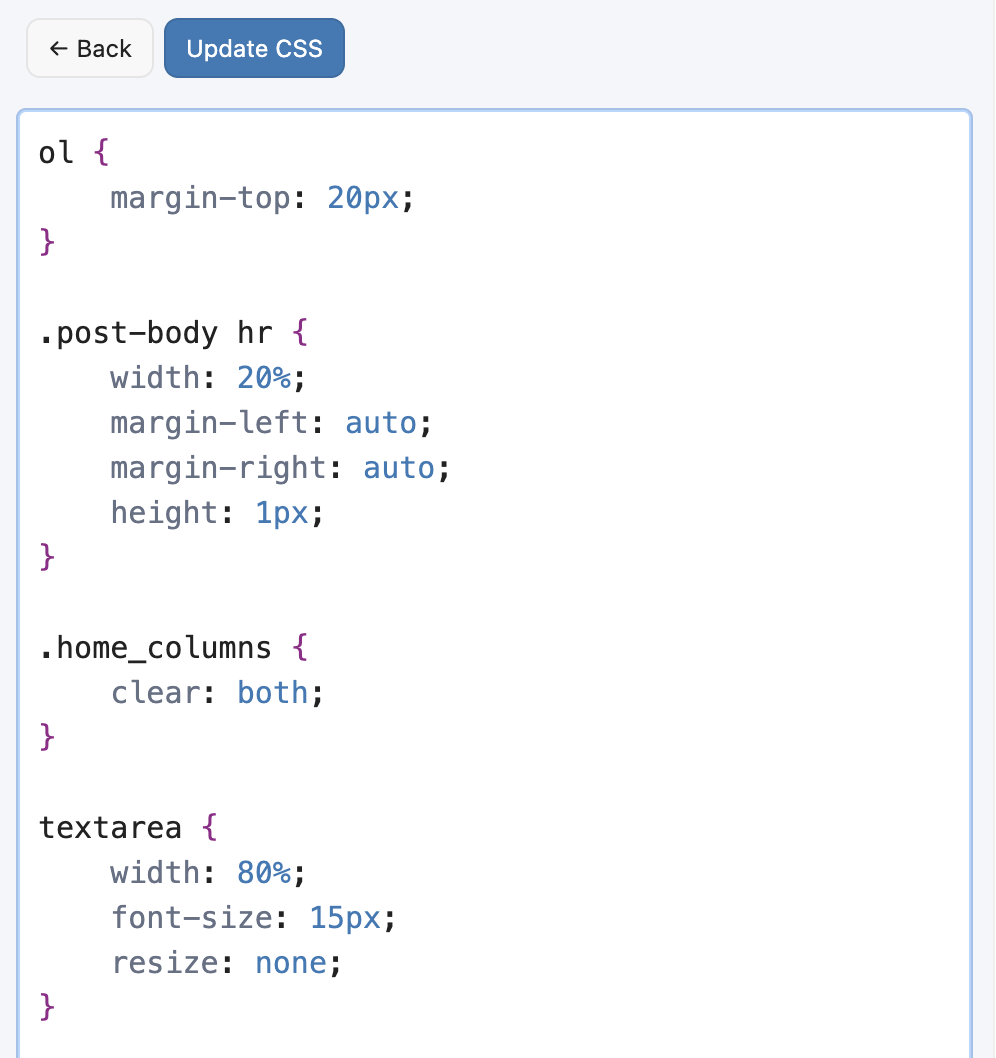
I feel like I’m drowning in managing multiple app releases, so I’m trying something new: letting AI (my OpenAI dot for now) update a single releases.md document that has high-level notes about what has shipped recently and what’s being worked on. Making it public because it might be interesting.
If you spend 45 minutes a day angry at strangers online, you’ll give them about 270 hours this year. That’s nearly seven full 40-hour work weeks, handed to people you’ll never meet, about events you can’t change.
Sobering. 🙁
Perhaps as the value of individual apps decreases, with many more apps being released, the value of complex systems will go up. It’s still relatively hard to build and run a platform that combines many different services and databases.
Reading The Mountain In The Sea by Ray Nayler.
Reading The Mountain In The Sea by Ray Nayler.

Matt Mullenweg
• Matt
Beeper MCP
Fellow Automattician Job Thomas, down in Cape Town, South Africa, has a lovely story about using Claude and the Beeper MCP to wrangle all the group chats for his daughter’s sports.
ArtLung
• Joe Crawford
3.3 sessions per week
I got an email from Dawn Patrol (dawnpatrol.cloud) HERE IS YOUR MONTHLY SURF SUMMARY SEPTEMBER 14 sessions That makes 3.3 sessions per week 363 waves That is an average of 25.9 waves per session 378 feet was the length of your longest wave this month. On Fri Sep 11 2026 at Ocean Beach. Your total...