Imperial Garden Seafood Restaurant, a longtime dim sum destination and San Francisco Legacy Business, will serve its last meal Dec. 31.

The San Francisco Standard
• Paolo Bicchieri

The San Francisco Standard
• Paolo Bicchieri
Imperial Garden Seafood Restaurant, a longtime dim sum destination and San Francisco Legacy Business, will serve its last meal Dec. 31.
The San Francisco Standard
• Jessica Blough
San Francisco has staked its downtown recovery on retail and foot traffic. A technology company thinks a ‘regenerative urban energy center’ could fit in.
The San Francisco Standard
• Jane Kenny
Other Golden State scorers must step up if the team hopes to knock off the Atlanta Dream and win the WNBA Finals.
The San Francisco Standard
• Tim Kawakami
In the wake of this up-and-down performance, Kyle Shanahan’s team provided even more evidence that it absolutely can win the Super Bowl this season.
The San Francisco Standard
• David Lombardi
From Trent Williams to George Kittle, the most experienced players in the locker room were gushing about the way the 2026 draft class closed out a victory.
Brewster Kahle argues against news sites blocking the Internet Archive from archiving their sites. “Impeding the Wayback Machine’s preservation work will not prevent powerful AI companies from gathering training data.”
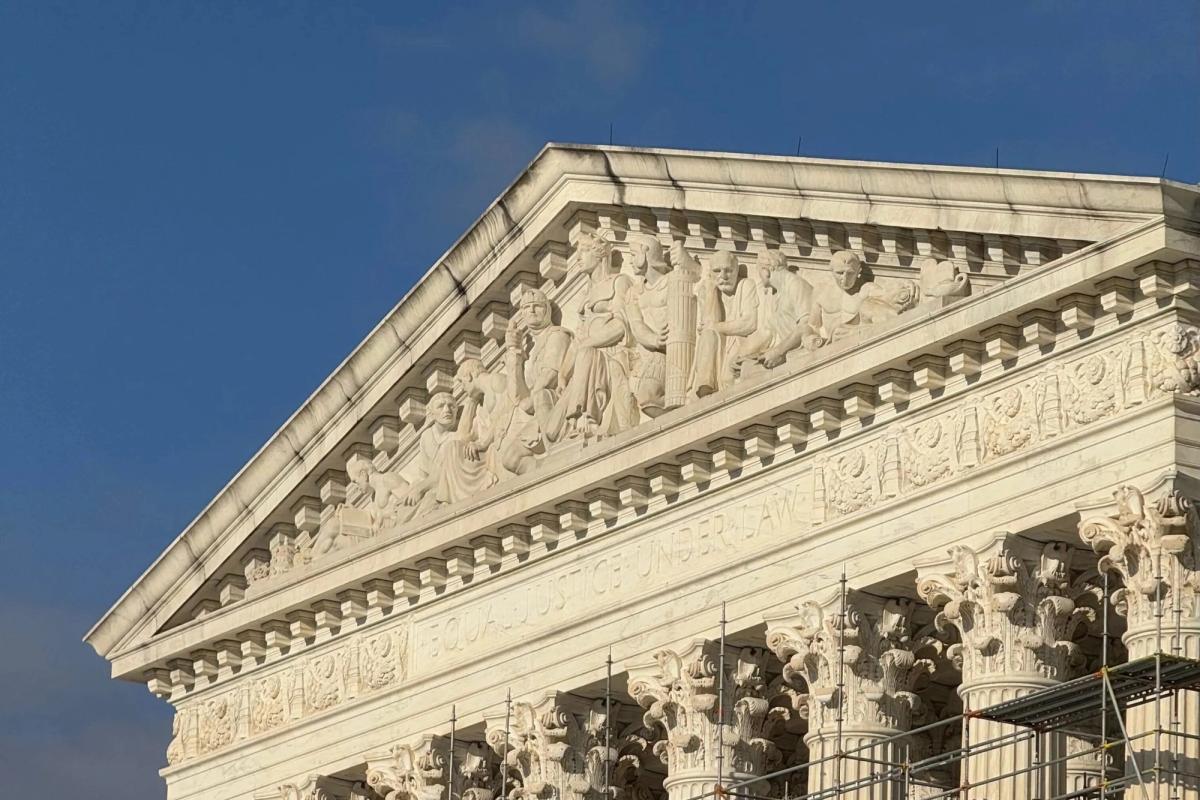
SCOTUSblog
• Kelsey Dallas, Blake Fox
Scientists have uncovered a surprising reason why statins, the widely prescribed cholesterol-lowering drugs that help prevent heart attacks and strokes, can sometimes cause muscle pain, weakness, and even severe muscle damage. Using advanced imaging technology, researchers discovered that statins can attach to a crucial protein in muscle cells and force open a channel that normally controls calcium flow. This causes calcium to leak continuously, potentially damaging muscle tissue.
A new study reveals that improved hurricane forecast graphics may help people identify threatened areas without making them more likely to recognize the danger or take protective action. Researchers also found that a widespread misunderstanding of the hurricane cone persists, highlighting a potentially dangerous gap between accurate forecasts and public preparedness.
Scientists have achieved a major breakthrough in understanding the Universe’s earliest moments, measuring the amount of helium formed in the first five minutes after the Big Bang with unprecedented precision. Using one of the world’s most powerful telescopes, an international team studied 15 remarkably pristine galaxies that act as cosmic time capsules, preserving clues from nearly 13.8 billion years ago.
A surprising clinical trial suggests that taking vitamin C daily could improve survival in people with precancerous blood disorders and early-stage blood cancers. Patients receiving the supplement had fewer adverse events and showed a promising survival advantage, raising hopes that a common vitamin could help protect against leukemia-related complications.
Scientists have identified the “fattest” belemnite ever discovered, a bizarre, barrel-shaped squid relative that lived in Wyoming’s ancient seas 160 million years ago. The exceptionally rare fossils reveal a creature unlike anything previously known, potentially a predator of smaller squid-like animals and a surprising survivor of a supposedly vanished family.
The aging brain may be undergoing a remarkable transformation rather than simply losing its abilities, shifting its focus from remembering details to understanding the bigger picture. Scientists suggest this change could be an evolutionary adaptation that helps older adults develop wisdom and share decades of knowledge with younger generations.
Scientists have found a promising way to protect the brain from Alzheimer’s-related damage by blocking immune cells that contribute to the destruction of neurons. In mice, the treatment preserved roughly 40% more tissue in memory centers and improved memory, even without removing harmful tau protein buildup.
Scientists have discovered a natural compound that targets dangerous C. difficile bacteria without wiping out the gut's beneficial microbes. Successful early tests suggest it could lead to a gentler, more effective treatment for stubborn intestinal infections that frequently return.
NASA scientists have finally uncovered why asteroid Bennu loses heat so quickly despite being covered in massive boulders. Samples returned to Earth reveal that its rocks are filled with hidden cracks, solving a mystery that has puzzled researchers for years.
Researchers discovered that recurring arthritis triggered by cancer immunotherapy may be driven by immune cells that remember previous attacks and return in a more aggressive state. The findings could pave the way for treatments that prevent painful flare-ups while preserving the immune system's ability to fight cancer.
Scientists have achieved a quantum breakthrough by creating an ultra-clean surface where individual molecules can maintain their delicate quantum properties at the fundamental limit. The discovery could unlock unprecedented control over molecules and help drive the next generation of quantum technologies.
NASA's stunning new gallery of 16 galaxies reveals colossal black hole jets, explosive star formation, and spectacular cosmic collisions through the combined power of Chandra, James Webb, Hubble, and other telescopes. These extraordinary images expose the hidden forces shaping galaxies across the universe and offer clues about the Milky Way's own past and future.
Pootlepress
• Jamie Marsland
My daughter dented her car this morning. I could tell that having me in the car made it ten times worse. The dent was bad enough. Having your dad there to witness it apparently comes with its own damage multiplier. That made me sad. And it made me think about the effect I have on […]