OR: the secret key to permanent happiness

Experimental History
• Adam Mastroianni
Claude, don’t touch my lump

Experimental History
• Adam Mastroianni
OR: the secret key to permanent happiness
If the agent isn't using my diagnostics library, I could introspect and update AGENTS.md, but there's still a delta, and it'll drift. Instead, I write a pre-commit hook that checks the git diff for direct calls to observability modules that bypass my diagnostics module. Boom: fail the commit, inject a prompt telling the agent to use the diagnostics library. All of a sudden it's ten out of ten.
— Geoffrey Huntley, nobody should type code by hand anymore. here's what's left.
Tags: coding-agents, generative-ai, git, agentic-engineering, ai, geoffrey-huntley, llms
Release: web-edit 0.1a0
I was working on a project from my phone using Codex Remote when I found myself wanting to edit a credentials file without round-tripping those credentials through the LLM itself.
So... I had Codex and GPT-6 Astra Extra High build this Python web app which provides a web UI for viewing and editing files in a folder. It's intended to be run over Tailscale, so I can have an agent start this running and then edit files via my Tailscale network directly from my phone.
Here's the interface for browsing files in a folder:
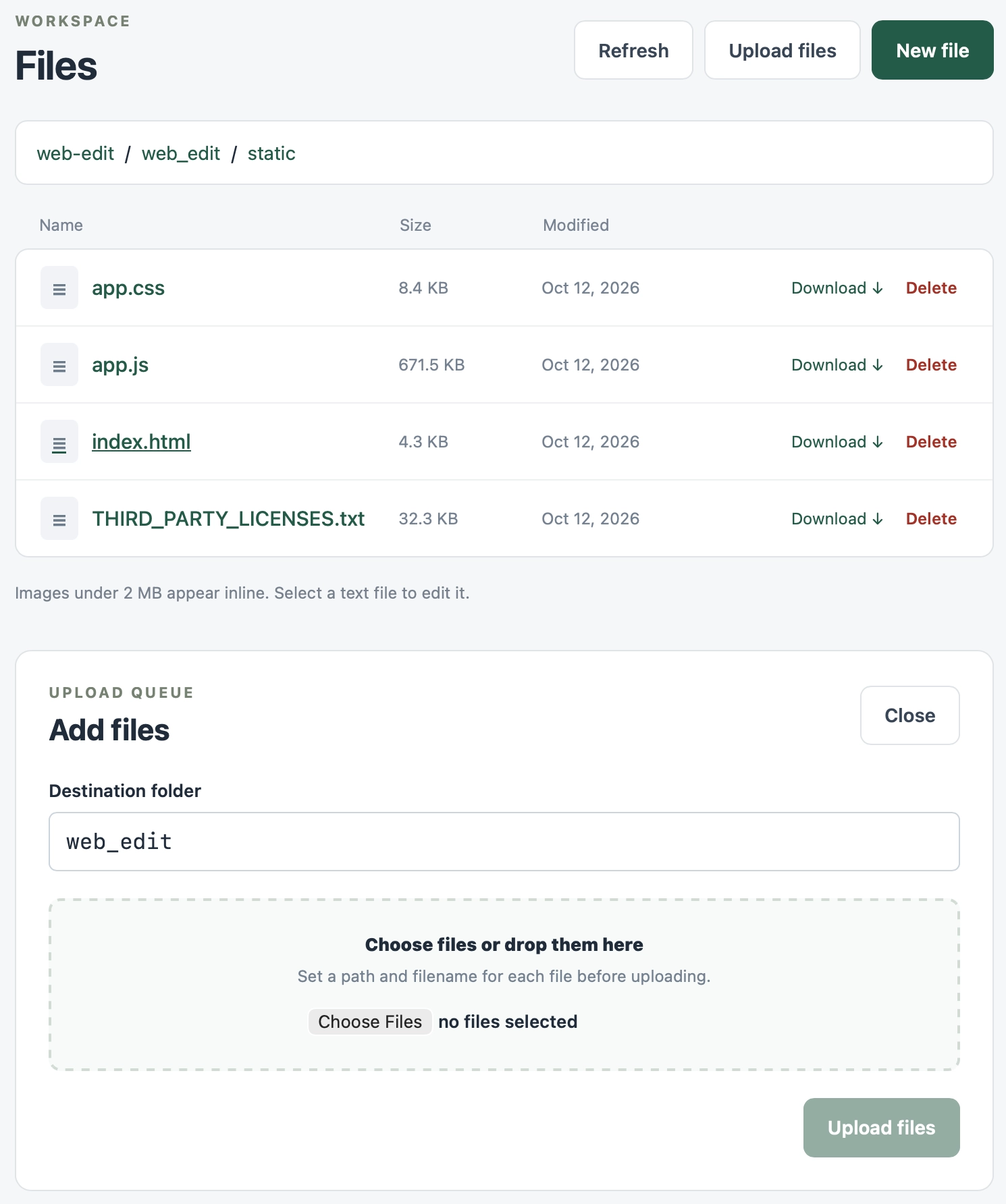
Editing uses CodeMirror 6 - I was going to use Monaco but that still doesn't have a great mobile experience yet.
Tags: projects, python, ai, tailscale, generative-ai, llms, codex

Entropic Thoughts
• kqr

The Old New Thing
• Raymond Chen
Building things out of the state.
The post C++ futures part 2: The mental model for <CODE>std::promise</CODE>, <CODE>std::packaged_task</CODE> appeared first on The Old New Thing.

John D. Cook
• John
Pascal’s triangle is the most famous triangular arrangement of numbers. I’ve written about other numerical triangles, such as Bell’s triangle and the trinomial triangle. There’s another well-known triangle that somehow I never heard of until recently: the harmonic triangle, first explored by Leibniz around 1700. To create the harmonic triangle, start with the harmonic series […]
The post Harmonic triangle first appeared on John D. Cook.
Steve Blank
• steve blank
This article previously appeared in Cipher Brief. The DoW urgently needs to organize its scattered subterranean warfare assets into a single unified organization. Ideally, a Direct Reporting Portfolio Manager (DRPM) for Subterranean Warfare, reporting to the Deputy Secretary of War. (The Department already uses this model for unmanned systems, critical weapons and Golden Dome.) This […]

Troy Hunt
• Troy Hunt
I remember the name of that AI doco now - The AI Doc: Or How I Became an Apocaloptimist. I was watching it on the long-haul flight home the other day, and what I found particularly engrossing was the polar-opposite opinions from a bunch of people: "it'

Pluralistic: Daily links from Cory Doctorow
• Cory Doctorow

Terence Eden’s Blog
• Terence Eden
The thing about Romeo and Juliet is that it is a true story. It isn't literally true, but it is literary true. We see the same motif repeated throughout all cultures and all times. Caroline Lea (writing as Caroline Finch) asks an important question - what if every pair of star-cross'd lovers were reincarnations of the original Verona duo? The essence of tragedy is that the end is unavoidable.…

The Silicon Underground
• Dave Farquhar

Microsoft Access didn’t exist in the MS-DOS era. For that matter, Microsoft wasn’t even a player in databases until relatively late in the MS-DOS era. The dominant database during most of the DOS era was a company called Ashton-Tate. They
The post What happened to Ashton-Tate and dBase appeared first on The Silicon Underground.
The Old New Thing
• Raymond Chen
Managing a value that is produced later.
The post C++ futures part 1: The mental model appeared first on The Old New Thing.

Marcus on AI
• Gary Marcus

Some ominous signs
I wrote the chapter on app icon history for The iOS App Icon Book.
The other day I found an old note stashed away where I had started researching the macOS version of that chapter (which Michael ultimately ended up writing).
At the time, I didn’t know what to write. I mean, how do you write a history of icon design for the Mac? It’s rich!
To get my creative juices flowing, I started by researching the different docks in macOS through the years and compiled them all into a single graphic (big shout out to this compilation of images on 512 Pixels).
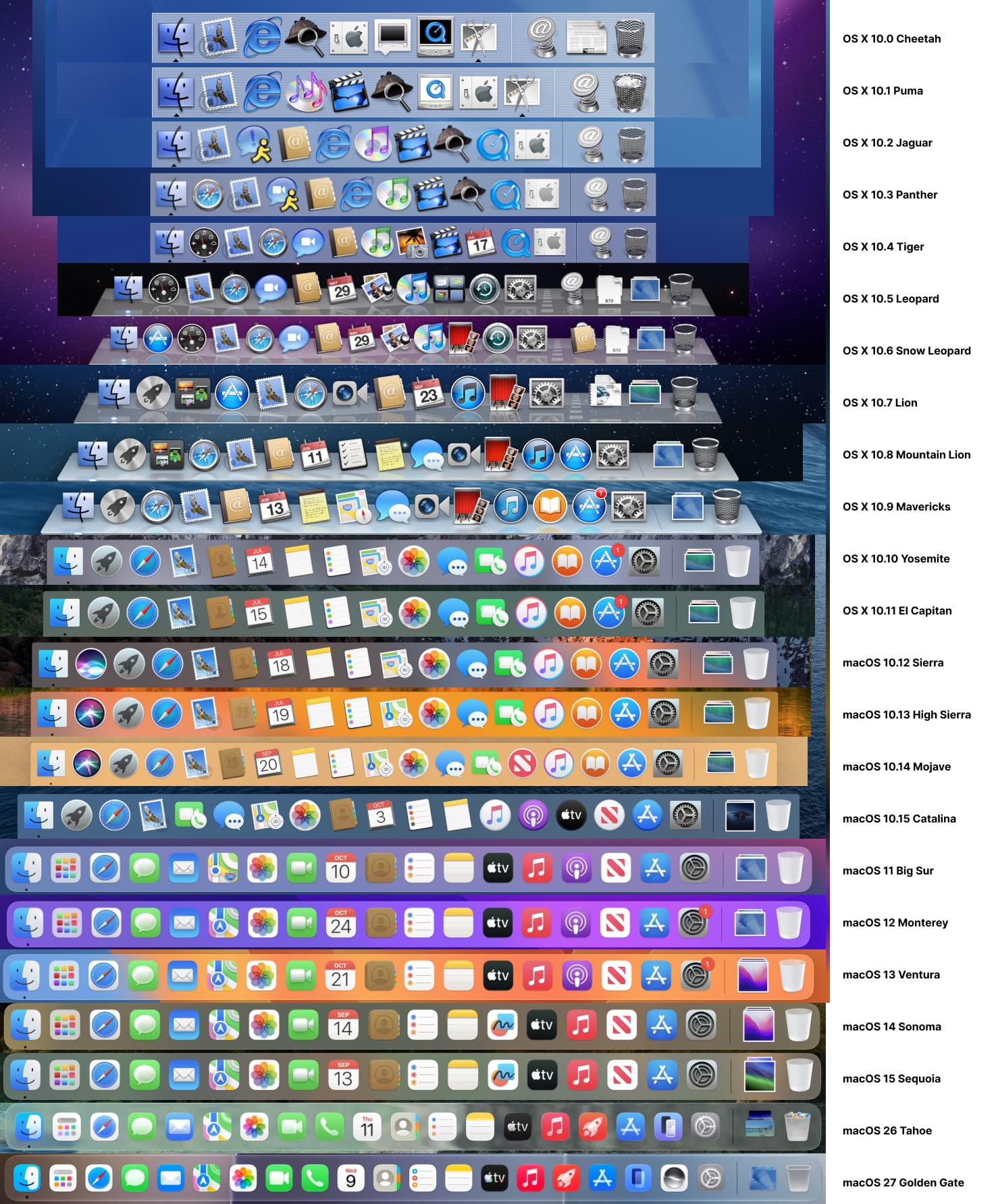
I just wanted to preserve and archive that image. Check out the high-res version here.
That’s it, that’s the post.
Andrew Nesbitt
• Andrew Nesbitt

15 chart-topping hits about unpaid maintainers and overconfident AI agents.
Release: datasette-ports 0.4
My plugin for detecting and listing all Datasette instances on the current machine now works with the latest version, and displays the detected PID as well. Knowing the PID makes it easier to attach the new Python 3.15 profiler.
Tags: datasette

Tedium: The Dull Side of the Internet.
• Ernie Smith
Is X good again? That's probably the wrong question. The right one: Are we past the era when a single social network needs to be everything to everyone?
John D. Cook
• John
A few days ago I wrote about topological models of modal logic. If you find general topology more familiar than modal logic, this correspondence could be helpful. If you think the motivation for general topology is evident but the motivation for modal logic is suspect, the correspondence between the two fields might relieve some of […]
The post Categorical models of logics first appeared on John D. Cook.