Pluralistic: Daily links from Cory Doctorow
• Cory Doctorow
Why we should anthropomorphize AI agents
Marcus on AI
• Gary Marcus
Two dire warnings, one from Terence Tao, the other from someone who just quit Anthropic
Lots to consider
Quoting Terence Tao
I wrote recently about how the collection of good, fruitful open problems is now being mined in a non-renewable fashion, leading to the potential scenario of these problems becoming scarce. [...]
We have now seen that even the rumor of someone working on a problem can trigger a massive amount of AI-powered effort to flatten it before the original research project has time to reach its full potential. The incentives may now be pointing in the direction of no longer sharing any promising research directions with the broader community, which would reverse centuries of traditions of open science and do serious long-term damage to the future of the field.
Tags: ai-ethics, mathematics, ai
On the Navier–Stokes Millennium Prize Problem
Introducing ChatGPT Images 2.5
Krebs on Security
• BrianKrebs
Microsoft Plugs Nearly 1,000 Security Holes
Microsoft Corp. today issued updates to plug at least 974 security holes in its Windows operating systems and other software, by far its biggest single patch batch ever. Microsoft says artificial intelligence is helping to speed the discovery of vulnerabilities, but security experts warn that many organizations already are struggling to prioritize the more human-intensive endeavor of testing and deploying so many fixes each month.
Marcus on AI
• Gary Marcus
OpenAI’s Egregious Pattern of Misconduct
Nine troubling new reports in seven days
The Bulldozing of an Interface
Jeff Geerling
• Jeff Geerling
OpenNMC is an open replacement for expensive APC management cards
UPSes are typically the most boring part of your homelab, but they're important. One of their main jobs is to give servers time to shut down safely if the power goes out. Another job is to condition your power so your servers can run smoothly.
To do both of those things well, you need a smart interface. And at least with APC, there are tons of older UPSes that use Network Management Cards. The one pictured below is the NMC 2, and I pulled out of my old APC Smart-UPS 2200 XL (pictured above).
Dwarkesh Podcast
• Dwarkesh Patel
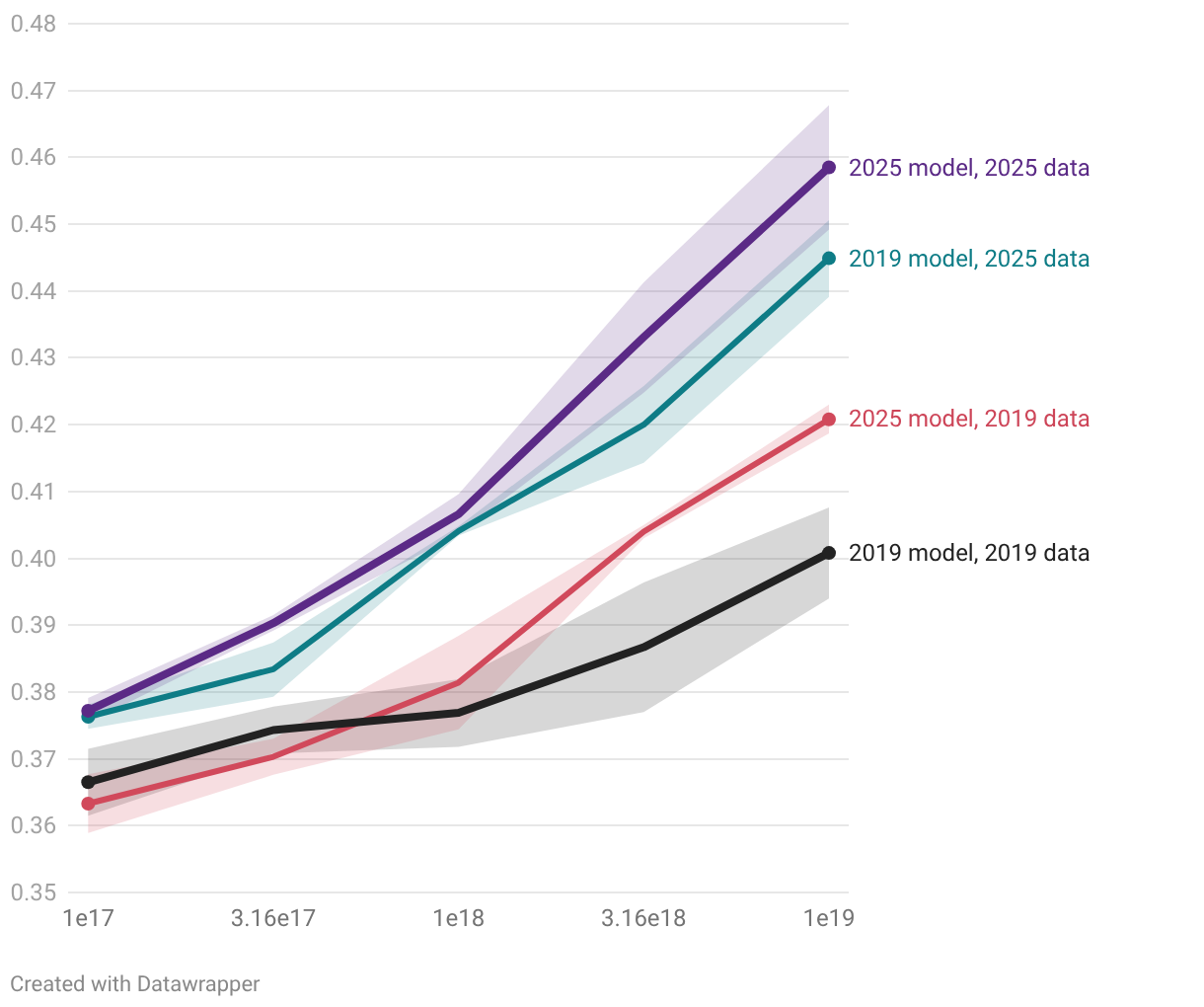
Pretraining progress is mostly coming from data
Breaking down 6 years of pretraining progress into data vs model improvements
The Old New Thing
• Raymond Chen
A sample use of the winstart.bat file in Windows 95
For a driver that needs high resolution mode only in Windows.
The post A sample use of the <CODE>winstart.bat</CODE> file in Windows 95 appeared first on The Old New Thing.
John D. Cook
• John
Navier-Stokes in the news
There are rumors that a long-standing math problem, one of the Millennium Prize problems, has been solved. The problem concerns technical properties of solutions to the Navier-Stokes equations [1], an equation that describe the dynamics of fluid flow. Popular accounts of the problem are often oversimplified and misleading. Some reports will speak of the problem […]
The post Navier-Stokes in the news first appeared on John D. Cook.
The Old New Thing
• Raymond Chen
Why don’t we allow stacks to be sparse, instead of forcing them to be contiguous?
Imagining how to report a memory allocation failure for a sparse page.
The post Why don’t we allow stacks to be sparse, instead of forcing them to be contiguous? appeared first on The Old New Thing.
Andrew Nesbitt
• Andrew Nesbitt
What’s new in git-pkgs
Small Go modules for people who build package-manager tooling.
Terence Eden’s Blog
• Terence Eden
ActivityPub - Is it worth defending against replay attacks and message/signature time skew?
Here's a problem that I've found with ActivityBot - my little ActivityPub server. Sometimes it receives messages which were originally sent months ago. Why does that happen and is it risky to accept and process them? My tl;dr is that it probably isn't worth worrying about. But I'd love someone to tell me why I'm wrong. Here's my thinking: Table of ContentsCausesIs that a problem?What are we…
The Silicon Underground
• Dave Farquhar
What happened to Compuserve?
Compuserve was an online service for dialup modems from the 1970s to the 1990s. It was a way of getting online and communicating with others before the Internet was generally available to individuals. Later, it became a primary way for
The post What happened to Compuserve? appeared first on The Silicon Underground.
llm 0.35
Automatically detecting AI text in my browser
Creepy crawlies
TL;DR: we spend more CPU cycles rendering commits for scrapers than we spend on all other kinds of legitimate access, including git clones. At any one time, across 5 geo-distributed nodes, there are 14 CPU cores doing nothing but rendering git commits as html.
I worry about this a lot from the perspective of Datasette, which serves a huge number of crawlable web pages.
Via Hacker News