A new weekly show focused on commentary and observations about the open source and open web community.

Open Channels FM Podcast Network
• Bob Dunn
Open Channels FM Podcast Network
• Bob Dunn
A new weekly show focused on commentary and observations about the open source and open web community.

The Wolf – Hudson Valley’s New Country
• Evan Paul

Stella Lefty's 'Boston' almost became a dance track. The faster version was so bad that she's hoping nobody ever hears it. Continue reading…

Electrek
• Jameson Dow

The entire US auto industry is back at it again, lobbying Congress to stifle competition and ensure that Americans remain stuck with overpriced, second-rate, highly-polluting vehicles.
more…
Electrek
• Fred Lambert
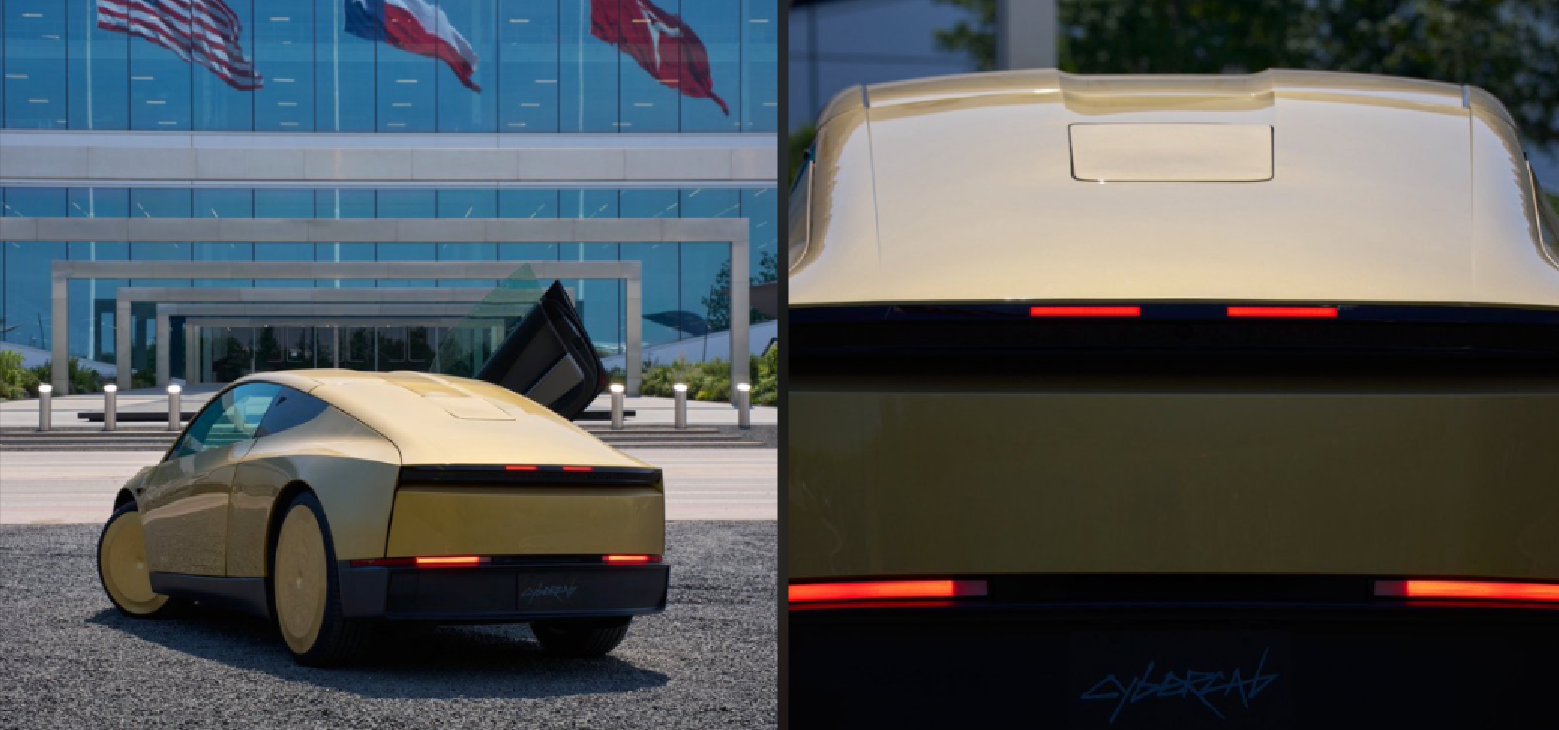
Tesla’s Cybercab is already under federal investigation. NHTSA opened an audit into how Tesla certified the vehicle the same day the company started putting passengers in it in Austin.
The probe targets the exact thing that makes the Cybercab unusual: it has no steering wheel, no pedals, and no mirrors, and Tesla certified it as road-legal anyway.
more…
The City Reporter
• Claudia Irizarry Aponte

Organized labor in New York City has been mightily active so far this decade, and the first half of 2026 was no exception. Nurses, public defenders, hotel workers and college faculty all walked off the job this summer to historic effect, winning substantial contract improvements. But, while union advocates may have reason to pat themselves […]
The post Does New York’s Labor Momentum Measure Up? appeared first on The City Reporter.
Pont Alexander III #cortes #edouardcortes
White Over Red, 1957 #americanart #markrothko
Diesel prices have officially hit a record high.
Slow breathing with a prolonged exhale made people more willing to take risks by changing heart activity and increasing the brain’s sensitivity to rewards. The findings suggest that something as simple as controlling your breath can directly influence how you evaluate choices.
A giant iceberg measuring more than 76 square kilometers broke from Greenland’s Petermann Glacier in August 2026, marking the Arctic’s largest glacier calving event since 2020. The berg later slammed into Joe Island but survived without breaking apart, and satellites are now tracking it as it drifts through Nares Strait.
The LUX-ZEPLIN experiment has detected a rare particle interaction that looks unusually difficult to explain as ordinary background noise and appeared where dark matter might be expected. Scientists are not claiming a discovery yet, but additional data could show whether this single mysterious event is the first hint of a long-sought dark matter particle.
UCLA researchers have discovered two powerful influences that help guide how the human brain forms before birth. Radial glia, stem cells responsible for producing much of the cerebral cortex, change their behavior depending on how they process glucose and on physical contact with signals arriving from the thalamus. Those signals can alter which types of neurons are produced, including upper-layer neurons that are especially prominent in humans.
Scientists have discovered a strange black “devil flower” in Thailand that lives mostly underground, steals nutrients from fungi, and looks strikingly unlike a typical plant. The newly named Thismia daemona is known from fewer than 50 individuals and may already be critically endangered.
A substance found in edible sea squirts appeared to reverse several signs of aging in older mice. Plasmalogen supplements improved memory and learning, strengthened connections between brain cells, reduced inflammation, and even helped the mice grow thicker, darker hair. Researchers believe the compounds may encourage brain regeneration and protect aging synapses.
Duke researchers developed an injectable scaffold that helped stroke-damaged brains grow new blood vessels, support nerve regrowth, and recover movement in mice. The treatment appears to work partly by recruiting the body’s own immune cells, including neutrophils that may switch from damaging to helpful under the right conditions.
Puerto Rico’s normally rainy season has instead brought a severe and fast-growing drought. By August 25, three-quarters of the territory was in at least moderate drought, with extreme drought covering 44 percent and some areas receiving less than 20 percent of their usual rainfall. Water shortages have forced rationing, while farmers are losing crops and ranchers are running low on hay. The situation has become serious enough to trigger both local and federal disaster declarations.
Deep beneath Mars, scientists have found evidence of enormous magmatic systems once thought to require Earth-like plate tectonics. Seismic measurements suggest molten rock repeatedly evolved and recycled itself through the Martian crust, potentially across hundreds or thousands of kilometers. The discovery challenges long-held ideas about how complex planetary crusts form.
MIT researchers have created bacterial “transistors” that can be wired together into living circuits capable of performing calculations and directing chemical signals. One day, these biological computers could coat plant roots or leaves, detecting environmental threats and automatically triggering defenses.
Morning glories may be getting caught in an evolutionary tug-of-war between surviving climate change and attracting increasingly scarce pollinators. Over just nine years, researchers found that the plants’ rate of adaptation plunged by 96%, even though they still had plenty of genetic diversity to evolve.
Astronomers have identified a surprisingly young population of fading radio galaxies whose supermassive black holes have already switched off their powerful jets. The confirmed remnants range from about 8 to 42 million years old, suggesting many may disappear from view much faster than previously recognized. More distant remnants also seem to fade especially quickly, helping explain why they have been so difficult to detect.