Plus, the kidney stones that made John Marshall the chief justice.
SCOTUSblog
• Kelsey Dallas, Nora Collins
The latest on the mail-in voting and ballroom battles
SCOTUSblog
• Kelsey Dallas, Nora Collins
Plus, the kidney stones that made John Marshall the chief justice.
Latest articles from Crooks and Liars
• John Amato
Latest articles from Crooks and Liars
• Andrea Thompson
Latest articles from Crooks and Liars
• Chris capper Liebenthal
Electrek
• Fred Lambert

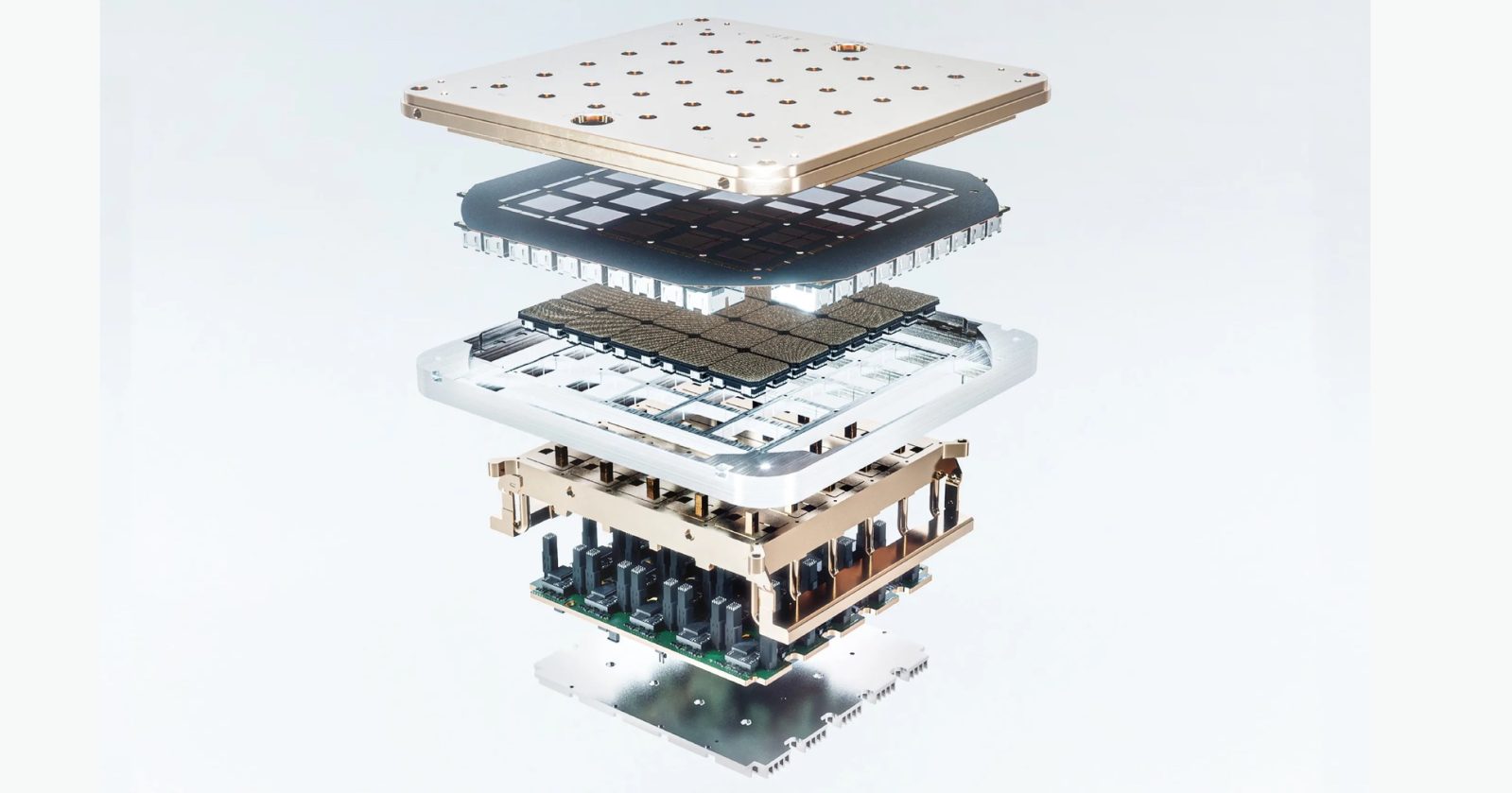
Tesla has lost another senior chip engineer to DensityAI, the AI hardware startup built out of its own former Dojo team. Shishuang Sun, who spent more than five years as a Tesla AI hardware architect on Dojo and the Autopilot computers, now lists his role as “Packaging and System Hardware” at DensityAI, starting in July.
This is not a junior loss. Sun left Tesla as Senior Director of AI Hardware Design — one of the people responsible for turning Tesla’s custom silicon into working systems, exactly the expertise Tesla needs as it stakes its valuation on in-house AI chips.

Common medications may reshape the gut microbiome long after the last dose is taken. In a study of more than 2,500 people, researchers found lasting microbial changes linked not only to antibiotics, but also to antidepressants, beta-blockers, acid-reducing drugs, and benzodiazepines. Some effects were still detectable years later, suggesting past medication use may strongly influence the gut bacteria people carry today.
Backyard bird feeders could become unexpected hotspots for H5N1 as Australia’s bird flu outbreak spreads, bringing species together in ways that rarely occur naturally. Experts say stopping feeding is safest, while smaller amounts of food, no hand-feeding, and careful cleaning can reduce the danger.
Both too little and too much sleep may be linked to faster aging throughout the body. Researchers analyzing 23 biological aging clocks found the lowest aging levels among people sleeping about 6.4 to 7.8 hours per day. Short or long sleep was also associated with numerous conditions affecting the brain, heart, lungs, metabolism, and digestive system.
More screen time during infancy and around the start of school was linked to poorer academic performance and weaker working memory years later. The findings suggest that early childhood may contain particularly sensitive windows when screen habits can have longer-lasting effects.
NASA’s Roman Space Telescope has been cleared for final launch preparations ahead of a targeted August 30 liftoff aboard SpaceX’s Falcon Heavy. The powerful new observatory will probe cosmic expansion, the history of the universe, and distant exoplanets.
The Artemis II crew will receive the Congressional Space Medal of Honor after becoming the first humans in more than 50 years to travel beyond the Moon. Their 10-day Orion mission also carried them farther into space than anyone in history.
Scientists discovered a small, yellowish mountain horned dragon in Thailand and named it Acanthosaura syrax after a dragon from House of the Dragon. Found only in a narrow band of high-elevation forest, the distinctive new species could become a flagship for protecting its rare mountain habitat.
A faint ribbon of stars around a distant galaxy has become the first globular cluster stellar stream ever identified beyond the Milky Way. Because the stars trace the galaxy’s gravity, researchers used the stream to estimate how much invisible dark matter surrounds it and how that matter is distributed. The breakthrough offers astronomers a promising new way to investigate one of the universe’s greatest mysteries.
Researchers have created a tiny chip that produces a stable “rainbow” of light capable of generating multiple high-frequency signals at once, potentially boosting the speed and capacity of future 6G networks. Its extreme precision could also make it valuable for quantum timing, navigation, radar, and even space-based technologies.
Researchers have found a way to create a complete 3D image of a molecule’s wavefunction, one of quantum mechanics’ most fundamental yet elusive features. By combining advanced photoelectron measurements with newly designed algorithms, the University of Göttingen team reconstructed the molecular orbital of a nanometer-sized organic molecule in remarkable detail, even resolving features smaller than the spacing between its carbon atoms.
Gut bacteria can transform nitrate and plant-based iron from vegetables and other foods into protective molecules that may benefit the heart and metabolism. In experimental models, higher levels of these compounds were linked to lower blood pressure, better blood sugar control, healthier blood vessels, and less liver fat.
💯
Ars Technica - All content
• Andrew Cunningham
The Unibook is a weird entry-level laptop for people with patience.
The San Francisco Standard
• Tim Kawakami
Kyle Shanahan and John Lynch don’t draft like everybody else, which seems to have worked out well for the team this year.
The San Francisco Standard
• Max Harrison-Caldwell
As rents skyrocket, developers are predicting a building boom in the next two years.