
Good morning!

The Warning with Steve Schmidt
• Steve Schmidt
davewiner's subscription list, blogroll category. List created by feedlandDatabase v0.9.3.
The Warning with Steve Schmidt
• Steve Schmidt
Good morning!
Sailboat, 1884 #pointillism #georgesseurat
Mark your calendars: August 13 at 1 p.m. ET. The public can call in and listen as a federal court holds a hearing over the Justice Department’s compliance with court orders involving the Epstein files.

Ars Technica - All content
• Jacek Krywko
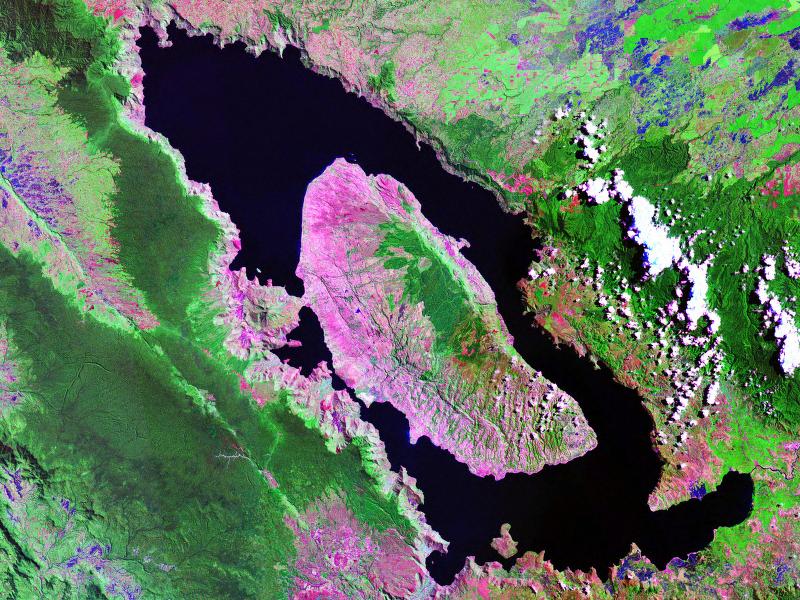
The massive Toba eruption seems to have had little climate impact.
More than 60,000 years ago, humans in southern Africa were engraving ostrich eggshells with intricate geometric patterns that appear far more organized than previously realized. Researchers found recurring grids, parallel lines, right angles, and repeated shapes, suggesting the designs followed deliberate rules rather than being improvised. The engravers may even have planned entire patterns in their minds before carving them.
A study tracking more than 340,000 adults for over a decade found that heavy drinking increased the risk of death regardless of beverage type. At lower levels, however, the picture became more surprising: beer, cider, and spirits were linked to higher mortality, while wine was associated with lower risk. Moderate wine drinkers had a 21% lower risk of cardiovascular death compared with people who rarely or never drank.
Frequent cannabis users may wake up with unusually high levels of the stress hormone cortisol, suggesting their daily stress rhythms could be disrupted. Researchers say the finding raises questions about whether using cannabis for stress relief might, over time, interfere with the very system that helps the body handle stress.
Full-fat dairy may be healthier than conventional advice has suggested. In a 12-week study, adults who ate three servings a day showed no meaningful increases in weight, body fat, cholesterol, or insulin resistance. They also experienced improved blood pressure and consumed more calcium, protein, and vitamin D. The findings suggest dairy’s complex structure may matter more than its saturated fat content alone.
Atomically thin semiconductors could enable dramatically smaller and more efficient chips, but a stubborn problem at the boundary between materials has limited their performance. Researchers have now engineered that atomic interface to protect electron flow while still allowing extremely thin insulating layers. The resulting transistors delivered an unusually strong combination of electrical control and performance.
An intensive seven-day meditation retreat triggered striking changes across the brain and body, including shifts tied to neuroplasticity, immunity, metabolism, and natural pain relief. Participants also showed brain connectivity patterns resembling those associated with psychedelic experiences, suggesting that powerful altered states may be achievable without drugs.
Stress may literally scramble the brain’s internal GPS. Researchers found that cortisol, a hormone released during stress, made people significantly worse at navigating a virtual environment and disrupted the precise activity of grid cells, specialized brain cells that help us understand where we are in space. When landmarks were missing, this navigation system nearly stopped functioning, while another brain region appeared to step in and compensate.
Deep underground, bacteria may be capable of doing something remarkable: trapping toxic uranium before it spreads. When researchers fed microbes in uranium-contaminated mine water with glycerol, about 95% of the dissolved uranium disappeared within 130 days. The bacteria helped convert it into an unusually stable uranium compound that had rarely been observed before.
Chemists have developed a catalyst that breaks a long-standing rule governing which molecules receive electrons during chemical reactions. By releasing electrons directly into solution, the technique could unlock reactions—and potentially useful new molecules—that were previously out of reach.
CT scans of the world’s rarest dodo skulls suggest the extinct bird may have had a stronger sense of smell, a highly sensitive beak, and a lifestyle that extended into dawn and dusk. The discoveries are helping overturn centuries-old myths and reveal a far more complex animal than the famously “dumb” dodo of popular imagination.
Dinosaurs conquered the land at enormous sizes, but strangely, they almost never evolved into truly tiny animals. New research suggests that physiology alone can’t explain this missing miniature end of the dinosaur spectrum—and that early mammals may have been partly responsible. While dinosaurs kept mammals from becoming large, small mammals may have returned the favor by occupying ecological niches that could otherwise have supported mouse-sized dinosaurs.