Pluralistic: Daily links from Cory Doctorow
• Cory Doctorow
The Old New Thing
• Raymond Chen
Creating a fake agile wrapper that is technically agile but is not useful outside its home apartment, part 1
Looking for a COM reference that is between strong and weak.
The post Creating a fake agile wrapper that is technically agile but is not useful outside its home apartment, part 1 appeared first on The Old New Thing.
Eli Bendersky's website
• Eli Bendersky
Relative velocity and closing speed
In Physics simulations or game engines it’s sometimes useful to determine the speed with which two objects are approaching each other. This post will discuss the concept of closing speed, which is the normal component of the relative velocity of two objects.
Relative velocity and its components
Suppose we …
Quoting Steve Yegge
Gas Town was intended to be reusable, but I only ever wound up using it to build itself. Gas Town fell apart at the seams with Opus 4.7. Up through 4.6 it was working brilliantly. With 4.7 we saw the introduction of the "just two more things" tic, which prevented Opus from ever converging on being ready to do real work—it always wanted to fiddle with Gas Town itself. The Opus tic never went away, so Gas Town effectively burned down. It had other problems, too, but 4.7 was the final straw.
— Steve Yegge, The Shape of Things to Come
Tags: steve-yegge, coding-agents, generative-ai, ai, llms
Quoting Steve Yegge
Gas Town was intended to be reusable, but I only ever wound up using it to build itself. Gas Town fell apart at the seams with Opus 4.7. Up through 4.6 it was working brilliantly. With 4.7 we saw the introduction of the "just two more things" tic, which prevented Opus from ever converging on being ready to do real work—it always wanted to fiddle with Gas Town itself. The Opus tic never went away, so Gas Town effectively burned down. It had other problems, too, but 4.7 was the final straw.
— Steve Yegge, The Shape of Things to Come
Tags: steve-yegge, coding-agents, generative-ai, ai, llms
Don't be a meat proxy
By all means, prompt AI. But don't just relay the output. Read it, understand it, validate it, and then write a response in your own words (a decent certificate that you've done the prior steps). Making that effort is value you can add.
Via Lobste.rs
Tags: definitions, ai, generative-ai, llms, ai-misuse
Devtools must be open source (exe.dev)
Dwarkesh Podcast
• Dwarkesh Patel
Why smarter AI models could drive up compute prices 10x
The end of cheap compute?
DYNOMIGHT
• dynomight
Indirect lessons from human alignment
On doing what evolution wants us to do
Marcus on AI
• Gary Marcus
Two critical updates re: Astra and mathematics
First, abstracting from all the words in my long analysis on OpenAI Astra yesterday, the overall point was that Astra may not be the breakthrough that OpenAI wants you to think it was.
Quoting David Crawshaw
Set up a nightly cron job that executes the prompt: fetch upstream changes to the <software> and rebase all local changes on top of upstream. Check that the software works as intended and replace the current version.
— David Crawshaw, Devtools must be open source
Tags: prompt-engineering, coding-agents, generative-ai, ai, llms, open-source
micahflee
• Micah Lee
Agentic coding techniques
Since LLMs have been available, I've been doing a lot of coding using agents. Unlike shoving AI into every app, replacing customer support with chatbots, generating endless streams of slop, etc., agentic coding is actually useful. If used right – and, crucially, by someone who understands and reviews
Terence Eden’s Blog
• @edent
Book Review: The Field Guide to Understanding 'Human Error' by Sidney Dekker ★★★★☆
This is such a useful book. It makes the case that there's no such thing as "human error" - instead most catastrophes are caused by system issues, misaligned incentives, and unrealistic processes. You are not the custodian of an otherwise safe system that you need to protect from erratic human beings. By its nature it is a little repetitive. I suspect it's the sort of book students and…
The Silicon Underground
• Dave Farquhar
The Caldera-SCO merger of 2000
On August 2, 2000, a second-tier Linux vendor acquired a struggling Unix vendor. The merger received some press, but if you weren’t really following Linux at the time, it would have been easy enough to miss. But the merger of
The post The Caldera-SCO merger of 2000 appeared first on The Silicon Underground.
Pluralistic: Daily links from Cory Doctorow
• Cory Doctorow
Pluralistic: Dualism (03 Aug 2026)
Troy Hunt
• Troy Hunt
Welcoming the Nepalese Government to Have I Been Pwned
Today, we welcome the 47th government onboarded to Have I Been Pwned’s free gov service: Nepal. Their National Cyber Security Centre now has access to monitor Nepalese government domains against the data in HIBP. This gives the NCSC the ability to identify exposure across government email addresses and
Invisible Problems
Review: Job-Less Utopia
Review of Marcus Hutter's Job-Less Utopia.
Troy Hunt
• Troy Hunt
Weekly Update 515
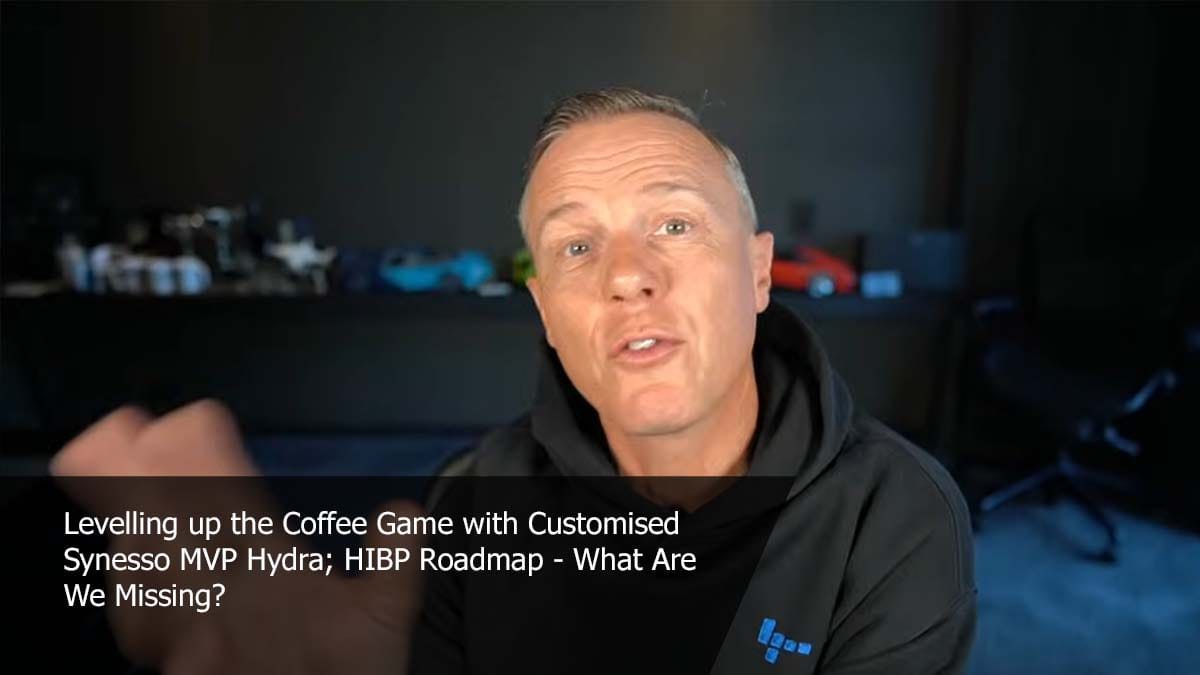
Apparently, Aussies are so obsessed with coffee that it's referred to as the coffee capital of the world down here (some bits, at least). "But what about Italy?" people ask. Having spent a lot of time in a lot of Italy, no, it's just