Sign up

davewiner's subscription list, hackerNewsStars category. List created by feedlandDatabase v0.8.16.

An external list from lists.opml.org.
https://lists.opml.org/hackerNewsStars.xml

The Silicon Underground
• Dave Farquhar

David Bunnell, vintage computer magazine publisher

David Bunnell, vintage computer magazine publisher

David Bunnell, born July 25, 1947, was the founder of three of the most successful computer magazines of all time. He even edited two of them simultaneously, straddling two very different worlds. He was not only a pioneer of tech

The post David Bunnell, vintage computer magazine publisher appeared first on The Silicon Underground.

Pluralistic: Daily links from Cory Doctorow
• Cory Doctorow

Pluralistic: AI solipsists and AI cynics (24 Jul 2026)

Today's links AI solipsists and AI cynics: You don't have to believe that AI "works" to believe that it's a good investment. Hey look at this: Delights to delectate. Object permanence: Malware v stolen computer; Industrial material made from old coffee and melted cups; Austro...

Andrew Nesbitt Valid
• Andrew Nesbitt

Interview with a Maintainer

Episode 214 of Green Squares.

Software and Tech stories from an Insider - iDiallo.com

Have you read it?

I think I finally figured it out. That is, the reason why AI written articles suck:

Both the author and I are reading the article for the first time.

When an article is insightful I don't even mind the emdashes or that the stark truth is not X, but Y. A good take can transcend even llmism. But then you have questions, and somehow the author doesn't even know what you are talking about, it's simply because they are discovering the insight at the same time you are.

They were busy, they didn't have time to write. As a consequence, they only dedicated enough time to skim the result before publishing. They don't know what's in it. You can't ask them what they were thinking when they came up with the insight because, well, they didn't think.

The great article sucks because there is nobody behind it.

The Old New Thing
• Raymond Chen

Making an agile version of a Windows Runtime delegate in C++/WinRT, part 4

Optimizing the context check.

The post Making an agile version of a Windows Runtime delegate in C++/WinRT, part 4 appeared first on The Old New Thing.

lcamtuf’s thing
• lcamtuf

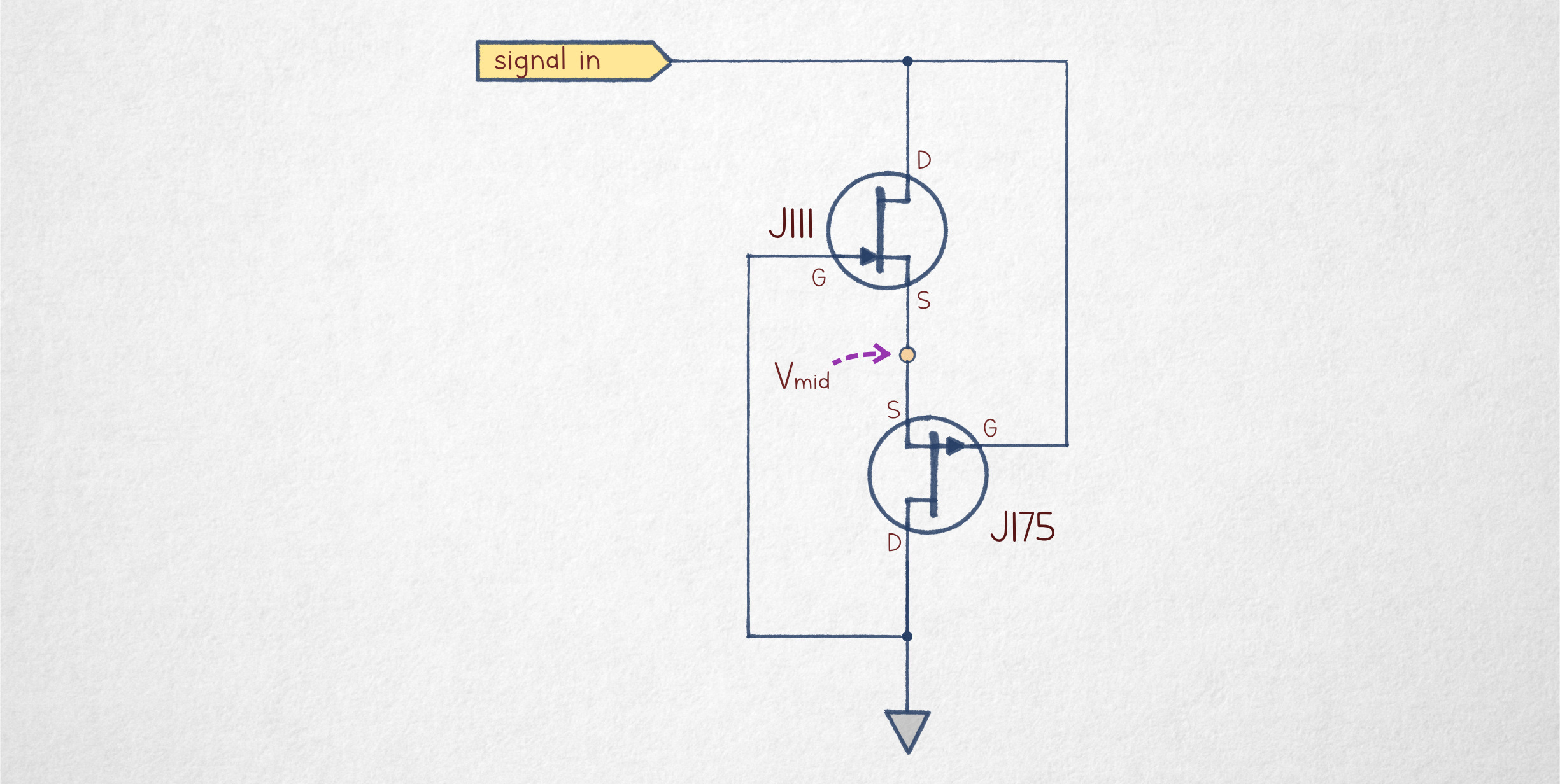
Negative resistance

Negative resistance

Hello! The blog you’re trying to reach is currently unavailable.

Simon Willison's Weblog Supports Webmention

The first known runaway AI agent - or a very bad marketing stunt?

The first known runaway AI agent - or a very bad marketing stunt? Martin Alderson's commentary on the OpenAI accidental cyberattack against Hugging Face includes a couple of details I hadn't considered. First, Hugging Face offers a truly rich target if you're trying to find ...

Max Woolf's Blog

LLMs break down in funny ways when told the Jacobian Conjecture counterargument

Cognitohazards can affect machines too.

Beej's Bit Bucket

10 REM"_(C2SLFF4

Wherein we chase down a BASIC retrocomputing question that's bugged me for far too long.

Keygen Blog

Announcing the Portal open beta

Introducing Portal, Keygen's brand new open source dashboard.

John D. Cook
• John

An almost periodic function

This post takes a more abstract view of the previous post. That post looked at the concrete question of whether a number ever has the same sine in radians as in degrees. The relation between radians and degrees is irrelevant except that π/180 is an irrational number. Suppose α and β are two positive numbers […]

The post An almost periodic function first appeared on John D. Cook.

Construction Physics
• Brian Potter

Can We Lower Construction Costs with Cheaper Labor or Materials?

Can We Lower Construction Costs with Cheaper Labor or Materials?

Last time in our series on the nature of the construction productivity problem, we looked at economies of scale, finding that capturing economies of scale in homebuilding is difficult.

The Silicon Underground
• Dave Farquhar

The Caldera-Microsoft Lawsuit of 1996

The Caldera-Microsoft Lawsuit of 1996

On July 23, 1996, Novell sold the intellectual property of Digital Research to Linux vendor Caldera. The common thread the two companies had was Ray Noorda. Noorda had been CEO of Novell and was Novell’s largest shareholder, and Caldera was

The post The Caldera-Microsoft Lawsuit of 1996 appeared first on The Silicon Underground.

Pluralistic: Daily links from Cory Doctorow
• Cory Doctorow

Pluralistic: California's privacy obstacle course (23 Jul 2026)

Today's links California's privacy obstacle course: Malice or incompetence (why not both?). Hey look at this: Delights to delectate. Object permanence: Continuous partial attention, TSA is the worst; Trump's FCC v the future. Upcoming appearances: Edinburgh, Sydney, Melbourne...

seangoedecke.com RSS feed

Powerful AIs might escape containment by releasing themselves as open-weight models

Before large language models, people who worried about AI safety often talked about the “boxing problem”. It goes like this. Suppose some genius figures out artificial intelligence in a late-night coding session on their laptop. Because they’re a genius, they’re smart enough...

Bert Hubert's writings Valid

Met het Oog op Morgen: Uitgebroken AI?

Gisteren 22 juli was ik in Met het Oog op Morgen, een programma waar ik al 40 jaar naar luister (ik was er heel vroeg bij), dus ik vond het heel bijzonder daar te zijn! En het was ook erg leuk. Goed voorbereid door de redactie sprak ik met Sheila Sitalsing over de recent “uitgebroken AI hack”. Ik sprak iets te veel door Sheila heen, waarvoor excuses. Maar, ik denk ook dat we een paar dingen hebben genoemd die je niet zo vaak hoort.

Simon Willison's Weblog Supports Webmention

Quoting Seth Larson

The Python Package Index (PyPI) now rejects new files being uploaded to releases that are older than 14 days. This restriction was put in place to prevent old and long-stable releases from being poisoned in case publishing tokens or workflows of PyPI projects were compromised. As far as we are aware this has not yet been abused, but there is no technical reason beyond that attackers weren't aware it was possible.

Seth Larson, PyPI blog

Tags: packaging, python, supply-chain, pypi, seth-michael-larson

Andrew Nesbitt Valid
• Andrew Nesbitt

Package Name Prefixes

django plugins, cloud SDKs, and 1,999 homework submissions.

Old Vintage Computing Research Updates instantly via WebSub
ClassicHasClass

John C. Dvorak has died

Reports coming in of the death of John C. Dvorak, apparently passed away on Monday (July 20th) from complications of heart bypass surgery. Dvorak started in wine and moved to silicon as an early columnist at InfoWorld, one of the pillar references for this particular blog bec...

Simon Willison's Weblog Supports Webmention

Quoting Thomas Ptacek

I genuinely believe that if you took an open weights model from 2025 and built a pentest harness for it, it could do this kind of sandbox escape and scan/hack in most networks. This is only surprising because you assume OpenAI has sounder sandboxes.

Thomas Ptacek, doesn't think this even needs a frontier model

Tags: thomas-ptacek, openai, security, generative-ai, ai-security-research, ai, llms, sandboxing