Jeff Geerling
• Jeff Geerling
Open Sauce and GPS time were my summer AI Antiseptics
In the midst of our AI slop revolution, traveling to the West coast for Open Sauce this past weekend was the perfect antiseptic for rising costs, summer heat, and online divisiveness.
It's ironic, then, that I used Claude to vibe code my Tufty GPS Time Badge.
Partly due to time constraints, and partly because I wanted to see if I could complete a personal project end-to-end, without editing a line of code, I throw my requirements at Claude and ultimately came up with this 2141 MicroPython app for Pimoroni's Badgeware ecosystem.
John D. Cook
• John
When sine of x degrees equals sine of x radians
Ordinarily the sine of x radians and the sine of x degrees are very different numbers. Having your calculator in radian mode when it should be in degree mode, or vice versa, results in a major error. But sometimes it doesn’t matter. A trivial example is when x = 0. A more interesting example is […]
The post When sine of x degrees equals sine of x radians first appeared on John D. Cook.
Terence Eden’s Blog
• @edent
Scattered thoughts on social geolocation
I want to be able to share my location with my friends on social media. Twitter (RIP) had a way to attach an optional location to a post. Facebook still lets me check in to venues. But neither ActivityPub (Mastodon) nor AT Protocol (BlueSky) allow me to do that. I've been banging on about this for a while so was delighted to be invited to chat with the GeoSocial Task Force on their monthly call. …
The Silicon Underground
• Dave Farquhar
Amiga 1000: Ten years ahead of its time
On July 23, 1985, Commodore introduced its Amiga 1000 computer. And let’s just say the world wasn’t ready for it yet. Dave Haynie, a Commodore engineer who worked on the later models, has said there was no such thing as
The post Amiga 1000: Ten years ahead of its time appeared first on The Silicon Underground.
Pluralistic: Daily links from Cory Doctorow
• Cory Doctorow
Pluralistic: Trump's America can't even win a rigged game (22 Jul 2026)
Krebs on Security
• BrianKrebs
LG to Ban Residential Proxies from Smart TV Apps
The home appliance giant LG Electronics USA said this week it plans to suspend any apps built for its smart TVs that turn one's television into an always-on residential proxy node. The move comes less than a month after researchers found that more than 42 percent of games and other apps available for download on LG's webOS store allow unknown third-parties to route their Internet traffic through a user's TV.
The Old New Thing
• Raymond Chen
Making an agile version of a Windows Runtime delegate in C++/WinRT, part 2
Short-circuiting the easiest case.
The post Making an agile version of a Windows Runtime delegate in C++/WinRT, part 2 appeared first on The Old New Thing.
Kan een Amerikaans bedrijf met encryptie de Amerikaanse overheid buiten de deur houden?
Het is inmiddels duidelijk dat zelfs maar deels Amerikaanse bedrijven met allerhande middelen gedwongen kunnen worden om onze data te overhandigen aan de Amerikaanse overheid.
Ook kan de dienstverlening gestaakt worden na een enkel briefje op Whitehouse.gov, wat zonder enige rechterlijke toetsing geplaatst kan worden.
Tegen deze beide dingen is met papier niets te doen. Geen speciale afspraak zal je redden uit dit probleem (dit ook volgens de Landsadvocaat).
Maar, er is dan soms nog de hoop om de data nog wel privé te houden met speciale encryptie.
John D. Cook
• John
Forensic accounting in Python
I recently had a project in which I had to reverse engineer a data analysis. There was some ambiguity regarding which of several possibilities someone chose for several of the variables, something analogous to the following example. Suppose you have three numbers with uncertain values with a known, or at least purported, sum. The first […]
The post Forensic accounting in Python first appeared on John D. Cook.
Experimental History
• Adam Mastroianni
Blog Jamboree 2026: The Winners
yeehaw
Nativ: Run AI models locally on your Mac
Prince Canuma is the developer behind the excellent MLX-VLM Python library for running vision-LLMs using MLX on a Mac.I'm really excited about his new project, which wraps MLX in a full macOS desktop application. It's similar in shape to LM Studio, providing both a chat interface and a localhost API server for accessing models.
The app picked up MLX models I had already tried that were present in my Hugging Face cache directory, which was a nice touch.
Via Hacker News
Tags: macos, python, ai, generative-ai, local-llms, llms, mlx, prince-canuma
A Fireside Chat with Cat and Thariq from the Claude Code team
Simone Salis
• Simone Salis
For a Business, Should Making (Extra) Money Be Incidental?
Humans are desire-driven machines: a business should help dissipate desires by satisfying them without exploiting you.
John D. Cook
• John
Locally everywhere does not imply everywhere
A couple days ago, Levent Alpöge, a mathematician working at Anthropic, discovered a counterexample to the Jacobian conjecture using Claude Fable 5. I was curious whether most mathematicians were trying to prove or disprove the conjecture, so I asked Claude. Before a counterexample to the Jacobian conjecture was found, did most mathematicians believe it was […]
The post Locally everywhere does not imply everywhere first appeared on John D. Cook.
Andrew Nesbitt
• Andrew Nesbitt
–end-of-options
The git flag I assumed was an LLM hallucination
The Silicon Underground
• Dave Farquhar
The First Microsoft Product
On January 2, 1975, Microsoft announced Altair Basic, their first product. It was a programming language for the MITS Altair 8800 computer, a product that let people write their own software for the new computer. The makers of the computer
The post The First Microsoft Product appeared first on The Silicon Underground.
Troy Hunt
• Troy Hunt
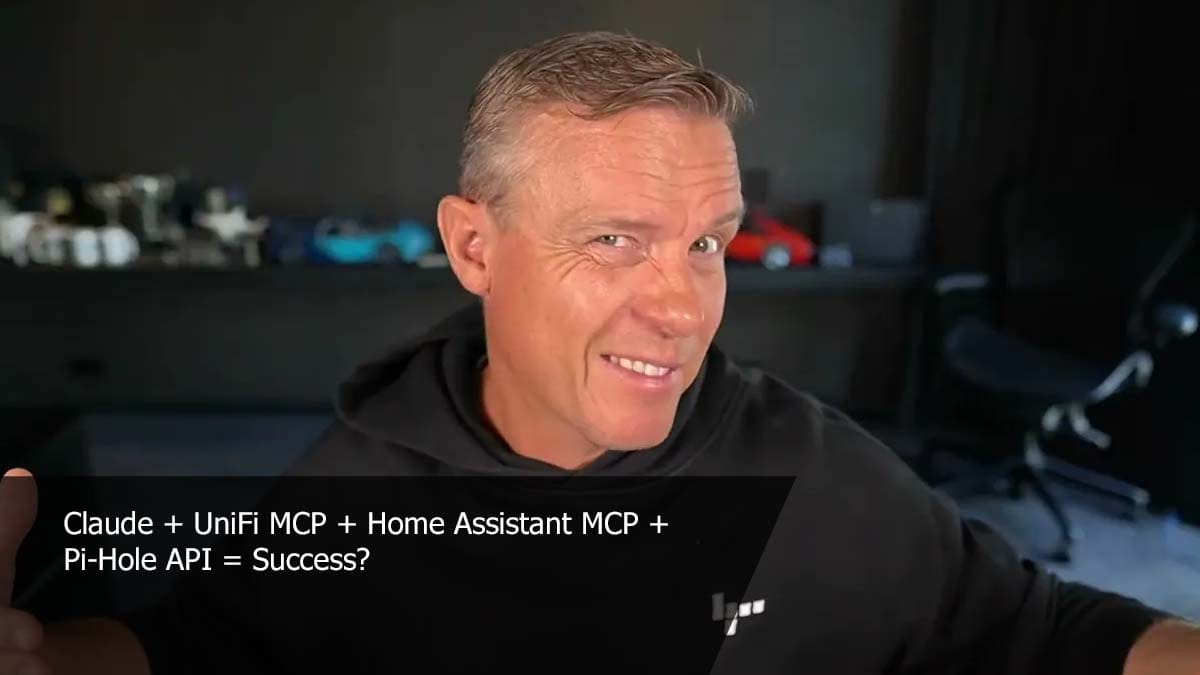
Weekly Update 513: Clauding The Home Network
I reckon this week's video on how Claude is tying together info from UniFi, Home Assistant and the Pi-Hole is an absolute ripper. Or at least the concept is - if ever there was an actual value proposition for AI it's taking lots of noise and
Pluralistic: Daily links from Cory Doctorow
• Cory Doctorow
Pluralistic: Dealing with dickovers (21 Jul 2026) dickovers
Entropic Thoughts
• kqr
Kuiper Q-Q plot: are these the same?
When we tried to get an intuition for the differences in distribution functions, we learned that children subjected to a treatment had greater variation in their score than the reference group.