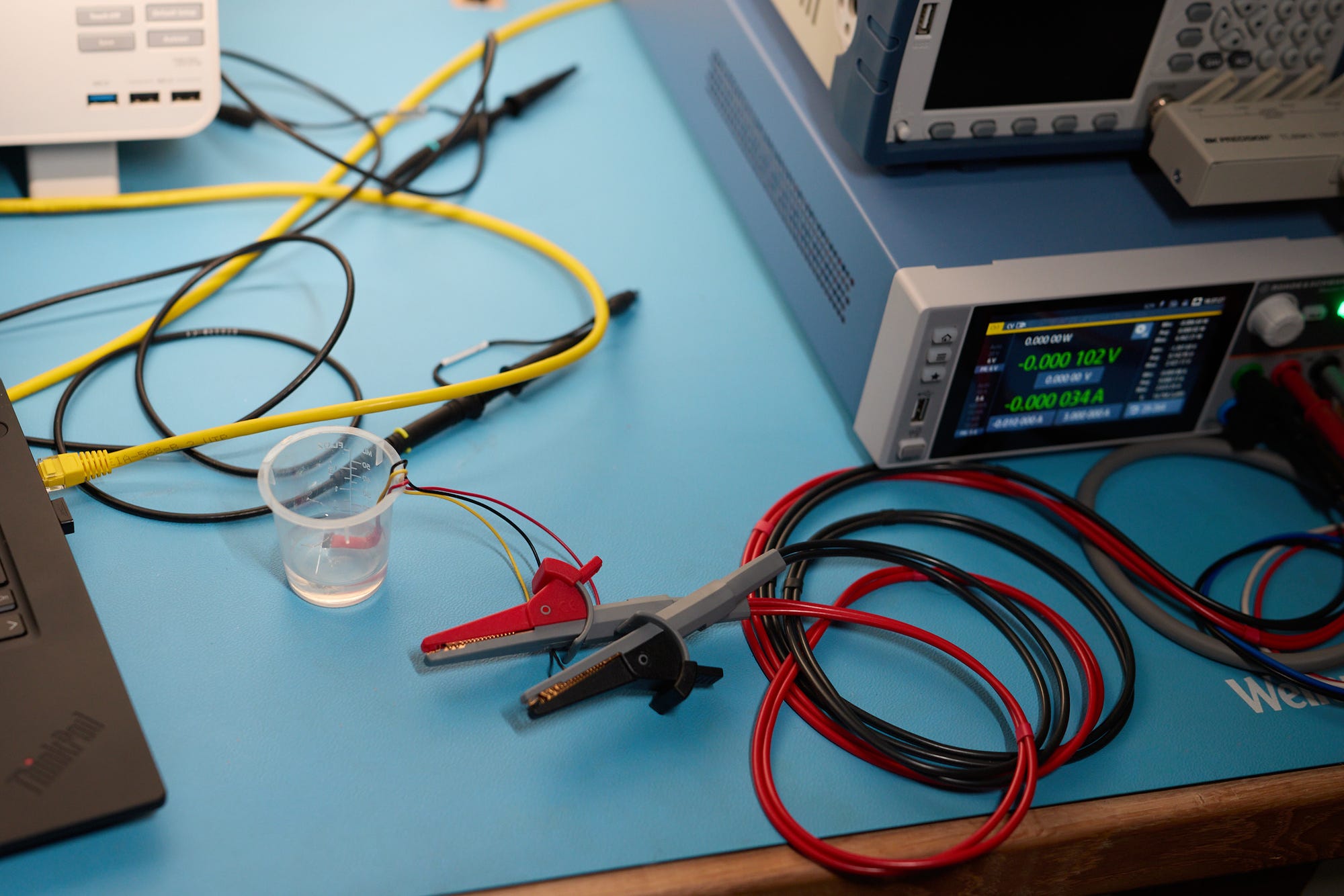
When working on my latest book, The Secret Life of Circuits, I wanted to keep the artwork real.
lcamtuf’s thing
• lcamtuf
Tech note: making your own V-I plots at home
lcamtuf’s thing
• lcamtuf
When working on my latest book, The Secret Life of Circuits, I wanted to keep the artwork real.
lcamtuf’s thing
• lcamtuf
When working on my latest book, The Secret Life of Circuits, I wanted to keep the artwork real.
Suggestion for hyperscalers feeling pressure over data center water use:
Buy up a few exclusive country clubs, convert the golf courses into public parks, pay for guides and binoculars to get the previous members into birdwatching - help them embrace a more sustainable hobby!
Google used 10.9 billion gallons in 2025, so about 30 million gallons per day.
The Coachella Valley has 120 golf courses each using ~800 acre-feet per year, which is ~750,000 gallons per day.
So Google buying up 40 of those courses (1/3) should do the trick.
Tags: ai-energy-usage, ai
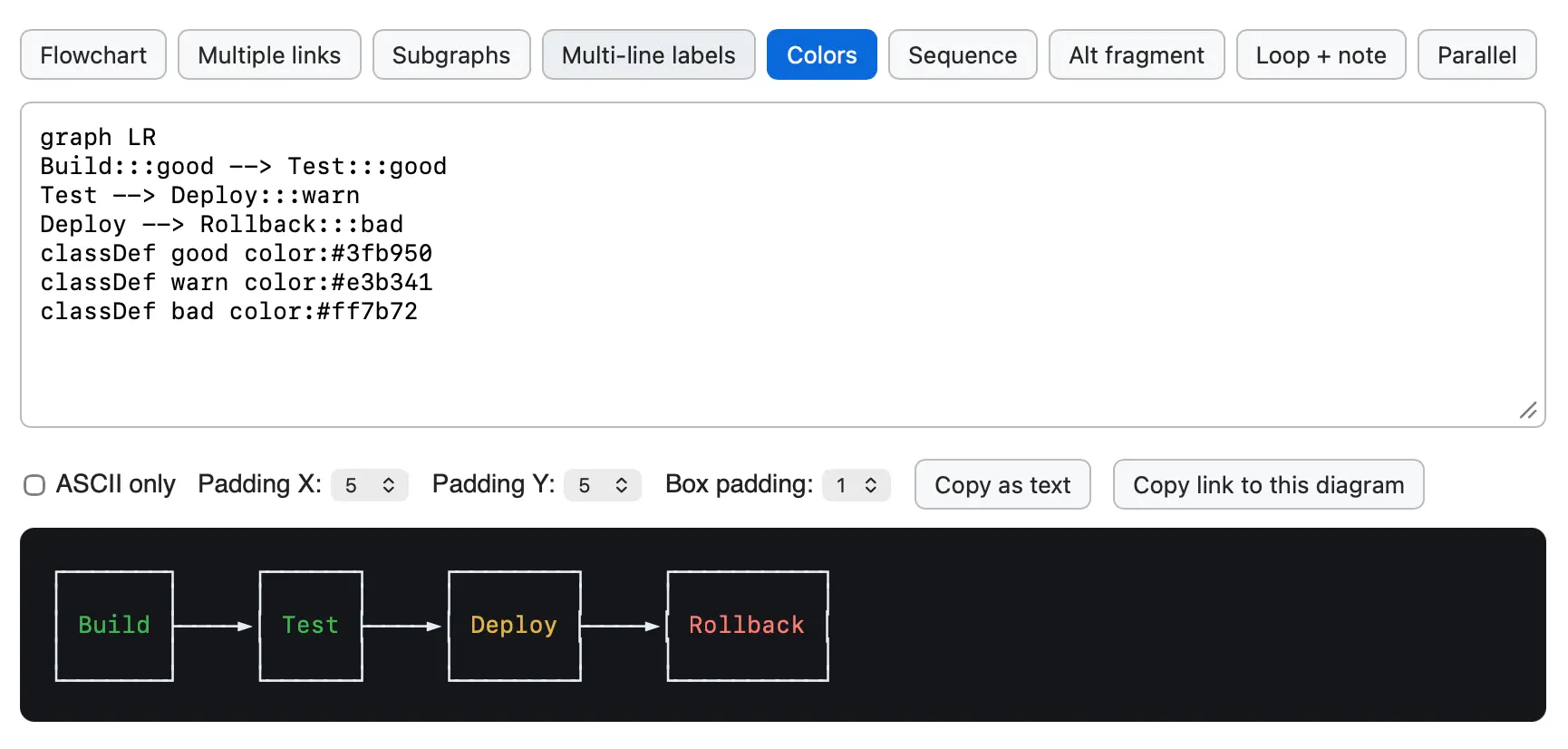
Tool: Mermaid to ASCII art (mermaid-ascii)
After building the Mermaid to ASCII tool based on Grok Build's Rust code I learned that there's an older, more fully-featured Go library called AlexanderGrooff/mermaid-ascii that implements a similar pattern, so I had Claude Fable 5 compile that one to WebAssembly as well so I could compare the two.
This one includes support for colors!

Tags: go, tools, webassembly, mermaid
the website of jyn
• jyn
I just miss doing art. Don't you?
Pluralistic: Daily links from Cory Doctorow
• Cory Doctorow
On file deletions. We’ve investigated a handful of reports where GPT-5.6 unexpectedly deleted files.
What we have found is that this most commonly occurs when:
- Full access mode is enabled and codex is run without sandboxing protections, including without auto review being enabled
- The model attempts to override the $HOME env var to define a temporary directory.
- The model makes an honest mistake and mistakenly deletes $HOME instead.
— Thibault Sottiaux, describing a pretty gnarly Codex bug
Tags: codex, coding-agents, generative-ai, ai, llms
The Old New Thing
• Raymond Chen
Inferring the code's history.
The post Speculating on how the buggy control panel extension truncated a value that it had right in front of it appeared first on The Old New Thing.
I realize that some people really dislike AI, but this is an area where I'm willing to absolutely put my foot down as the top-level maintainer.
Linux is not one of those anti-AI projects, and if somebody has issues with that, they can do the open-source thing and fork it.
Or just walk away.
AI is a tool, just like other tools we use. And it's clearly a useful one.
It may not have been that "clearly" even just a year ago, but it's no longer in question today.
There are other questions around AI (like what the economy of it will actually look like in the end), but "is it useful" is no longer one of those questions. Anybody who doubts that clearly hasn't actually used it.
— Linus Torvalds, Linux Media Mailing List
Tags: open-source, linus-torvalds, linux, generative-ai, ai, llms

Construction Physics
• Brian Potter
An enormous amount of ink has been spilled (some of it by me) on the trials and tribulations of complying with the National Environmental Policy Act, better known as NEPA.
Terence Eden’s Blog
• @edent
The good folks at Thermal Master have sent me their DV2 camera to review. As their name suggests, this is a thermal / infrared camera - they've specifically designed this for bird watching and animal spotting. Let's put it through its paces and see how it compares to the competition! Straight away you can see it is different from normal IR cameras - they tend to have a small fixed screen and a …
The Silicon Underground
• Dave Farquhar
Intel was founded July 18, 1968, by semiconductor pioneers Gordon Moore (of Moore’s law fame) and Robert Noyce and investor Arthur Rock. Intel’s employee #3 was Andrew Grove. Moore, Noyce, and Grove had all worked together at Fairchild Semiconductor in
The post Intel founded July 18, 1968 appeared first on The Silicon Underground.
Tedium: The Dull Side of the Internet.
• Ernie Smith
With Sony clobbering the physical game market and Grand Theft Auto 6 eschewing discs entirely, it makes one long for kiosks that could make disks on demand—a model that actually once existed in the UK.
Tool: Mermaid to Unicode box art (grok-mermaid)
While exploring the codebase for the newly open-sourced Grok CLI coding agent I came across xai-grok-markdown/src/mermaid.rs, a "self-contained terminal renderer for Mermaid diagrams" written in Rust.
I figured it would be fun to try that out in a browser via WebAssembly. Here's the prompt I ran in Claude Code for web (Fable 5), and this is what the resulting tool looks like:
![Screenshot of a Mermaid diagram editor showing source code and rendered flowchart. The code reads: graph TD Start[Request received] --> Auth{Authenticated?} Auth -->|yes| Rate{Rate limit OK?} Auth -->|no| R401[401 Unauthorized] Rate -->|yes| H(Handle request) Rate -->|no| R429[429 Too Many Requests] H -.-> Log[Audit log] H ==> Resp[200 OK]. Below the code are controls labeled Max width: Fit output panel, Copy as text, and Copy link to this diagram. The rendered flowchart on a dark background flows top-down: Request received leads to Authenticated?, which branches yes to Rate limit OK? and no to 401 Unauthorized. Rate limit OK? branches yes to Handle request and no to 429 Too Many Requests. Handle request connects with a dotted arrow to Audit log and a thick arrow to 200 OK.](https://static.simonwillison.net/static/2026/grok-mermaid-wasm.png)