
An AI interview about explaining hard things simply, conducted on a dog walk
davewiner's subscription list, hackerNewsStars category. List created by feedlandDatabase v0.8.16.

Works on My Machine
• Scott Werner
The Wizard With the Very Defensible Pond
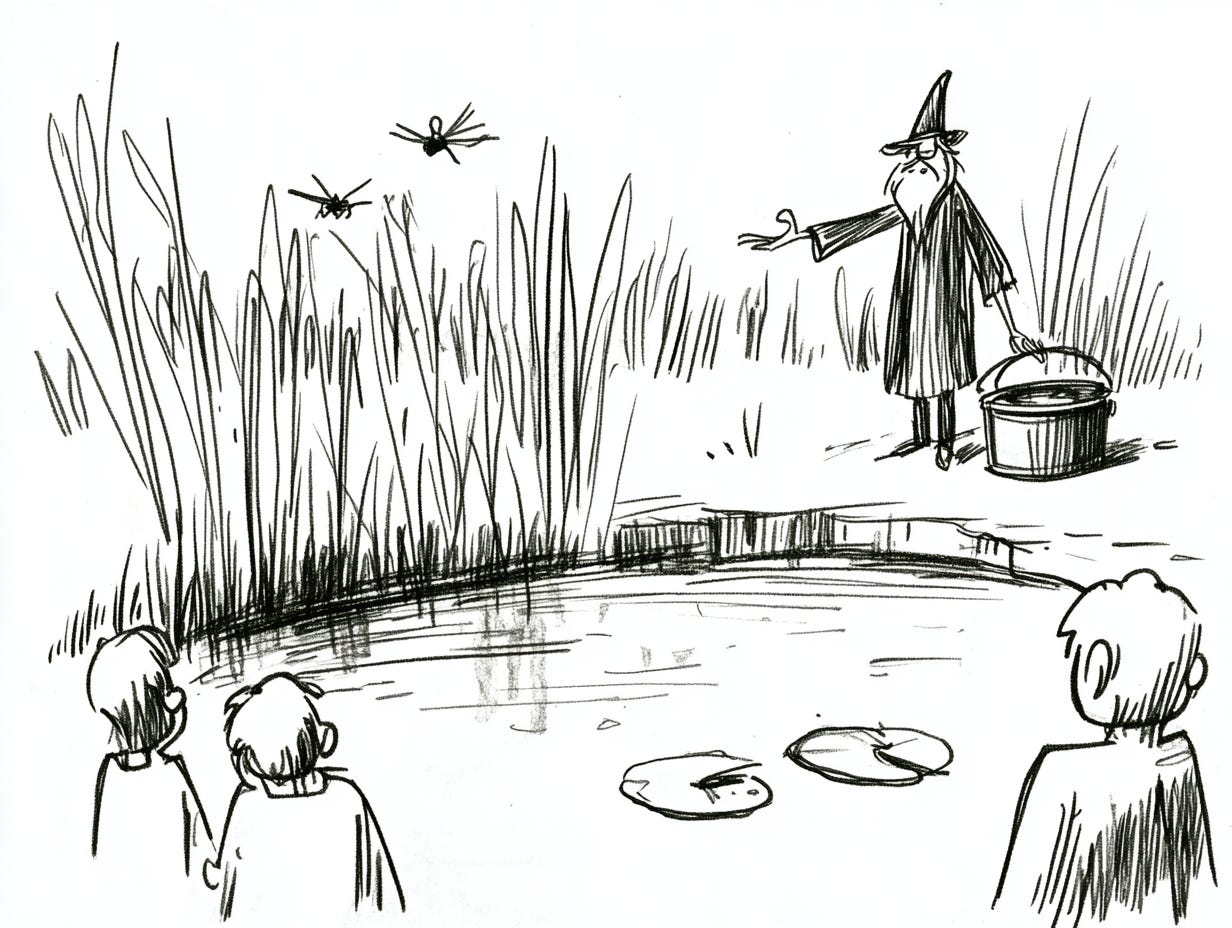
There was once a wizard who lived beside a pond.

How my minimal, memory-safe Go rsync steers clear of vulnerabilities
Back in January 2025, multiple different security researchers published a total
of 6 security vulnerabilities in
rsync, some of which
allow arbitrary code execution and file leaks, so naturally I was wondering
whether/how my gokrazy/rsync implementation
was affected. Did imp...
Andrew Nesbitt
• Andrew Nesbitt
Signing is for the bad days

TUF, in-toto, and Sigstore only look pointless while nothing is on fire
The Eternal Sloptember
I’m calling it now, the adoption of AI agents into software development will be one of the most costly mistakes in the field’s history. Agents cannot program, and it’s taking longer and longer to realize that they can’t. They are a highly sophisticated statistical model designed to mimic the distribution of programming. The output is broken, but in a way that’s getting harder and harder to detect. Which is exactly what you’d expect from an increasingly accurate statistical model.

Troy Hunt
• Troy Hunt
Weekly Update 505

Well, that didn't last long! Recording this on Saturday morning my time, I observed ShinyHunters having gone quiet since the massive haul that would have been the Instructure ransom. It was two weeks almost to the hour since I'd first heard rumour of payment being made,

Armin Ronacher's Thoughts and Writings
• Armin Ronacher
Building Pi With Pi
Pi is now part of Earendil, but in the important sense it is
still Mario’s project. He has been living with its
issue tracker longer than I have, and he has been exposed to the weirdness of
the new form of agent traffic in Open Source projects for longer too. This post
is ...

Childhood Computing
I recently stumbled upon a nice blog post titled
Childhood
Computing. It made me think about my own childhood computing
experience. I am much older than the author of the aforementioned
post, but like them, I too love computers. I have for most of my
life.
...
Games Are the Art Form of Our Time
Submissions for Australia’s next National Cultural Policy closed in May 2026. I wrote one, on behalf of Tasmanian Game Makers, because I want games taken seriously as what they are: the art form most of us actually play.
Read the full submission on Tas Game Makers
Here are the highlights.
Games are the art form of our time. In 2025, 82% of Australians played them, the average player was 35, and women now make up just over half of all players. On the government’s own data, digital games development has been the fastest-growing of all cultural and creative activities in the country over the past decade. Games are also one of our most export-heavy creative industries: 93% of the Australian sector’s revenue comes from overseas.
On the <dl>
I learned a few new-to-me things about the
<dl> element from this article by Ben Meyer:
- A
<dt>can be followed by multiple<dd> - You can optionally group the
<dt>and<dd>elements in a<div>for styling - but only a<div>. - You can label them using ARIA.
- They've been called "description lists", not "definition lists", since an HTML5 draft in 2008.
So this is valid:
<h2 id="credits">Credits</h2>
<dl aria-labelledby="credits">
  <div>
    <dt>Author</dt>
    <dd>Jeffrey Zeldman</dd>
    <dd>Ethan Marcotte</dd>
  </div>
</dl>
Here's a useful note from Adrian Roselli on screen reader support for description lists.
Via Hacker News
Tags: css, html, screen-readers, web-standards
Reverse engineering circuitry in a Spacelab computer from 1980
Spacelab was a reusable laboratory that could be carried in the cargo bay of the Space Shuttle, providing lab space for astronauts
and experiments.
Spacelab was controlled by a French-built minicomputer, called the Mitra 125 MS.
Unlike modern computers, this computer didn't ...

Construction Physics
• Brian Potter
Reading List 05/23/26

Squatter removal services, Apple finding uses for defective chips, process heat use in California, the brewing Colorado River crisis, and more.
Andrew Nesbitt
• Andrew Nesbitt
This Week in Package Management: 23 May 2026
Releases, advisories, and articles from across the package management world
Some notes on how we ended up with Palantir & how to replace it
There is justified anger about governments relying on Palantir software. There are also calls to write replacement software, perhaps imbued with European values. And I’d love for that to happen pronto, but first we need to understand a few things. It is not just the software. Image by Mariia Shalabaieva on Unsplash “Palantir is often called a data broker, a data miner, or a giant database of personal information. In reality, it’s none of these—but even former employees struggle to explain it” - Wired
There is only one bad AI scenario
I’ve pushed AI doomers on how exactly the AI kills us, and I’ve never heard a good answer. I think Skynet style scenarios where humanity is largely opposed to an out of control AI are science fiction domination fantasies, along with Gray goo bottom-up scenarios. Both of these assume a major continuity break with current reality, too bizarre to be true. But unfortunately, you don’t need this for humanity to end as an open-ended evolutionary process. I think the danger is that AI continues to optimize the current societal loss function of domestication.
Don't Roll Your Own ...
This is going to be a rant about modern web design practices. But
before I get to that, let me begin with a familiar principle from
the world of cryptography. Among software developers, and
especially among those who work on security-sensitive systems, there
is ...
The memory shortage is causing a repricing of consumer electronics
The memory shortage is causing a repricing of consumer electronics
David Oks provides the clearest explanation I've seen yet of why consumer products that use memory are likely to get significantly more expensive over the next few years.
The short version is that memory manu...
Jeff Geerling
• Jeff Geerling
News about Raspberry Pi 6 and Microcontroller Development
On Thursday, three of the lead Raspberry Pi engineers hosted an AMA on the r/engineering subreddit.

Raspberry Pi 6
One of the most interesting tidbits was on the Pi 6.
Looking back at previous launches:
- 2012: Raspberry Pi
- 2015: Raspberry Pi 2 (+3 years)
- 2016: Raspberry Pi 3 (+1 year)
- 2019: Raspberry Pi 4 (+3 years)
- 2023: Raspberry Pi 5 (+4 years)
Following that cycle, one would expect a Pi 6 3-4 years after the Pi 5, which would put it in 2026 or 2027.
pydantic-monty investigation
Research: pydantic-monty investigation
It's been a few months since I last poked at Monty, the sandboxed subset of Python implemented in Rust. I had Claude Code look at the most recent release.
Importantly the max_duration_secs, max_memory, max_allocations, and max_recursion_depth settings all appear to work as advertised.
Tags: python, sandboxing, pydantic
Krebs on Security
• BrianKrebs
Lawmakers Demand Answers as CISA Tries to Contain Data Leak
Lawmakers in both houses of Congress are demanding answers from the U.S. Cybersecurity & Infrastructure Security Agency (CISA) after KrebsOnSecurity reported this week that a CISA contractor intentionally published AWS GovCloud keys and a vast trove of other agency secrets on a public GitHub account. The inquiry comes as CISA is still struggling to contain the breach and invalidate the leaked credentials.