Sign up

Simon Willison's Weblog Supports Webmention
Text

Quoting John Gruber

The real goldmine isn’t that Apple gets a cut of every App Store transaction. It’s that Apple’s platforms have the best apps, and users who are drawn to the best apps are thus drawn to the iPhone, Mac, and iPad. That edge is waning. Not because software on other platforms is getting better, but because third-party software on iPhone, Mac, and iPad is regressing to the mean, to some extent, because fewer developers feel motivated — artistically, financially, or both — to create well-crafted idiomatic native apps exclusively for Apple’s platforms.

John Gruber

Tags: apple, john-gruber

Simon Willison's Weblog Supports Webmention
Text

Gemini 3.1 Flash TTS

Gemini 3.1 Flash TTS Google released Gemini 3.1 Flash TTS today, a new text-to-speech model that can be directed using prompts. It's presented via the standard Gemini API using gemini-3.1-flash-tts-preview as the model ID, but can only output audio files. The prompting guide...

Simon Willison's Weblog Supports Webmention
Text

Gemini 3.1 Flash TTS

Tool: Gemini 3.1 Flash TTS

See my notes on Google's new Gemini 3.1 Flash TTS text-to-speech model.

Tags: gemini, google

Simon Willison's Weblog Supports Webmention
Text

datasette-ports 0.3

Release: datasette-ports 0.3

A small update for my tool for helping me figure out what all of the Datasette instances on my laptop are up to.

  • Show working directory derived from each PID
  • Show the full path to each database file

Output now looks like this:

http://127.0.0.1:8007/ - v1.0a26
  Directory: /Users/simon/dev/blog
  Databases:
    simonwillisonblog: /Users/simon/dev/blog/simonwillisonblog.db
  Plugins:
    datasette-llm
    datasette-secrets
http://127.0.0.1:8001/ - v1.0a26
  Directory: /Users/simon/dev/creatures
  Databases:
    creatures: /tmp/creatures.db

Tags: datasette

Computer Things Supports Webmention
Text

A sufficiently comprehensive spec is not (necessarily) code

Simon Willison's Weblog Supports Webmention
Text

Quoting Kyle Kingsbury

I think we will see some people employed (though perhaps not explicitly) as meat shields: people who are accountable for ML systems under their supervision. The accountability may be purely internal, as when Meta hires human beings to review the decisions of automated moderation systems. It may be external, as when lawyers are penalized for submitting LLM lies to the court. It may involve formalized responsibility, like a Data Protection Officer. It may be convenient for a company to have third-party subcontractors, like Buscaglia, who can be thrown under the bus when the system as a whole misbehaves.

Kyle Kingsbury, The Future of Everything is Lies, I Guess: New Jobs

Tags: ai-ethics, careers, ai, kyle-kingsbury

Jeff Geerling
Text • Jeff Geerling

An Arm Mainboard for the Framework Laptop

Using the repair-friendly Framework 13 laptop chassis, I've tested the low-end x86 option (a Ryzen AI 5 340 Mainboard), the fastest RISC-V option (DC-ROMA II), and today I'm publishing results from the only Arm Mainboard, the MetaComputing AI PC, which has a 12-core Arm SoC and up to 32 GB of soldered-on RAM.

MetaComputing AI PC Mainboard next to Framework 13 laptop

My Framework 13 has run on x86, RISC-V, and now Arm, making it something of a 'Ship of Theseus'.

Dwarkesh Podcast
Audio • Dwarkesh Patel

Jensen Huang – TPU competition, why we should sell chips to China, & Nvidia’s supply chain moat

“If our next several years are a trillion dollars in scale, we have the supply chain to do it"

Dwarkesh Podcast
Text • Dwarkesh Patel

What I learned this week - Can distillation be stopped, Mythos and the cybersecurity equilibrium, Pipeline RL

What I learned this week - Can distillation be stopped, Mythos and the cybersecurity equilibrium, Pipeline RL

April 15, 2025

Pluralistic: Daily links from Cory Doctorow
Text • Cory Doctorow

Pluralistic: Rights for robots (15 Apr 2026)

Today's links Rights for robots: Not everything deserves moral consideration. Hey look at this: Delights to delectate. Object permanence: 7 years under the DMCA; NOLA mayoral candidate x New Orleans Square; Kettling is illegal; AOL won't deliver critical emails; Chris Ware x ...

Simon Willison's Weblog Supports Webmention
Text

Zig 0.16.0 release notes: "Juicy Main"

Zig 0.16.0 release notes: "Juicy Main" Zig has really good release notes - comprehensive, detailed, and with relevant usage examples for each of the new features. Of particular note in the newly released Zig 0.16.0 is what they are calling "Juicy Main" - a dependency injecti...

Simon Willison's Weblog Supports Webmention
Text

datasette PR #2689: Replace token-based CSRF with Sec-Fetch-Site header protection

datasette PR #2689: Replace token-based CSRF with Sec-Fetch-Site header protection Datasette has long protected against CSRF attacks using CSRF tokens, implemented using my asgi-csrf Python library. These are something of a pain to work with - you need to scatter forms in te...

Krebs on Security
Text • BrianKrebs

Patch Tuesday, April 2026 Edition

Microsoft today pushed software updates to fix a staggering 167 security vulnerabilities in its Windows operating systems and related software, including a SharePoint Server zero-day and a publicly disclosed weakness in Windows Defender dubbed "BlueHammer." Separately, Google Chrome fixed its fourth zero-day of 2026, and an emergency update for Adobe Reader nixes an actively exploited flaw that can lead to remote code execution.

Simon Willison's Weblog Supports Webmention
Text

Trusted access for the next era of cyber defense

Trusted access for the next era of cyber defense OpenAI's answer to Claude Mythos appears to be a new model called GPT-5.4-Cyber: In preparation for increasingly more capable models from OpenAI over the next few months, we are fine-tuning our models specifically to enable d...

Simon Willison's Weblog Supports Webmention
Text

Cybersecurity Looks Like Proof of Work Now

Cybersecurity Looks Like Proof of Work Now The UK's AI Safety Institute recently published Our evaluation of Claude Mythos Preview’s cyber capabilities, their own independent analysis of Claude Mythos which backs up Anthropic's claims that it is exceptionally effective at id...

Experimental History
Text • Adam Mastroianni

Nothing ever dies. It merely becomes embarrassing.

Nothing ever dies. It merely becomes embarrassing.

OR: the Halo theory of science

Pluralistic: Daily links from Cory Doctorow
Text • Cory Doctorow

Pluralistic: In praise of (some) compartmentalization (14 Apr 2026)

Today's links In praise of (some) compartmentalization: Go with the flow (mostly). Hey look at this: Delights to delectate. Object permanence: Multitasking teens; Copyrighted dirt; NZ internet disconnection x CHCH quake; Hubble cake; Churchill's booze Rx; Fraud-resistant elec...

Troy Hunt Supports Webmention
Text • Troy Hunt

Weekly Update 499

Weekly Update 499

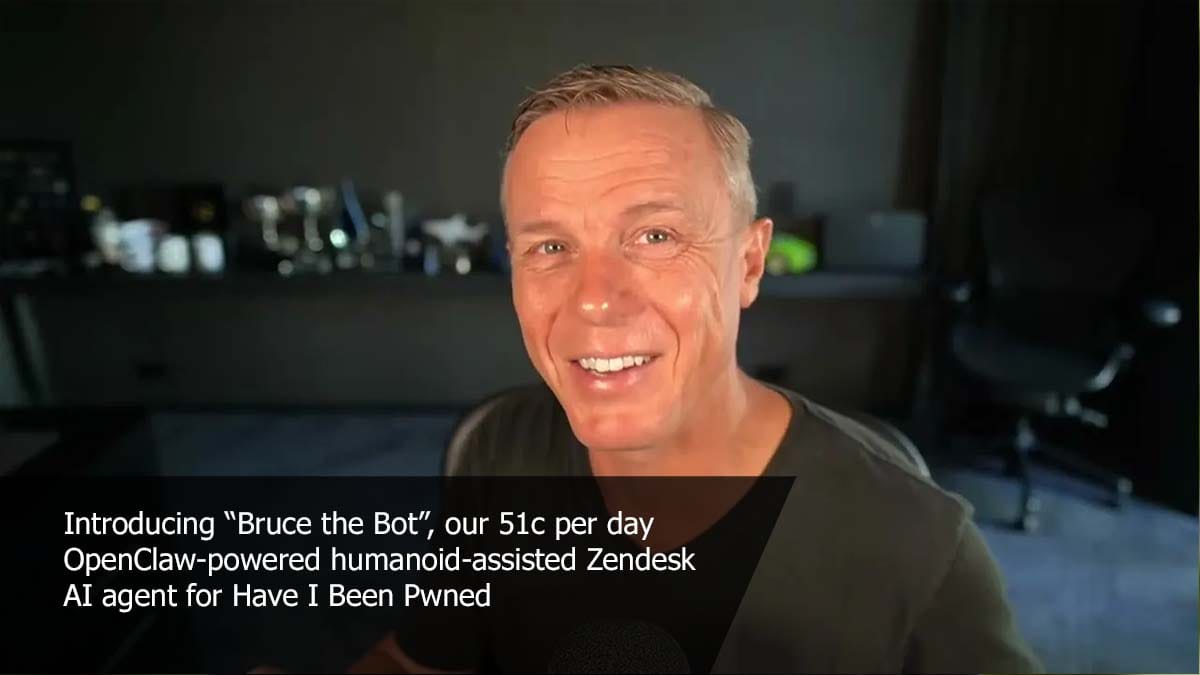
I'm starting to become pretty fond of Bruce. Actually, I've had a bit of an epiphany: an AI assistant like Bruce isn't just about auto-responding to tickets in an entirely autonomous manner; it's also pretty awesome at responding with just a little

Dr Paris Buttfield-Addison
Text

Big Plans is out now

Big Plans is out now on iOS and Android. We built it at Secret Lab for Bank of us, the Tasmanian customer-owned bank, as a story-based game for kids aged 5 to 8 about money. Specifically, the value of money, needs versus wants, and the basics of planning and making choices.

We loved making it. The brief was unusually thoughtful for a kids’ app: no ads, no in-app purchases, no online interaction, no marketing pitches at children. Just a small game that helps a five-year-old start thinking about how money works. There’s a parent guide that goes with it for families who want to keep the conversation going off-screen.

Entropic Thoughts Supports Webmention
Text • kqr

Object Oriented Programming in Ada

Ada is incredibly well designed. One way this shows is that it takes the big, monolithic features of other languages and breaks them down into their constituent parts, so we can choose which portions of those features we want. The example I often reach for to explain this is object-oriented programming.

I never truly understood object-oriented programming until I learned Ada, which breaks down object-oriented programming into separate features, like

  • encapsulation,
  • reuse,
  • inheritance,
  • abstract interfaces,
  • type extension, and
  • dynamic dispatch.

(Continue reading the full article on the web.)