Sign up

davewiner's subscription list, hackerNewsStars category. List created by feedlandDatabase v0.9.1.

An external list from lists.opml.org.
https://lists.opml.org/hackerNewsStars.xml

Troy Hunt Supports Webmention
• Troy Hunt

Weekly Update 483

Weekly Update 483

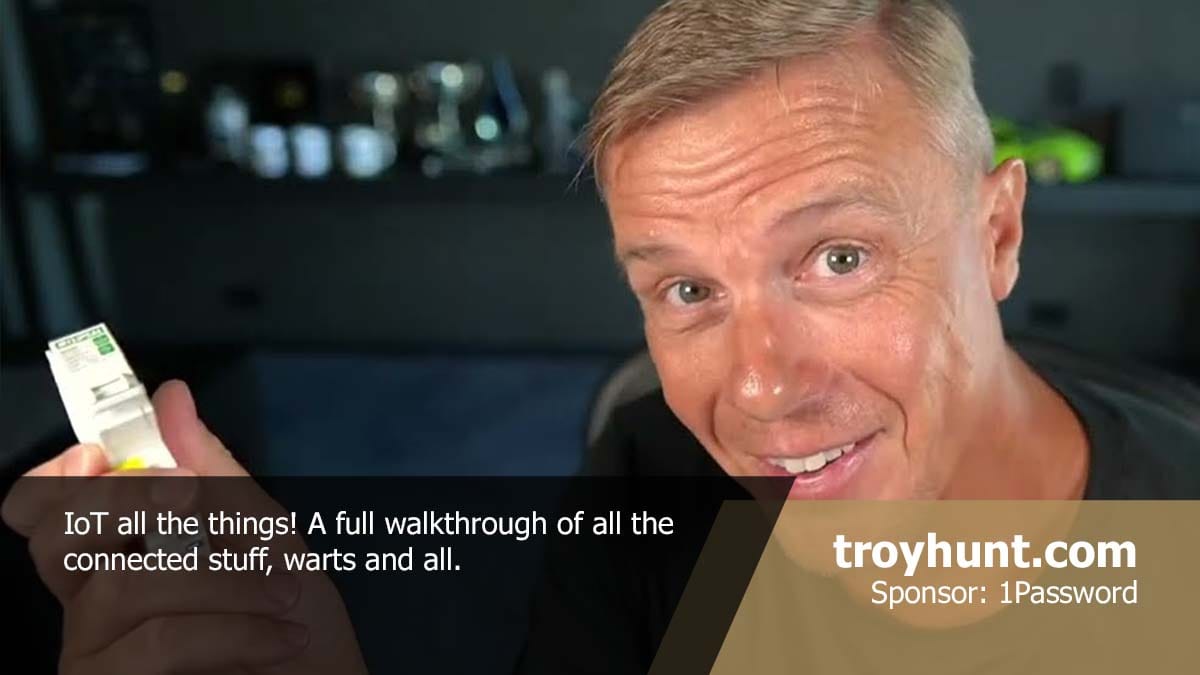
Building out an IoT environment is a little like the old Maslow's Hierarchy of Needs. All the stuff on the top is only any good if all the stuff on the bottom is good, starting with power. This week, I couldn't even get that right, but

<antirez>

Reflections on AI at the end of 2025

http://antirez.com/news/157

* For years, despite functional evidence and scientific hints accumulating, certain AI researchers continued to claim LLMs were stochastic parrots: probabilistic machines that would: 1. NOT have any representation about the meaning of the prompt. 2. NOT have any representatio...

Simon Willison's Weblog Supports Webmention

Quoting Andrej Karpathy

In 2025, Reinforcement Learning from Verifiable Rewards (RLVR) emerged as the de facto new major stage to add to this mix. By training LLMs against automatically verifiable rewards across a number of environments (e.g. think math/code puzzles), the LLMs spontaneously develop strategies that look like "reasoning" to humans - they learn to break down problem solving into intermediate calculations and they learn a number of problem solving strategies for going back and forth to figure things out (see DeepSeek R1 paper for examples).

Andrej Karpathy, 2025 LLM Year in Review

Tags: andrej-karpathy, llm, generative-ai, llm-reasoning, definitions, ai, llms, deepseek

Simon Willison's Weblog Supports Webmention

Sam Rose explains how LLMs work with a visual essay

Sam Rose explains how LLMs work with a visual essay

Sam Rose is one of my favorite authors of explorable interactive explanations - here's his previous collection.

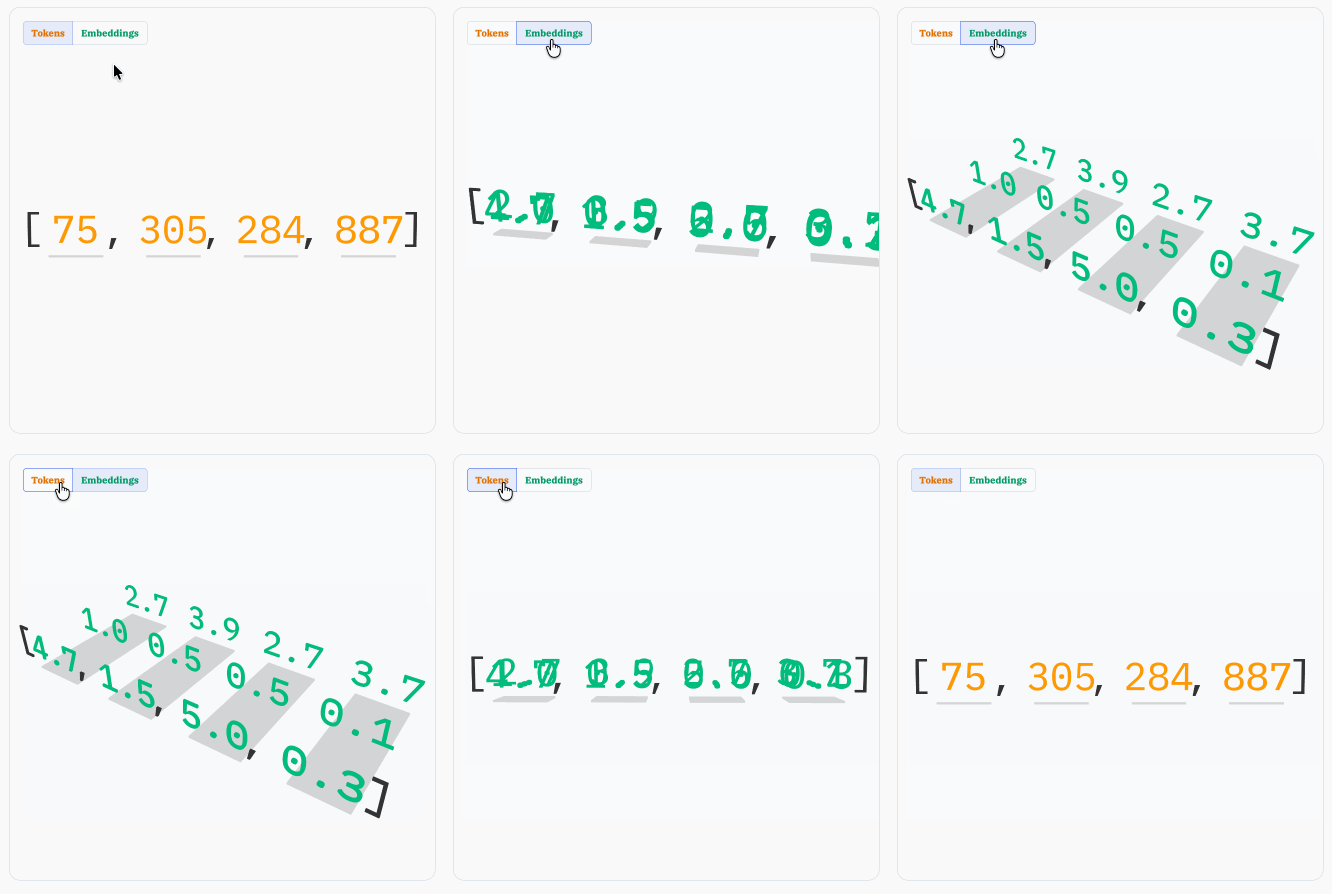
Sam joined ngrok in September as a developer educator. Here's his first big visual explainer for them, ostensibly about how prompt caching works but it quickly expands to cover tokenization, embeddings, and the basics of the transformer architecture.

The result is one of the clearest and most accessible introductions to LLM internals I've seen anywhere.

Animation. Starts in tokens mode with an array of 75, 305, 24, 887 - clicking embeddings animates those into a 2D array showing each one to be composed of three floating point numbers.

Tags: ai, explorables, generative-ai, llms, sam-rose, tokenization

Krebs on Security
• BrianKrebs

Dismantling Defenses: Trump 2.0 Cyber Year in Review

The Trump administration has pursued a staggering range of policy pivots this past year that threaten to weaken the nation’s ability and willingness to address a broad spectrum of technology challenges, from cybersecurity and privacy to countering disinformation, fraud and corruption. These shifts, along with the president’s efforts to restrict free speech and freedom of the press, have come at such a rapid clip that many readers probably aren’t even aware of them all.

Bert Hubert's writings Valid

Nationaal Agentschap Baanbrekende Innovatie, in EU of niet?

Ik ben eigenlijk op vakantie, maar toch een korte blogpost. Het is (in)formatietijd, en er worden plannen gemaakt. Eerder dit jaar kwam het ministerie van Economische Zaken met het idee een Nationaal Agentschap Disruptieve Innovatie op te richten, zoals ook al bestaat in Duitsland, en het meest beroemd in Amerika. Ik schreef hier eerder al een artikeltje over met meer details: Klassieke manieren om wetenschap en innovatie te stimuleren zijn erg ongeschikt voor disruptieve innovatie, ideeën die misschien helemaal niet gaan werken, maar als ze dat wel doen de wereld kunnen veranderen.

Matt Godbolt’s blog

Chasing your tail

The art of not (directly) coming back: tail call optimisation

Simon Willison's Weblog Supports Webmention

Introducing GPT-5.2-Codex

Introducing GPT-5.2-Codex The latest in OpenAI's Codex family of models (not the same thing as their Codex CLI or Codex Cloud coding agent tools). GPT‑5.2-Codex is a version of GPT‑5.2⁠ further optimized for agentic coding in Codex, including improvements on long-horizon wo...

Simon Willison's Weblog Supports Webmention

Agent Skills

Agent Skills Anthropic have turned their skills mechanism into an "open standard", which I guess means it lives in an independent agentskills/agentskills GitHub repository now? I wouldn't be surprised to see this end up in the AAIF, recently the new home of the MCP specifica...

Simon Willison's Weblog Supports Webmention

Your job is to deliver code you have proven to work

In all of the debates about the value of AI-assistance in software development there's one depressing anecdote that I keep on seeing: the junior engineer, empowered by some class of LLM tool, who deposits giant, untested PRs on their coworkers - or open source maintainers - ...

Simon Willison's Weblog Supports Webmention

swift-justhtml

swift-justhtml

First there was Emil Stenström's JustHTML in Python, then my justjshtml in JavaScript, then Anil Madhavapeddy's html5rw in OCaml, and now Kyle Howells has built a vibespiled dependency-free HTML5 parser for Swift using the same coding agent tricks against the html5lib-tests test suite.

Kyle ran some benchmarks to compare the different implementations:

  • Rust (html5ever) total parse time: 303 ms
  • Swift total parse time: 1313 ms
  • JavaScript total parse time: 1035 ms
  • Python total parse time: 4189 ms

Tags: html5, ai, generative-ai, llms, ai-assisted-programming, vibe-coding, swift

overreacted — A blog by Dan Abramov

Introducing RSC Explorer

My new hobby project.

Jim Nielsen’s Blog Valid

You Might Also Like: My Notes Blog

If you subscribe to this blog, you must like it — right? I mean, you are subscribed to it. And if you like this blog, you might also like my notes blog. It’s where I take short notes of what I read, watch, listen to, or otherwise consume, add my two cents, and fire it off in...

DYNOMIGHT Valid
• dynomight

Good if make prior after data instead of before

because truth is many

Simon Willison's Weblog Supports Webmention

Your job is to deliver code you have proven to work

In all of the debates about the value of AI-assistance in software development there's one depressing anecdote that I keep on seeing: the junior engineer, empowered by some class of LLM tool, who deposits giant, untested PRs on their coworkers - or open source maintainers - ...

Pluralistic: Daily links from Cory Doctorow
• Cory Doctorow

Pluralistic: A perfect distillation of the social uselessness of finance (18 Dec 2025)

Today's links A perfect distillation of the social uselessness of finance: A final thought for the yule. Hey look at this: Delights to delectate. Object permanence: Droidflake; Spy Skymall; Malthus is a dope; Happy Public Domain Day 2025. Upcoming appearances: Where to find m...

Jeff Geerling
• Jeff Geerling

1.5 TB of VRAM on Mac Studio - RDMA over Thunderbolt 5

1.5 TB of VRAM on Mac Studio - RDMA over Thunderbolt 5

Mac Studio Cluster

Apple gave me access to this Mac Studio cluster to test RDMA over Thunderbolt, a new feature in macOS 26.2. The easiest way to test it is with Exo 1.0, an open source private AI clustering tool. RDMA lets the Macs all act like they have one giant pool of RAM, which speeds up things like massive AI models.

Jeff Geerling

Jeff Geerling
• Jeff Geerling

1.5 TB of VRAM on Mac Studio - RDMA over Thunderbolt 5

Mac Studio Cluster

Apple gave me access to this Mac Studio cluster to test RDMA over Thunderbolt, a new feature in macOS 26.2. The easiest way to test it is with Exo 1.0, an open source private AI clustering tool. RDMA lets the Macs all act like they have one giant pool of RAM, which speeds up things like massive AI models.

The stack of Macs I tested, with 1.5 TB of unified memory, costs just shy of $40,000, and if you're wondering, no I cannot justify spending that much money for this. Apple loaned the Mac Studios for testing. I also have to thank DeskPi for sending over the 4-post mini rack containing the cluster.

Matt Godbolt’s blog

Partial inlining

Inlining doesn't have to be all-or-nothing

Simon Willison's Weblog Supports Webmention

Inside PostHog: How SSRF, a ClickHouse SQL Escaping 0day, and Default PostgreSQL Credentials Formed an RCE Chain

Inside PostHog: How SSRF, a ClickHouse SQL Escaping 0day, and Default PostgreSQL Credentials Formed an RCE Chain Mehmet Ince describes a very elegant chain of attacks against the PostHog analytics platform, combining several different vulnerabilities (now all reported and fi...