Sign up

Schneier on Security

Not verified No WebSub updates No webmention support Not yet validated

Public lists
davewiner/blogroll
Fetched

Schneier on Security
• Bruce Schneier

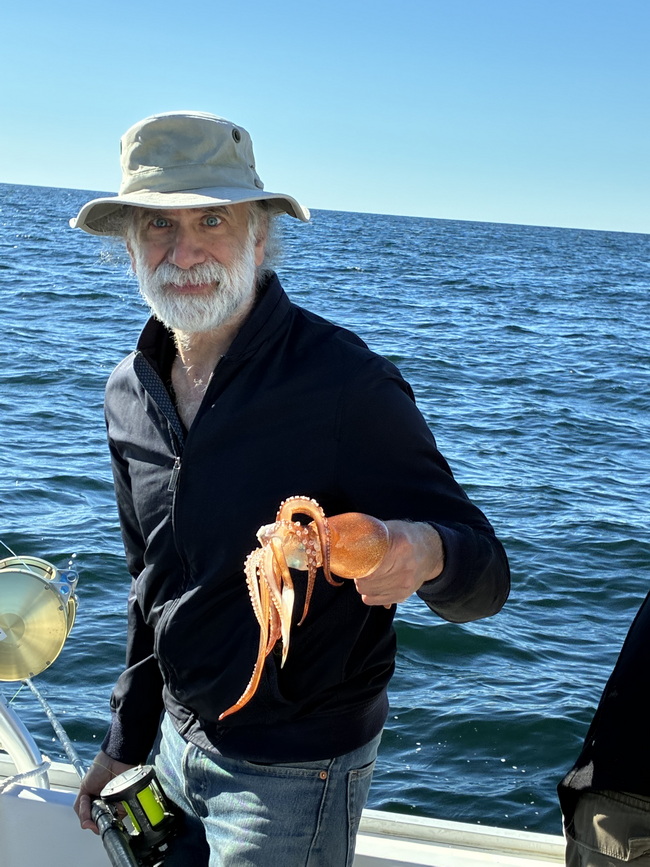
Friday Squid Blogging: Illex Squid Catch in the Falklands

Lower catch this year.

As usual, you can also use this squid post to talk about the security stories in the news that I haven’t covered.

Blog moderation policy.

Schneier on Security
• Bruce Schneier

Why AI Needs a “Genie Coefficient”

This essay was written with Barath Raghavan, and originally appeared in The Guardian.

Major benchmarks measure what AI can do. None measure whether it does what you mean: the distance between what you ask an AI to do and the unspoken assumptions about how you want the AI to do it. We propose a new metric: the Genie coefficient.

There’s often a gap between one person’s request and another’s understanding. Most of the time, we bridge it using general knowledge. For example, if you ask a friend to get you coffee, they’ll pour a cup from the pot or buy one from a coffee shop. They won’t bring you a bag of raw beans or snatch a cup from a stranger and hand it to you. You never specified any of this. You never had to...

Schneier on Security
• Bruce Schneier

End-to-End Encryption and “Going Dark”

New paper: “Encryption and Globalization 15 Years Later: End-to-End Encryption and the Third Round of the ‘Going Dark’ Debate“: Abstract: This Article updates and expands on 2012 research on encryption and globalization, analyzing what the authors call “Round 3” of the Goin...

Schneier on Security
• Bruce Schneier

First-Person Identity Theft Story

Harrowing story of an identity theft victim.

Yes, the person made a mistake—they gave the scammer a two-factor authentication code that allowed the scammer to take over their email address. But the real story here is how, for many of us, the security of most of our accounts hangs on the security of our email accounts.

Schneier on Security
• Bruce Schneier

MIT to Become Hotbed of AI Video Surveillance

It’s a lot: According to information obtained by The Tech, MIT is spending over $3 million on more than 500 AI surveillance cameras in academic buildings, residence halls, and outdoor areas along Memorial Drive. Installation of the new cameras, along with the wiring and inf...

Schneier on Security
• Bruce Schneier

On Flock License Plate Tracking Cameras

A recent story of a writer who was mistakenly identified, tracked, and arrested using data from Flock cameras has gone viral.

The New Jersey plates that were allegedly stolen from the LA dealer were 34 03 DTM, not 34 10 DTM. But when the police report was created and the plate was entered into Flock’s system, it was just recorded as 34 DTM. Just the five large characters, no little number in the middle. And Flock’s AI tech wasn’t registering that non-standard little number when it began picking up the Range Rover around town. It just saw ...

Schneier on Security
• Bruce Schneier

Friday Squid Blogging: Squid Washing Up on Cape Cod Beach

Lots of articles about this.

As usual, you can also use this squid post to talk about the security stories in the news that I haven’t covered.

Blog moderation policy.

Schneier on Security
• Bruce Schneier

Details of Alan Turing’s Voice Encryption System

Really interesting piece of cryptographic history:

In November 2023, a large cache of his wartime papers—nicknamed the “Bayley papers”—was auctioned in London for almost half a million U.S. dollars. The previously unknown cache contains many sheets in Turing’s own handwriting, telling of his top-secret “Delilah” engineering project from 1943 to 1945. Delilah was Turing’s portable voice-encryption system, named after the biblical deceiver of men. There is also material written by Bayley, often in the form of notes he took while Turing was speaking. It is thanks to Bayley that the papers survived: He kept them until he died in 2020, 66 years after Turing passed away...

Schneier on Security
• Bruce Schneier

Protecting Privacy in an AI Era

Daniel Solove argues in the Wall Street Journal (alternate link) that giving people control of their personal data is not an effective way to regulate privacy in this era. Instead, we need to hold companies accountable for their actions, similar to what we do with food and drug companies. Measures such as rigorous data minimization, fiduciary duties, liability for negligent or reckless technological design, liability for algorithms that cause harm, and multi-stakeholder review of technologies will be far more effective.

Paper.

Schneier on Security
• Bruce Schneier

A Video Screen That Is Also a Camera

Amazing:

Researchers from ETH Zurich in Switzerland, however, managed to create a new type of pixel that can simultaneously do both. This hypercharged pixel, called a Fourier pixel, can generate and sense arbitrary light fields and tap into a pixel’s full potential for carrying information by manipulating light’s intensity, oscillation phases, and polarization. The team reported its findings in a paper published yesterday in Nature.

We are one step closer to 1984 technology:

The telescreen received and transmitted simultaneously. Any sound that Winston made, above the level of a very low whisper, would be picked up by it; moreover, so long as he remained within the field of vision which the metal plaque commanded, he could be seen as well as heard. There was of course no way of knowing whether you were being watched at any given moment...

Schneier on Security
• Bruce Schneier

Upcoming Speaking Engagements

This is a current list of where and when I am scheduled to speak:

Schneier on Security
• Bruce Schneier

Vulnerability in FIFA’s Network

FIFA’s network was vulnerable to anyone with even minimal access.

Schneier on Security
• Bruce Schneier

AI Data Centers and the Concentration of Wealth

This essay was written with Nathan E. Sanders, and originally appeared in The Guardian.

Opposition to AI data centers has emerged as a primary theme in US politics, one that—surprisingly—doesn’t fall along party lines. We applaud people coming together for constructive debate on any issue, and agree that communities need to evaluate whether any economic benefits these data centers bring is worth their costs. Still, we worry that a focus on data centers obscures the larger impacts of AI on people’s lives: the concentration of power of AI companies, and their widespread political and financial influence...

Schneier on Security
• Bruce Schneier

Friday Squid Blogging: “Squidbleed” Vulnerability

In a rare combined cybersecurity/squid post, a twenty-nine-year-old squid proxy bug can leak HTTP requests.

As usual, you can also use this squid post to talk about the security stories in the news that I haven’t covered.

Blog moderation policy.

Schneier on Security
• Bruce Schneier

AI Surveillance and Social Progress

In the near future, AI-powered surveillance systems will be able to track everything we do in public, and much of what we do in private. And if we do something wrong—shoplift, litter, jaywalk, you name it—the system will notice, retain it, tie it to your official government record, communicate that fact to you, and provide real-time alerts to any relevant authorities… and maybe also to the general public.

Think of these systems as automated speed cameras, but on steroids. Only they’ll enforce not just speed limits, but any other rule you can imagine. And you won’t receive a ticket weeks later by mail; you’ll be informed about and fined for your violation immediately...

Schneier on Security
• Bruce Schneier

The Language of AI Could Change How Humans Speak

Because of the way they are trained, large language models capture only a slice of human language. They’re trained on the written word, from textbooks to social media posts, and our speech as captured in movies and on television. These models have minimal access to the unscripted conversations we have face to face or voice to voice. This is the vast majority of speech, and a vital component of human culture.

There’s a risk to this. The increased use of large language models means we humans will encounter much more AI-generated text. We humans, in turn, will begin to adopt the linguistic patterns and behaviors of these models. This will affect not just how we communicate with one another, but also how we ...

Schneier on Security
• Bruce Schneier

Cybersecurity and the Gap Between Skill and Ability

Last week, national security agencies from the Five Eyes—that’s the rich, English-language-speaking countries club—jointly released a statement warning of the increasing cyber risks of AI models: in particular, their ability to autonomously hack into systems and networks. The statement was more measured than some of the breathless headlines about it, and the advice they gave is pretty much the standard advice everyone gives—albeit with newfound urgency.

Internet risks are nothing new, and cyberattacks—both large and small—have been a significant issue since long before the current crop of generative AI models...

Schneier on Security
• Bruce Schneier

Google Is Suing Chinese Scammers Who Are Using Gemini

Not sure this will have any effect, but I support the effort:

According to Google’s legal filing, Outsider Enterprise operates through Telegram. The group offers phishing-as-a-service to individuals who may not be technically savvy enough to set up fraudulent websites and text campaigns on their own. In its Telegram channels, Outsider Enterprise reportedly provided instructions on how to use Google’s Gemini AI to create websites that imitate those of Google, YouTube, and government agencies such as New York’s E-ZPass. The group offered nearly 300 scam templates...

Schneier on Security
• Bruce Schneier

France to Stop Certifying Non-Quantum-Safe Encryption

France is accelerating its transition to post-quantum encryption:

France’s cybersecurity agency ANSSI said on Tuesday it would stop certifying security products that lack quantum-resistant encryption, a move that will force government bodies and critical operators to shift away from older systems.

Samih Souissi, ANSSI’s chief of staff, said at the France Quantum conference that the agency would halt such certifications from 2027, and that businesses should be buying only quantum-safe products by 2030.

ANSSI approval is required for use in French government agencies and critical infrastructure, making the policy a de facto phase-out of older encryption...

Schneier on Security
• Bruce Schneier

Flock Cameras Can Surveil Cars Without License Plates

This is from a 2024 company presentation:

Officers can also tap into data showing a car’s decals, bumper stickers, back and top racks—along with temporary and unique state tags.

Flock calls it a “Vehicle Fingerprint” and it’s touted as a way for law enforcement officials to get more information “even when you don’t have full plate information,” the company’s presentation shows.

The company gives police officers the ability to search that data as well, to “build stronger cases with less information upfront.” That includes being able to locate multiple vehicles law enforcement officials believe are moving together and what Flock calls a “multi geo search.”...

Schneier on Security
• Bruce Schneier

Cybersecurity Mission Creep in the US

Interesting paper: “Cybersecurity Mission Creep.”

Abstract: Cybersecurity is experiencing mission creep. Policymakers are casting more and more problems as issues of cybersecurity. So reframed, wildly different policy issues, from misinformation, to child social media safety laws, to antitrust regulations, to alleged journalist misconduct, to anti-sex trafficking statutes become what this Article calls “cybersecuritized.” Before this reframing, these issues present as important but not existential. But once cybersecuritization positions the issues as threats intensified by their technological nature, they gain access to the politics and law of urgency and exceptionalism and invite troubling governance responses...

Schneier on Security
• Bruce Schneier

Papa Johns Surveillance-Based Advertising

Papa Johns is spying on people’s buying activities to predict when they are low on food: The pizza chain recently tapped NBCUniversal, Instacart and the dentsu-owned media agency Carat for help reaching consumers when they’re low on groceries—and thus more likely to be sway...

Schneier on Security
• Bruce Schneier

The Realities of AI Video Surveillance

The Financial Times has a good article on how AI is changing the capabilities of video surveillance, with information from both Israel/Iran and Russia.

I wrote about this sort of thing a few years ago, how AI enables mass spying in the way that computers and networks enabled mass surveillance. The interesting development in the article is that AI allows people to ask natural language questions about video footage to AIs—and AIs can answer them.

In contrast with older tools restricted to a few dozen preset searches, these new tools allow an almost unlimited range of enquiries by enabling language-based searches on video...

Schneier on Security
• Bruce Schneier

Factoring RSA Keys with Many Zeros

Interesting research on a new class of weak RSA keys: keys with lots of zeros. It turns out that these keys are out in the wild.

The badkeys project is an open-source service that checks public keys for known vulnerabilities. While developing this tool, Hanno collected a massive number of real-world keys from public sources, including Certificate Transparency logs, internet-wide TLS and SSH scans, PGP keys, and many others. By searching this dataset for unexpectedly sparse RSA moduli, we uncovered a large number of keys in the wild with the patterns in Figure 1...

Schneier on Security
• Bruce Schneier

Robot Police Officers

We’ve taken one small step towards robot police officers: a drone capable of disarming a suspect:

In a June 22 video posted on the Sacramento County Sheriff’s Office’s Instagram page, an officer wearing goggles can be seen operating a drone to retrieve a knife from an armed suspect hiding inside a cluttered house. “After not responding to negotiators, a drone was deployed inside the residence,” the post says. “Drone pilots located the suspect hiding in a corner of a garage” and then used a high-powered magnet attached to the drone to grab the knife out of the suspect’s hand. In the video ­ which is soundtracked by the “Mission: Impossible” theme song—the intercepted knife can be seen spinning around in the air as the drone carries it back to the deputies...