Sign up

Jeff Geerling

Not verified No WebSub updates No webmention support Not yet validated

Recent content on Jeff Geerling

Managing Editor
Jeff Geerling
Webmaster
Jeff Geerling
Generator
Hugo
Rights
Jeff Geerling
Public lists
davewiner/hackerNewsStars
Fetched

Jeff Geerling
• Jeff Geerling

Adding a backup Internet WAN on my OPNsense Router

AKA "Spectrum has gone down two weeks in a row and I'm sick of it".

I've been borrowing a portable 5G gateway from my Dad for a few weeks, for testing... and two weeks in a row, I've used it as a backup Internet option, since my Spectrum Business cable Internet has gone down.

Spectrum Business Cable Modem offline

And yes, I'd get AT&T Fiber if I had the option, sadly they don't yet provide service at my studio. So I'm stuck with only one high speed wired provider. I may add on my own 5G backup Internet connection in the future, but we're getting off track.

Jeff Geerling
• Jeff Geerling

Open Sauce and GPS time were my summer AI Antiseptics

In the midst of our AI slop revolution, traveling to the West coast for Open Sauce this past weekend was the perfect antiseptic for rising costs, summer heat, and online divisiveness.

It's ironic, then, that I used Claude to vibe code my Tufty GPS Time Badge.

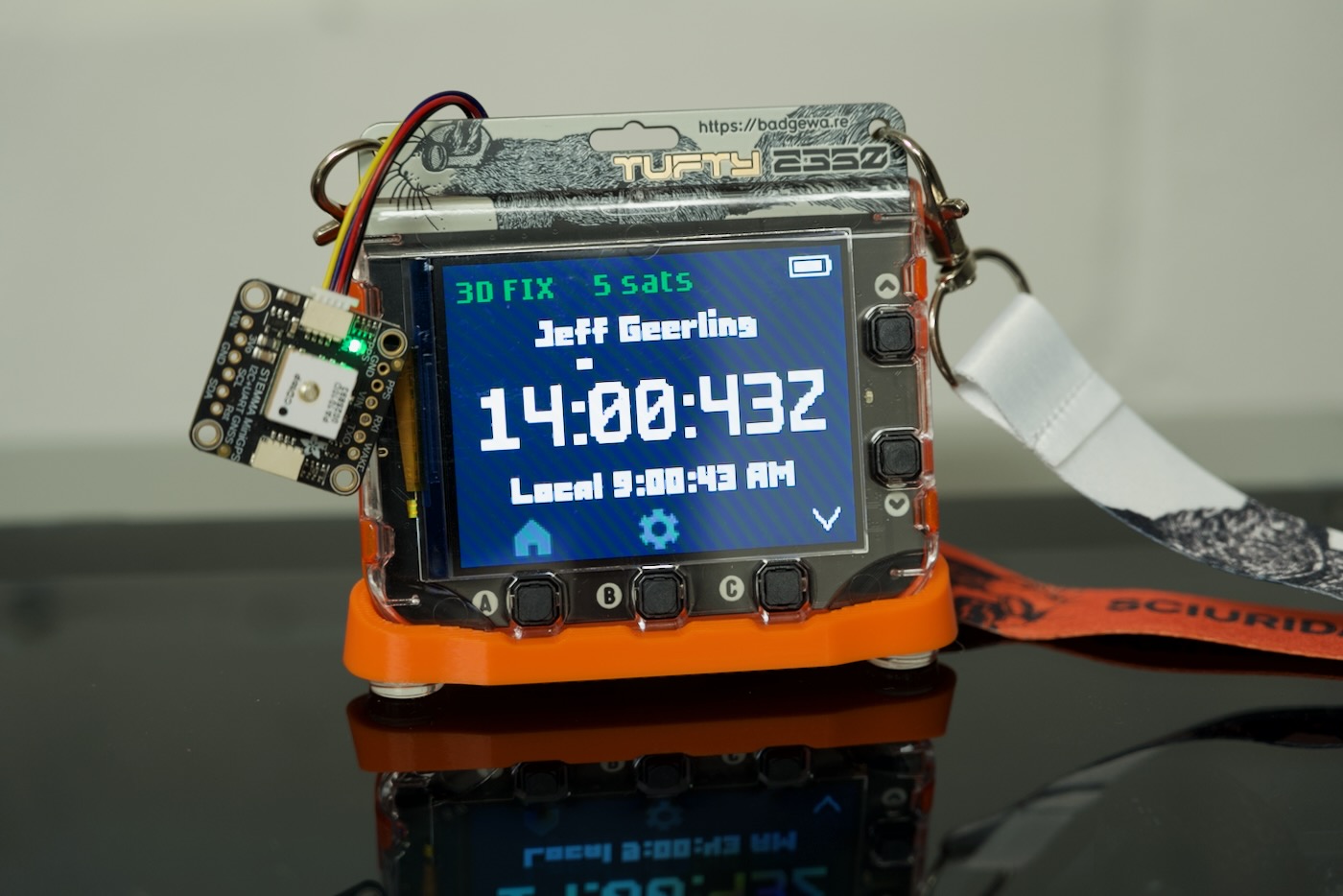
Pimoroni's Tufty 2350 running my GPS Time App with a GPS module

Partly due to time constraints, and partly because I wanted to see if I could complete a personal project end-to-end, without editing a line of code, I throw my requirements at Claude and ultimately came up with this 2141 MicroPython app for Pimoroni's Badgeware ecosystem.

Jeff Geerling
• Jeff Geerling

QuadRF can spot drones and see WiFi through my wall

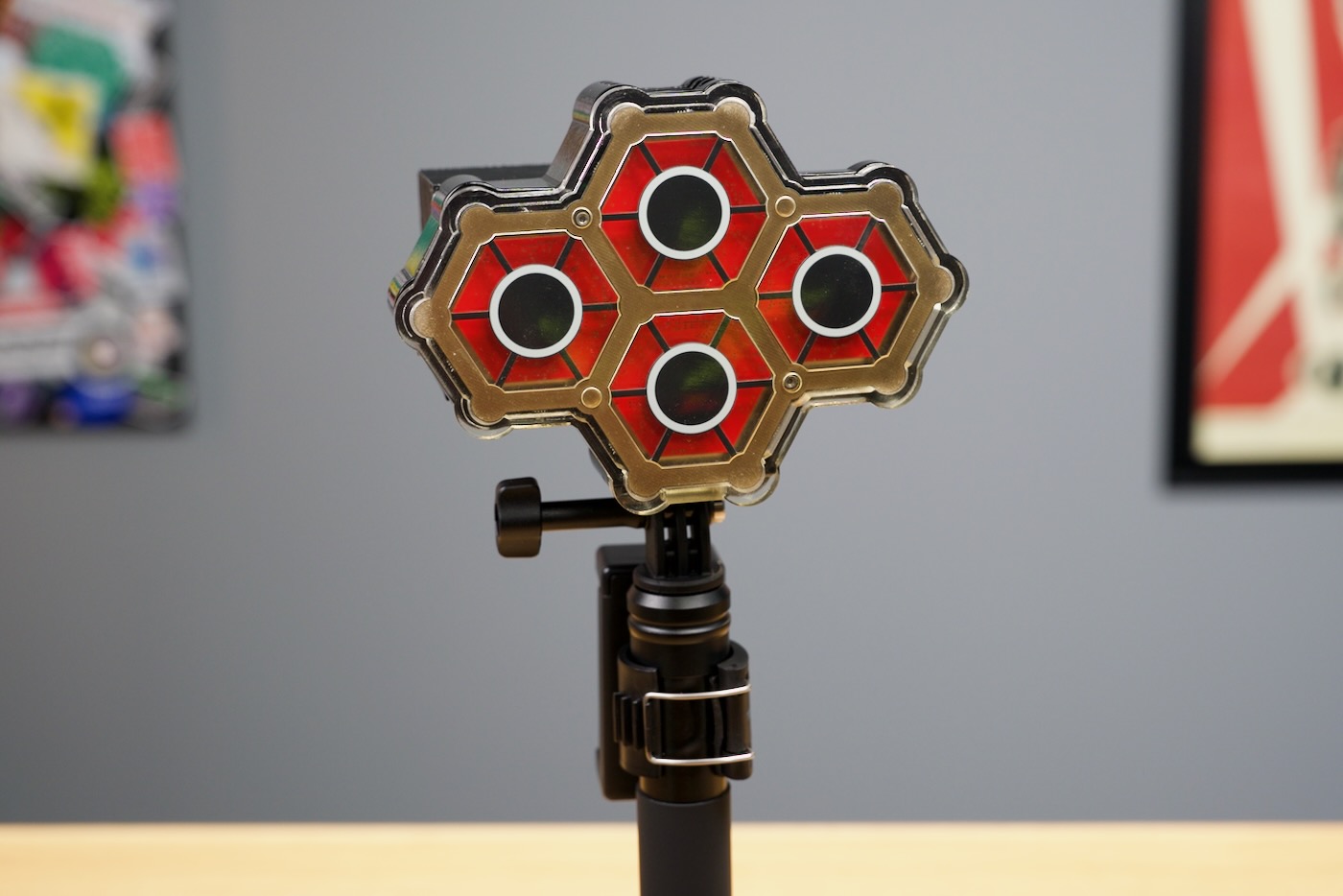
QuadRF antenna array from front

The QuadRF (pictured above) a phased-array radio built around a Raspberry Pi 5 and an FPGA board with picosecond-level timing. It does advanced signal processing and beamforming.

It can see WiFi through walls and track drones in flight.

If the open source community can come up with something like this, just imagine what governments are capable of.

When you plug a computer into a network, tools like Wireshark can show all the hidden traffic you might not even know is there. WiFi packets are the same, but those travel through the air, allowing snooping without physical access.

Jeff Geerling
• Jeff Geerling

The Special Value Pi 4 was extremely short-lived

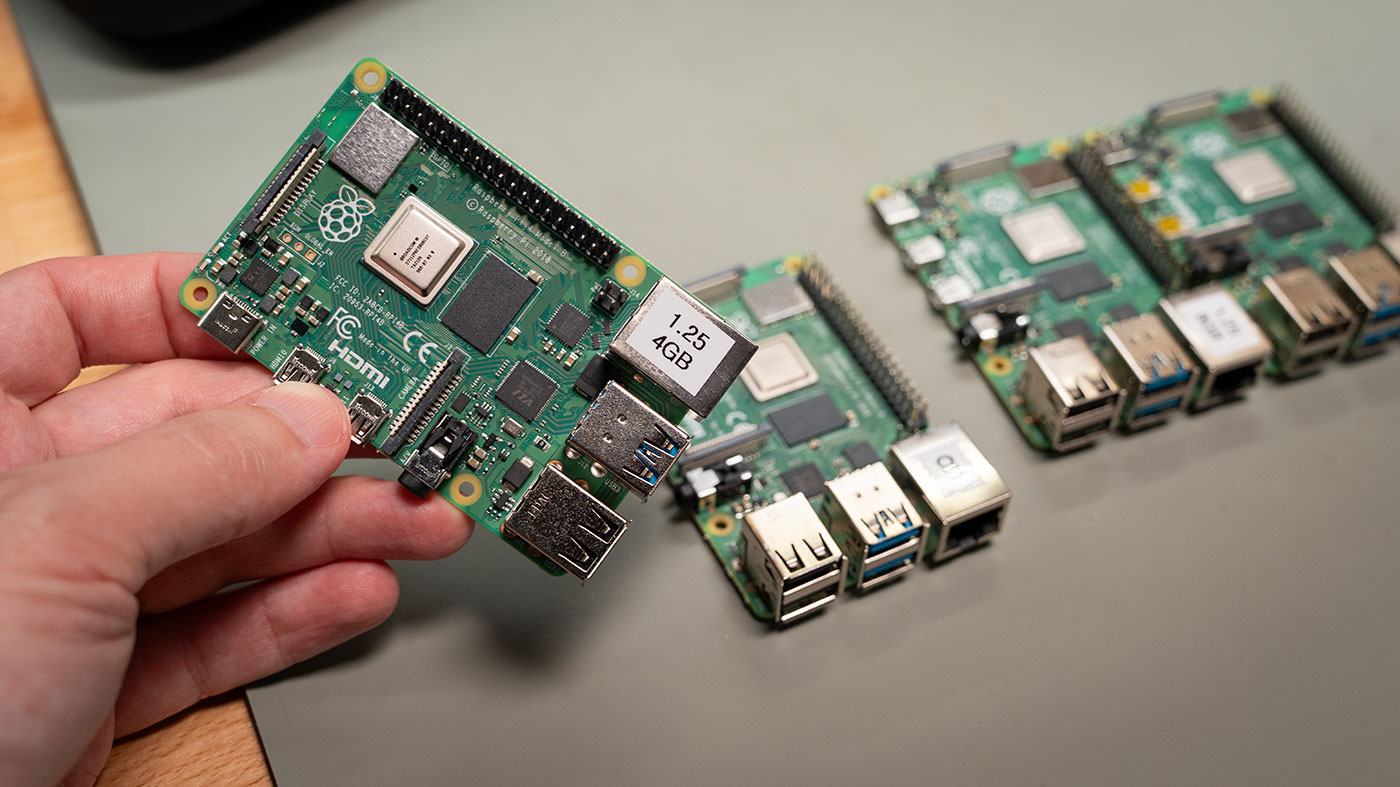
Special Value Pi 4 4GB in hand

The 'Special Value' Pi 4 pictured above is probably the rarest Raspberry Pi I own—even rarer than my blue special edition Pi.

A Raspberry Pi reseller briefly listed a special 'value edition' Pi 4. But the product page 404's now. While it was up, my curiosity got the better of me, and now I have two 'value' Pi 4s.

What makes them a 'value'? They're only certified to run at 1.25 GHz (retail Pi 4s run at 1.8 GHz, and can usually be overclocked).

Jeff Geerling
• Jeff Geerling

Quickly apply LUTs (color grading) with ffmpeg

This is a quick post, mostly for my own reference.

I've avoided LUTs and 'Log' video footage for years1, mostly because of the extra tiny bit of workflow involved. Like RAW photos, 'Log' footage retains the video sensor's full dynamic range, so you can pull more color and luminance information out of the footage later.

But unlike photography, where RAW has been a thing for decades, and many workflows 'just work' without me having to 'grade' every individual photo, in video precious few consumer apps handle Log footage gracefully. You generally end up with a muddy grey mess.

Jeff Geerling
• Jeff Geerling

Framework's 10G Ethernet module exposes USB-C's complexity

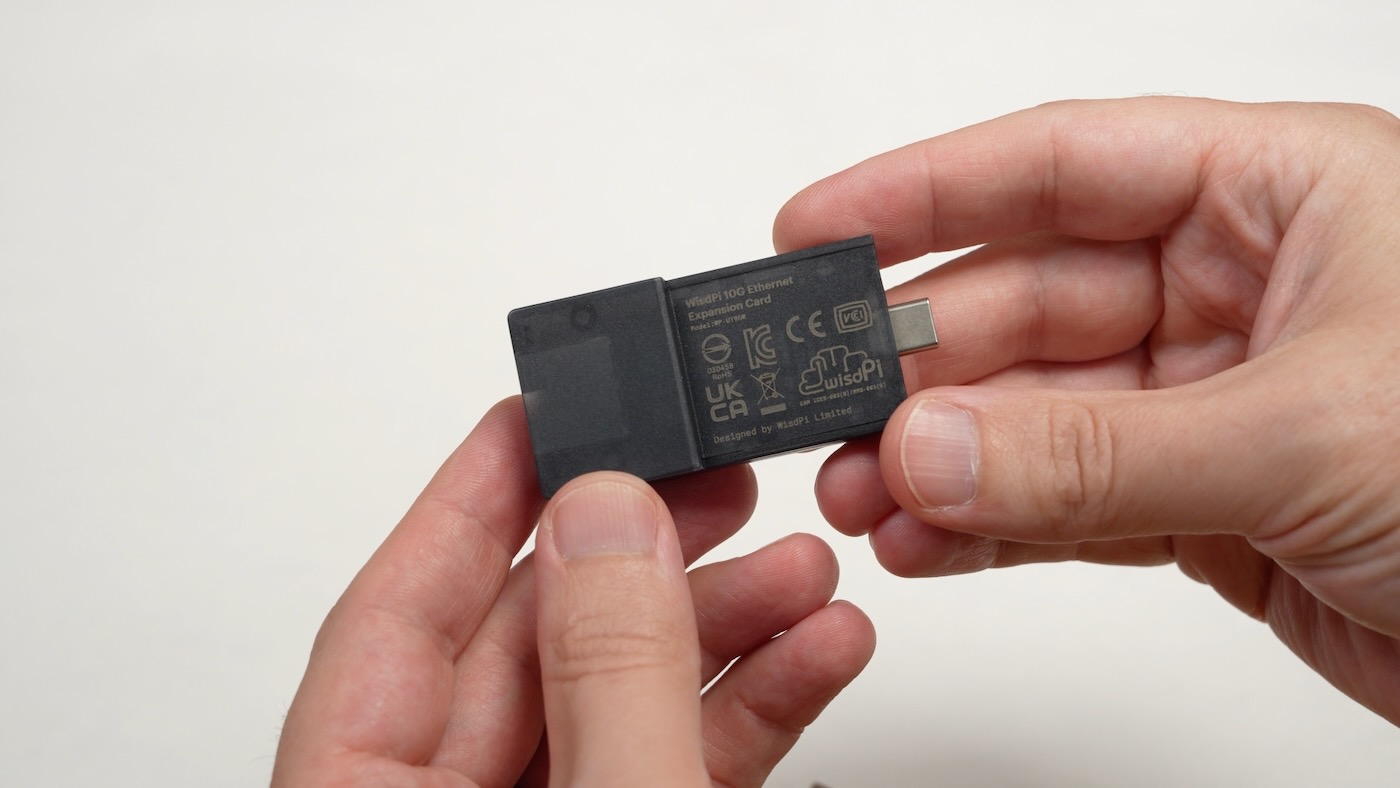
WisdPi's Framework 10G Ethernet module

I've been following WisdPi's development of various 5 Gbps and 10 Gbps Ethernet adapters for the past couple years.

They use newer Realtek Ethernet chips, which sometimes have performance quirks—most frequently encountered under Linux.

In today's video, I tested the new WisdPi 10G Ethernet Expansion Card for Framework computers. It fits in any available Framework Expansion slot—even on the Framework Desktop.

But Expansion Cards use USB-C for their connection to the mainboard—and therein lies the rub...

Jeff Geerling
• Jeff Geerling

You can finally power on a Mac remotely

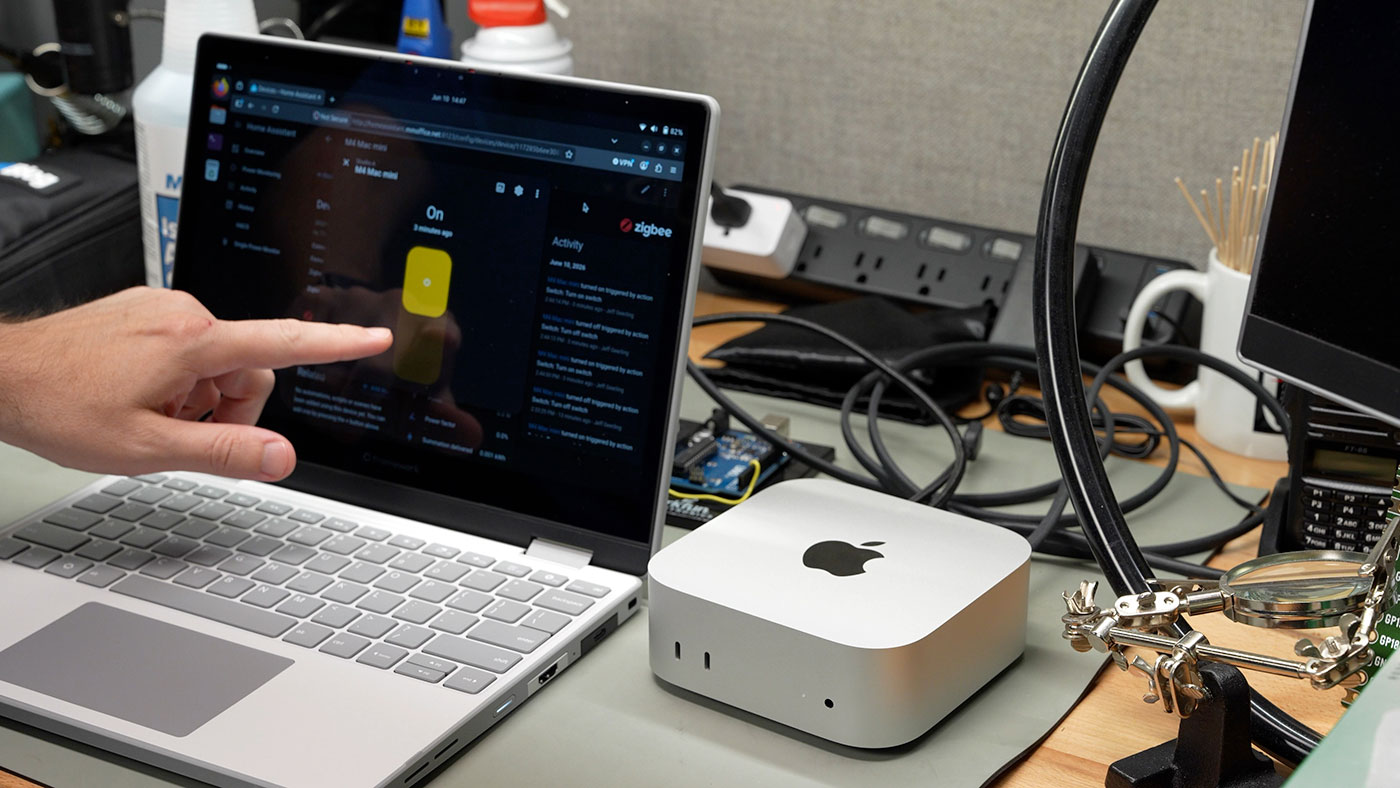
Apple FINALLY lets you turn on your Mac remotely, without having to press the power button. In the media, articles suggest it's a reaction to Mac mini power button complaints.

Turning on an M4 Mac mini remotely using Home Assistant on a Framework 12

While I agree the M4 mini's power button is in a really dumb spot, that's not why I care about this feature. The two bigger use cases for me have been a pain for years:

Jeff Geerling
• Jeff Geerling

I tested every IP KVM in my Homelab

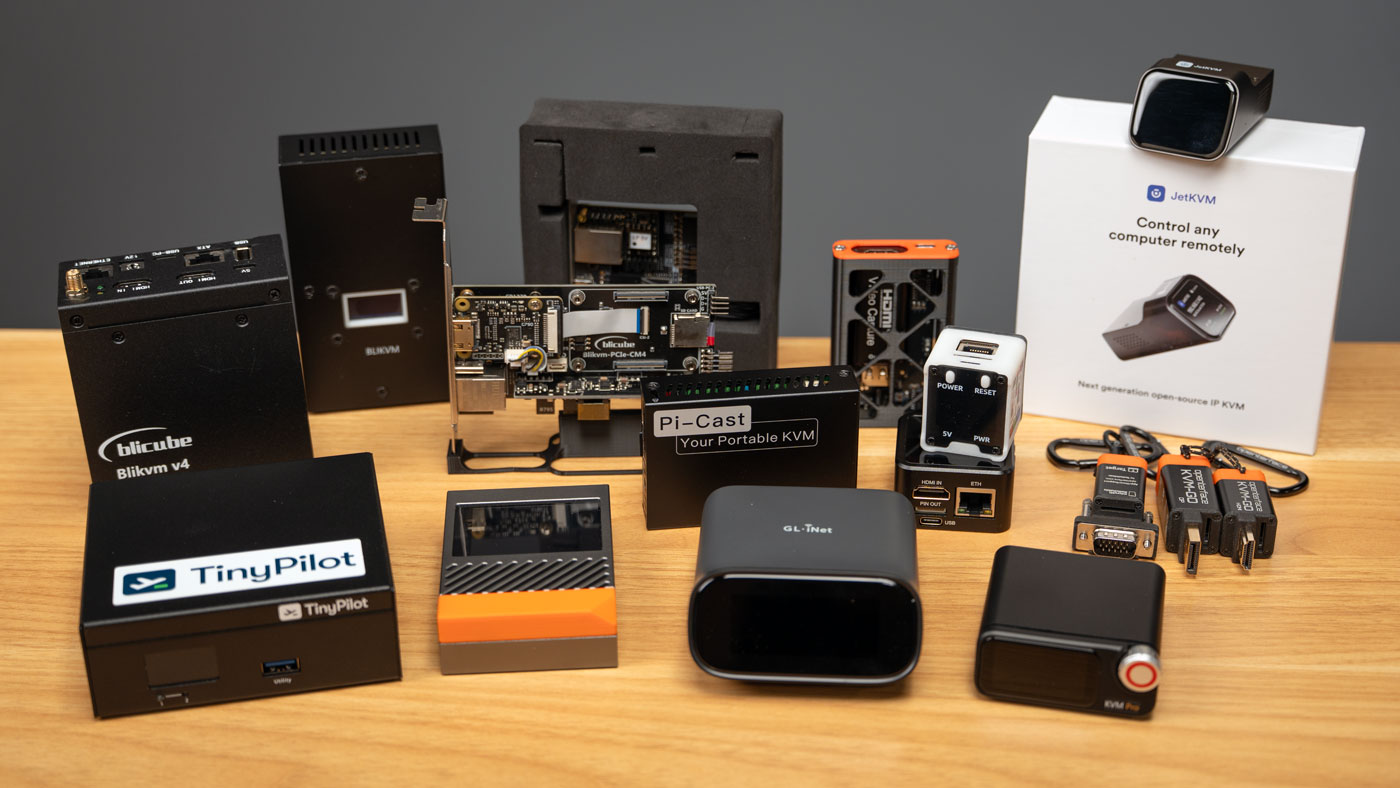
IP KVMs on desk

Since the PiKVM came out in 2017, there's been an explosion of IP KVMs. I've tested almost every one. But what are they good for?

You can use Remote Desktop, Screen Sharing, or VNC to remote control a computer from anywhere on a LAN. And if you don't have a private VPN, you could use RealVNC, Raspberry Pi Connect, or wire up Tailscale or Pangolin for fully remote access. Those solutions are great, and so is SSH if you don't need a full desktop.

Jeff Geerling
• Jeff Geerling

It's hard to justify buying a Framework 12

My nephew just graduated high school, and wants a laptop. When he decides what computer to buy, price (or more precisely, value) is the most important attribute.

Apple's MacBook Neo upended the 'value laptop' equation—Apple's not supposed to be both the cheapest option and the best value... but it seems like that's squarely where the Neo landed for the good-but-cheap laptop category.

MacBook Neo on top of Framework 12

My nephew is also my godson, and to kick off his computing journey, I thought I'd let him choose from a Framework 12 I bought to test, or the MacBook Neo I bought a couple months ago to use around the studio.

Jeff Geerling
• Jeff Geerling

Tuning in FM Radio on a 3D Printer Heatbed

Pooch from Repkord dropped by my studio while he was in St. Louis, and asked a simple question:

Can a 3D printer's heatbed act as an antenna?

A fair question, as many an antenna is embedded in a PCB these days... and the traces on a PCB heatbed like the one used in Prusa's Core One look kinda like an antenna, if you squint the right way.

NanoVNA hooked up to 3D Printer Heatbed

Really, anything (or anyone) can be an antenna, given enough power.

Jeff Geerling
• Jeff Geerling

I patched iozone for better disk benchmarks on modern macOS

A decade ago, I settled on iozone for disk benchmarking on all my systems. Tools like fio ('Flexible IO' tester) are a little more capable for raw disk performance testing, and other tools test network-scale filesystems better, but iozone gives me an easy overview of real-world disk performance across hard drives and SSDs, and runs on Mac, Windows, and Linux (and a smattering of other OSes).

iozone Website with filesystem performance graph

It's been around since 1991, and is still updated today—in fact, the two latest updates (version 509 and 510) contain patches I sent in to get iozone to compile on Apple Silicon Macs running newer releases of macOS.

Jeff Geerling
• Jeff Geerling

News about Raspberry Pi 6 and Microcontroller Development

On Thursday, three of the lead Raspberry Pi engineers hosted an AMA on the r/engineering subreddit.

Raspberry Pi Reddit AMA with Eben Upton, Gordon Hollingworth, and James Adams

Raspberry Pi 6

One of the most interesting tidbits was on the Pi 6.

Looking back at previous launches:

  • 2012: Raspberry Pi
  • 2015: Raspberry Pi 2 (+3 years)
  • 2016: Raspberry Pi 3 (+1 year)
  • 2019: Raspberry Pi 4 (+3 years)
  • 2023: Raspberry Pi 5 (+4 years)

Following that cycle, one would expect a Pi 6 3-4 years after the Pi 5, which would put it in 2026 or 2027.

Jeff Geerling
• Jeff Geerling

Wi-Wi Is Wireless Time Sync at 1 nanosecond

At NAB, I found a demo of Wi-Wi STAMP, a wireless time synchronization protocol that came out of Japan's NICT.

Wi-Wi STAMP time synchronization hardware

Wi-Wi stands for Wireless 2Way interferometry, and it uses the 900 MHz band for picosecond-level time sync, and mm-level distance accuracy, in a tiny box, currently the size of a smartphone.

The system is still in development, but existing prototypes have 20ps of phase synchronization jitter, and time synchronization down to 30ns. The next generation will have time down to 5ns in real-world use.

Jeff Geerling
• Jeff Geerling

Bambu Lab is abusing the open source social contract

Last year I said I'd probably never recommend another Bambu Lab printer again.

I still use my P1S, but after Bambu Lab started pushing their always-connected cloud solution as the new default:

  • I blocked the printer from the Internet via my OPNsense Firewall
  • I stopped updating the firmware
  • I locked the printer into Developer mode
  • I deleted Bambu Studio and started using OrcaSlicer

I had to do that to keep it under my control, instead of Bambu's.

Jeff Geerling
• Jeff Geerling

HomePod mini feels like magic, but it's just good timing

HomePod mini stereo pair demonstration with iPhone

Apple introduced the HomePod mini six years ago, in 2020.

I'm not one into smart speakers, but the feature that made me take a closer look was their ability to form stereo pairs, without any direct wired connection.

I know there are other speaker manufacturers with wireless speakers, but to my knowledge, Apple was just using AirPlay over WiFi... so how does it work?

Through the magic of buying two HomePods mini (pictured above), I found out. A video detailing the process is embedded below:

Jeff Geerling
• Jeff Geerling

SBC Clusters are a terrible value, but they're fun anyway

DeskPi Super4C SBC Cluster Board in Waveshare HomeRack Mini Rack

Pictured above is the new DeskPi Super4C installed in an 8U mini rack. The Super4C is a 4-node Raspberry Pi CM5 cluster board that solves two pain points I had with the older Super6C.

I was testing this board around the same time I helped kick off the SBCC 2026, the Single Board Cluster Competition for students. A dozen or so university teams squared off to run the best mini HPC cluster with a budget of $6,000, and a couple days to benchmark six HPC workloads.

Jeff Geerling
• Jeff Geerling

Raspberry Pi Connect may control Windows soon

Support for remote controlling Windows PCs may be added to Raspberry Pi Connect, Raspberry Pi's free remote access service.

Raspberry Pi Connect controlling a Windows 11 PC

When they announced Pi Connect in 2024, I speculated the service was launched in response to RealVNC's sluggish adoption of Wayland, leading to Pi users lacking a solid remote access solution after Pi OS 12 'Bookworm' was launched.

The service was helpful for those who had one or more Raspberry Pis to access, but the Pi Connect daemon didn't run on Windows or macOS at the time, so a true competitor to RealVNC (at least for basic use cases) it was not.

Jeff Geerling
• Jeff Geerling

New 10 GbE USB adapters are cooler, smaller, cheaper

For years, the best way to get 10 gigabit networking on laptops was to buy an expensive, large, and hot 10 GbE Thunderbolt adapter. With new RTL8159-based 10G USB 3.2 adapters coming onto the market, the bulky adapters might be a thing of the past. Just look at the size of the thing in comparison to my Thunderbolt adapters:

10 Gbps Ethernet adapters for Thunderbolt and USB

2.5G and even 5G USB adapters have been out for a while, but sometimes you need more bandwidth.

Jeff Geerling
• Jeff Geerling

An Arm Mainboard for the Framework Laptop

Using the repair-friendly Framework 13 laptop chassis, I've tested the low-end x86 option (a Ryzen AI 5 340 Mainboard), the fastest RISC-V option (DC-ROMA II), and today I'm publishing results from the only Arm Mainboard, the MetaComputing AI PC, which has a 12-core Arm SoC and up to 32 GB of soldered-on RAM.

MetaComputing AI PC Mainboard next to Framework 13 laptop

My Framework 13 has run on x86, RISC-V, and now Arm, making it something of a 'Ship of Theseus'.

Jeff Geerling
• Jeff Geerling

Build your own Dial-up ISP with a Raspberry Pi

Last year my aunt let me add her original Tangerine iBook G3 clamshell to my collection of old Macs1.

iBook G3 accessing dial-up Internet over WiFi browsing the vintage web

It came with an AirPort card—a $99 add-on Apple made that ushered in the Wi-Fi era. The iBook G3 was the first consumer laptop with built-in Wi-Fi antennas, and by far the cheapest way to get a computer onto an 802.11 wireless network.

Jeff Geerling
• Jeff Geerling

DRAM pricing is killing the hobbyist SBC market

Today Raspberry Pi announced more price increases for all Pis with LPDDR4 RAM, alongside a 'right-sized' 3GB RAM Pi 4 for $83.75.

The price increases bring the 16GB Pi 5 up to $299.99.

Despite today's date, this is not a joke.

I published a video going over the state of the hobbyist 'high end SBC' market (4/8/16 GB models in the current generation), which I'll embed below:

But if you'd like the tl;dr:

Jeff Geerling
• Jeff Geerling

Bring back MiniDV with this Raspberry Pi FireWire HAT

In my last post, I showed you to use FireWire on a Raspberry Pi with a PCI Express IEEE 1394 adapter. Now I'll show you how I'm using a new FireWire HAT and a PiSugar3 Plus battery to make a portable MRU, or 'Memory Recording Unit', to replace tape in older FireWire/i.Link/DV cameras.

Firehat on Raspberry Pi recording video from Canon GL1 over FireWire

The alternative is an old used MRU like Sony's HVR-MRC1, which runs around $300 on eBay1.

Jeff Geerling
• Jeff Geerling

Using FireWire on a Raspberry Pi

After learning Apple killed off FireWire (IEEE 1394) support in macOS 26 Tahoe, I started looking at alternatives for old FireWire equipment like hard drives, DV cameras, and A/V gear.

Power Mac G4 MDD with Canon GL1 DV Camera importing footage into Final Cut Express

I own an old Canon GL1 camera, with a 'DV' port. I could plug that into an old Mac (like the dual G4 MDD above) with FireWire—or even a modern Mac running macOS < 26, with some dongles—and transfer digital video footage between the camera and an application like Final Cut Pro.

Jeff Geerling
• Jeff Geerling

The best laptop Apple ever made

Today I posted a video titled The best laptop Apple ever made, and tl;dw1 it's the 11" MacBook Air.

I acknowledge in the video my pick is slightly subjective, and I also asked a number of other YouTubers which Mac laptop they consider the best (or at least most influential). If you don't want to watch the video, I'll summarize their choices here:

Jeff Geerling
• Jeff Geerling

Restoring an Xserve G5: When Apple built real servers

Recently I came into posession of a few Apple Xserves. The one in question today is an Xserve G5, RackMac3,1, which was built when Apple at the top—and bottom—of it's PowerPC era.

Xserve G5 on Jeff's desk

This isn't the first Xserve—that honor belongs to the G41. And it wasn't the last—there were a few generations of Intel Xeon-powered RackMacs that followed. But in my opinion, it was the most interesting.

Unfortunately, being manufactured in 2004, this Mac's Delta power supply suffers from the Capacitor Plague. The PSU tends to run hot, and some of the capacitors weren't even 105°C-rated, so they tend to wear out, especially if the Xserve was running high-end workloads.

Jeff Geerling
• Jeff Geerling

Can the MacBook Neo replace my M4 Air?

Many of us wonder if the MacBook Neo is 'the one'.

MacBook Neo on top of a Mac Pro side panel

Because I have a faster desktop (currently a M4 Max Mac Studio), I've always used a lower-end Mac laptop, like the iBook or MacBook Air, for travel. I've used MacBook Pros in the past, but I like the portability of smaller, cheaper models.

In fact, my favorite Mac laptop ever was the 11" Air.

Jeff Geerling
• Jeff Geerling

A PTP Wall Clock is impractical and a little too precise

After seeing Oliver Ettlin's 39C3 presentation Excuse me, what precise time is It?, I wanted to replicate the PTP (Precision Time Protocol) clock he used live to demonstrate PTP clock sync:

Oliver Ettlin with PTP wallclock at 39C3

I pinged him on LinkedIn inquiring about the build (I wasn't the only one!), and shortly thereafter, he published Gemini2350/ptp-wallclock, a repository with rough instructions for the build, and his C++ application to display PTP time (if available on the network) on a set of two LED matrix displays, using a Raspberry Pi.

Jeff Geerling
• Jeff Geerling

I built a pint-sized Macintosh

To kick off MARCHintosh, I built this tiny pint-sized Macintosh with a Raspberry Pi Pico:

Pico Micro Mac running System 5.3

This is not my own doing—I just assembled the parts to run Matt Evans' Pico Micro Mac firmware on a Raspberry Pi Pico (with an RP2040).

The version I built outputs to a 640x480 VGA display at 60 Hz, and allows you to plug in a USB keyboard and mouse.

Since the original Pico's RAM is fairly constrained, you get a maximum of 208 KB of RAM with this setup—which is 63% more RAM than you got on the original '128K' Macintosh!

Jeff Geerling
• Jeff Geerling

Expert Beginners and Lone Wolves will dominate this early LLM era

After migrating this blog from a static site generator into Drupal in 2009, I noted:

As a sad side-effect, all the blog comments are gone. Forever. Wiped out. But have no fear, we can start new discussions on many new posts! I archived all the comments from the old 'Thingamablog' version of the blog, but can't repost them here (at least, not with my time constraints... it would just take a nice import script, but I don't have the time for that now).

Jeff Geerling
• Jeff Geerling

Upgrading my Open Source Pi Surveillance Server with Frigate

In 2024 I built a Pi Frigate NVR with Axzez's Interceptor 1U Case, and installed it in my 19" rack. Using a Coral TPU for object detection, it's been dutifully surveilling my property—on my terms (100% local, no cloud integration or account required).

Exaviz Cruiser CM5 carrier board inside DeskPi mini rack enclosure with Annke 4K camera on top

I've wanted to downsize the setup while keeping cheap large hard drives1, and an AI accelerator.