
Opinion columnist Karen Attiah won her arbitration against the Washington Post. They are ordered to reinstate her and pay full back pay. The Post fired her almost a year ago for her remarks in the wake of Charlie Kirk’s murder.
 Subscribe
Jason Kottke's weblog, home of fine hypertext products since 1998
- Public lists
-
Featured
- Fetched
Jodi Ettenberg on living grief and a serendipitous...
Jodi Ettenberg on living grief and a serendipitous discovery. “Living grief lacks the tapestry of rituals, language, and social permissions around grieving that a person is offered with death.”
Walking the Length of Manhattan . I did this, solo,...
Walking the Length of Manhattan. I did this, solo, right before I moved out of NYC. Loved it. Will do it again someday.
“When Jason Ganos was asked to help sell an old box full...
“When Jason Ganos was asked to help sell an old box full of NES cartridges…” How 97 Copies of an Unreleased Version of Super Mario Bros. Duck Hunt Were Discovered in a Wisconsin Warehouse.
What a great idea for a book: Cookbooking: A Fan’s...
What a great idea for a book: Cookbooking: A Fan’s Guide. “An eclectic, visually stunning pop-history, Cookbooking explores the most influential and beloved cookbooks through photographs, listicles, graphics, and snappy writing.”
“ The principal aim of President Trump’s second...
“The principal aim of President Trump’s second term is revenge,” says Jamelle Bouie. “Revenge shapes the president’s priorities, drives his actions and structures the decisions of his government.”
Weird Al Yankovic’s Tiny Desk Concert
Holy moly, NPR’s Tiny Desk has been going for a long time. Weird Al Yankovic first stopped by the desk in 2010, so early that they didn’t even have it on YouTube until more recently. And the other day, they had him back for a second session!
Yankovic focused on originals...
Anil Dash built a standalone Touch ID sensor to use...
Anil Dash built a standalone Touch ID sensor to use with your Mac if you don’t have a newer Apple keyboard. It’s open-source…the code and instructions are on Github.
Analysts Warn U.S. Economy Becoming Overly Dependent On...
Analysts Warn U.S. Economy Becoming Overly Dependent On Anne Hathaway. “We estimate that Anne Hathaway films currently account for a staggering 63% of all U.S. exports.” Zendaya is the other 37%.
When you take screenshots of posts in iOS social apps...
When you take screenshots of posts in iOS social apps like Bluesky or Threads, they use this little trick to replace the “Follow” button with the app’s logo.
“All our neighbors worked for those firms —...
“All our neighbors worked for those firms — Facebook, Google and Apple. None of them would let their children interact with any screens. They all knew how addicting they were and how to protect their own children.”
Long past time to quit X . “Those who continue to...
Long past time to quit X. “Those who continue to post on X — in particular those X users who are not racist psychopaths — are enhancing the site’s usefulness to [Musk] as a propaganda tool by drawing more eyes to the platform… “
This is a wild story: The Scientist Who Lived with...
This is a wild story: The Scientist Who Lived with Dozens of Children from the Pacific Islands. “I realized I’m in the middle of a pedophile operation that has been run out of the N.I.H. by a Nobel laureate for thirty years.”
“Scientists have found that people are being...
“Scientists have found that people are being exposed to more toxins than previously known, and beyond damaging lungs, wildfire smoke may affect hearts, brains and other organs.” (Research is preliminary & ongoing but sheesh…)
Ring of Fire in the Sky
Portuguese photographer Rui Santos captured this shot of the recent solar eclipse.
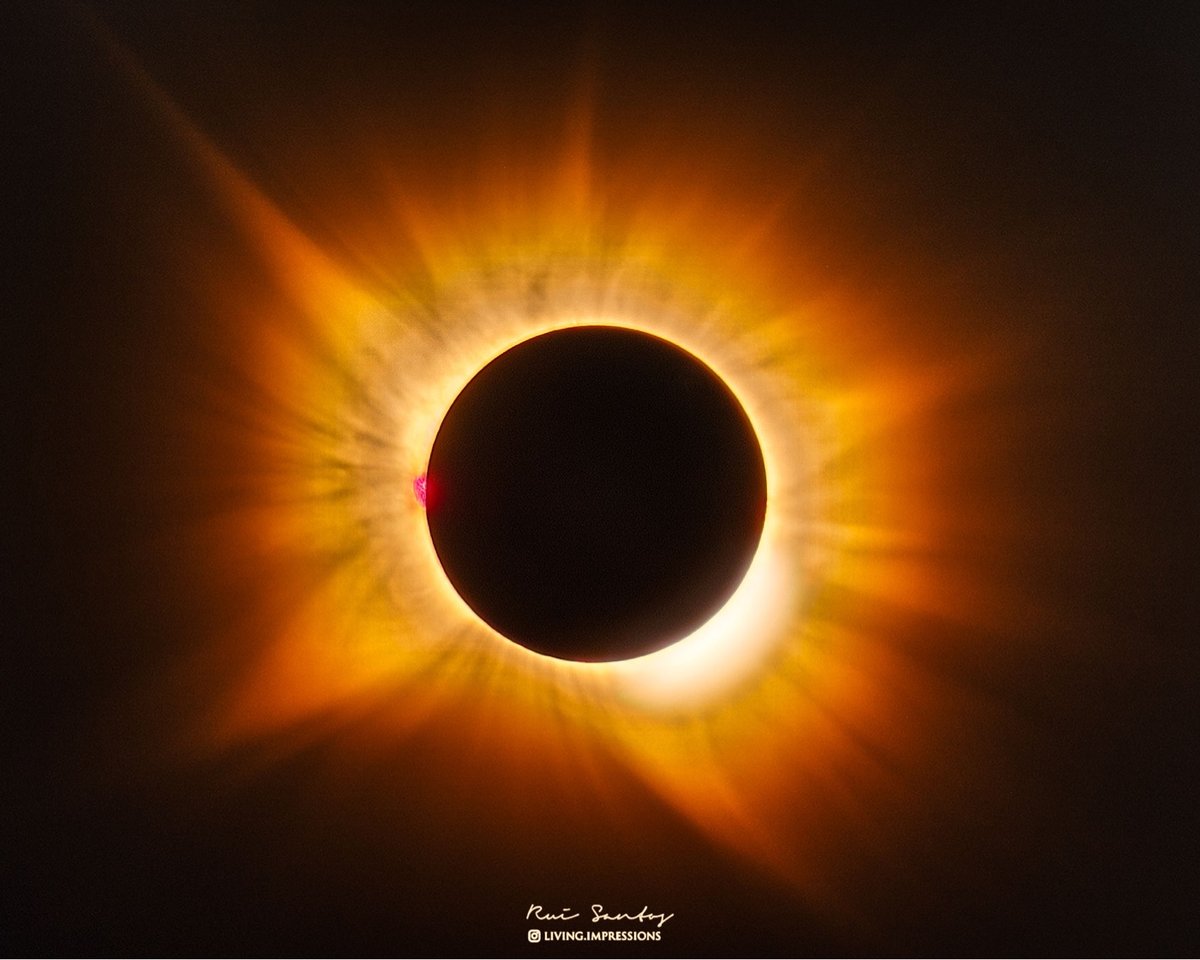
Stunning. Here’s what makes this shot look a little different from other eclipse photos; from APOD:
Usually the solar corona appears white, and to some observers the corona of last week’s total solar eclipse did appear this pearly color. But this time, totality observers in Spain saw a corona that appeared unusually golden. For one reason, from Spain, the totality occurred when the setting Sun was near the horizon. That low, sunlight travels through a large amount of air which scatters out blue light. An unusual amount of smoke in the air from nearby forest fires acted as a second filter, further scattering the remaining blue tones and deepening the already gold-dominated light.
Tags: 2026 solar eclipse · astronomy · eclipses · photography · Rui Santos · Sun
How to make a good Star Wars movie for once ....
How to make a good Star Wars movie for once. “Stop making stuff that’s so self referential and start focusing on projects that once again are bringing things from the outside and putting them in a Star Wars container.” Fan service is bad storytelling.
And also a trailer for season 2 of Star Wars: Ahsoka ....
And also a trailer for season 2 of Star Wars: Ahsoka. Huh. Lots of Anakin, but where are the space whales?
Trailer for VisionQuest , the third leg of the...
Trailer for VisionQuest, the third leg of the Wanda/Vision/Agatha trilogy. Huh. “Ultron! Human avatars only!”
In Bourgogne, they’ve been recording grape date harvests...
In Bourgogne, they’ve been recording grape date harvests since 1354. This year’s harvest set a record for earliest start: Aug 8. “From 1354 to 1987 the average start was 28 September. Since 1988 it runs 13 days earlier.”
Post-pandemic vaccination rates of US kindergarteners...
Post-pandemic vaccination rates of US kindergarteners continue to fall and “nonmedical exemptions” based on “personal or religious beliefs” jumped 0.8% in just 1 year.
Whoa, Columbia House (12 cassettes for 1¢) is finally...
Whoa, Columbia House (12 cassettes for 1¢) is finally going out of business after 71 years and several pivots (records to reel-to-reel to 8-tracks to cassettes to CDs to VHS to DVDs to Blu-ray).
The area known as Tornado Alley continues to shift...
The area known as Tornado Alley continues to shift eastward (from Texas, Oklahoma, and Kansas to Illinois, Indiana, and Wisconsin) due to “a warming climate that helps transport warmer and more-humid air farther north and east than in the past”.
“ Sand temperatures above 29°C now produce 95–99%...
“Sand temperatures above 29°C now produce 95–99% female sea turtles instead of the historical 50–50 ratio, creating a reproductive bottleneck that could collapse populations within two generations.”
A.J. Jacobs recently interviewed “the Papa Bear of...
A.J. Jacobs recently interviewed “the Papa Bear of Puzzling”, Will Shortz and came away with seven lessons he learned from him. “Creativity is usually more about evolution than revolution.”
Unwinding the Great Tech Power Grab . “If tech seeks to...
Unwinding the Great Tech Power Grab. “If tech seeks to replace democratic governance itself, then the response has to be more democracy, not less.” Lots of related links in this piece too.
We live in a world of ordinary abundance & luxuries...
We live in a world of ordinary abundance & luxuries only dreamed of in centuries past: music on demand, photographs, books, eyeglasses, refrigeration, vaccination, bicycles, and the washing machine.
Ozu in Color (Every Frame a Painting)
For TCM, Every Frame a Painting’s Taylor Ramos & Tony Zhou tell us how legendary Japanese filmmaker Yasujiro Ozu made the transition to color filmmaking. His first color film was Equinox Flower in 1958 and it took a couple of films for Ozu to work out how to best emplo...
Two new episodes of Ric Burns’ 1999 documentary...
Two new episodes of Ric Burns’ 1999 documentary series New York will soon air on PBS. “Produced by the same team that created the original NEW YORK series, The Future of Cities presents a sweeping and dramatic portrait of New York since Sept 11th.”
Yale study : “A single-payer universal health care...
Yale study: “A single-payer universal health care system could cover every American, save more than 100,000 lives a year, and still cost $1 trillion less than the system it would replace.”
Tressie McMillan Cottom on AOC’s presumed presidential...
Tressie McMillan Cottom on AOC’s presumed presidential run. “But these are different times. Ocasio-Cortez is a different woman, and Americans love to turn to women when the house is burning down.”